주제 5. 정약용 — 유배지에서 쓴 아들에게 보내는 편지
인물 전기 롱폼 완성 ★★★★☆
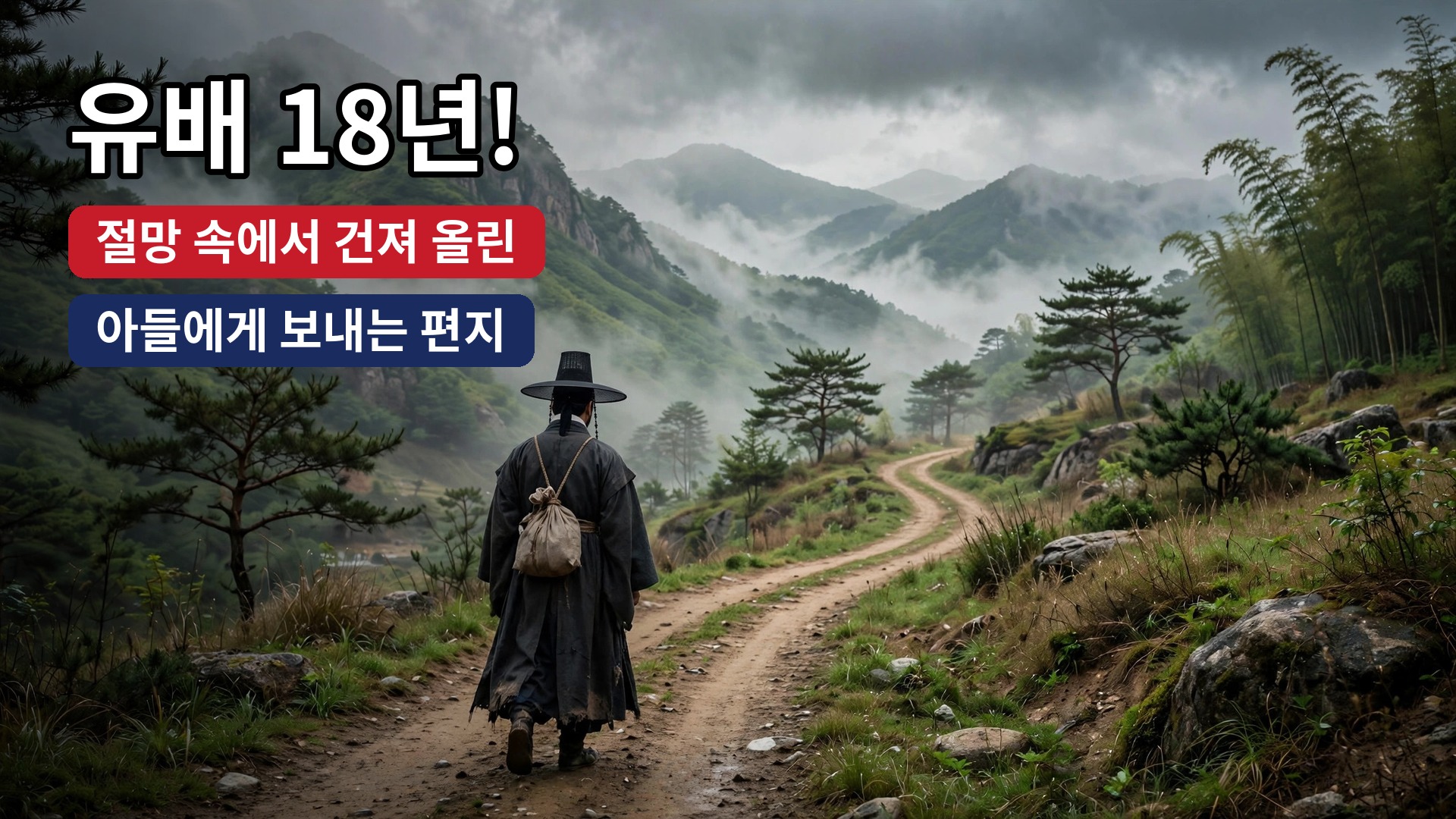
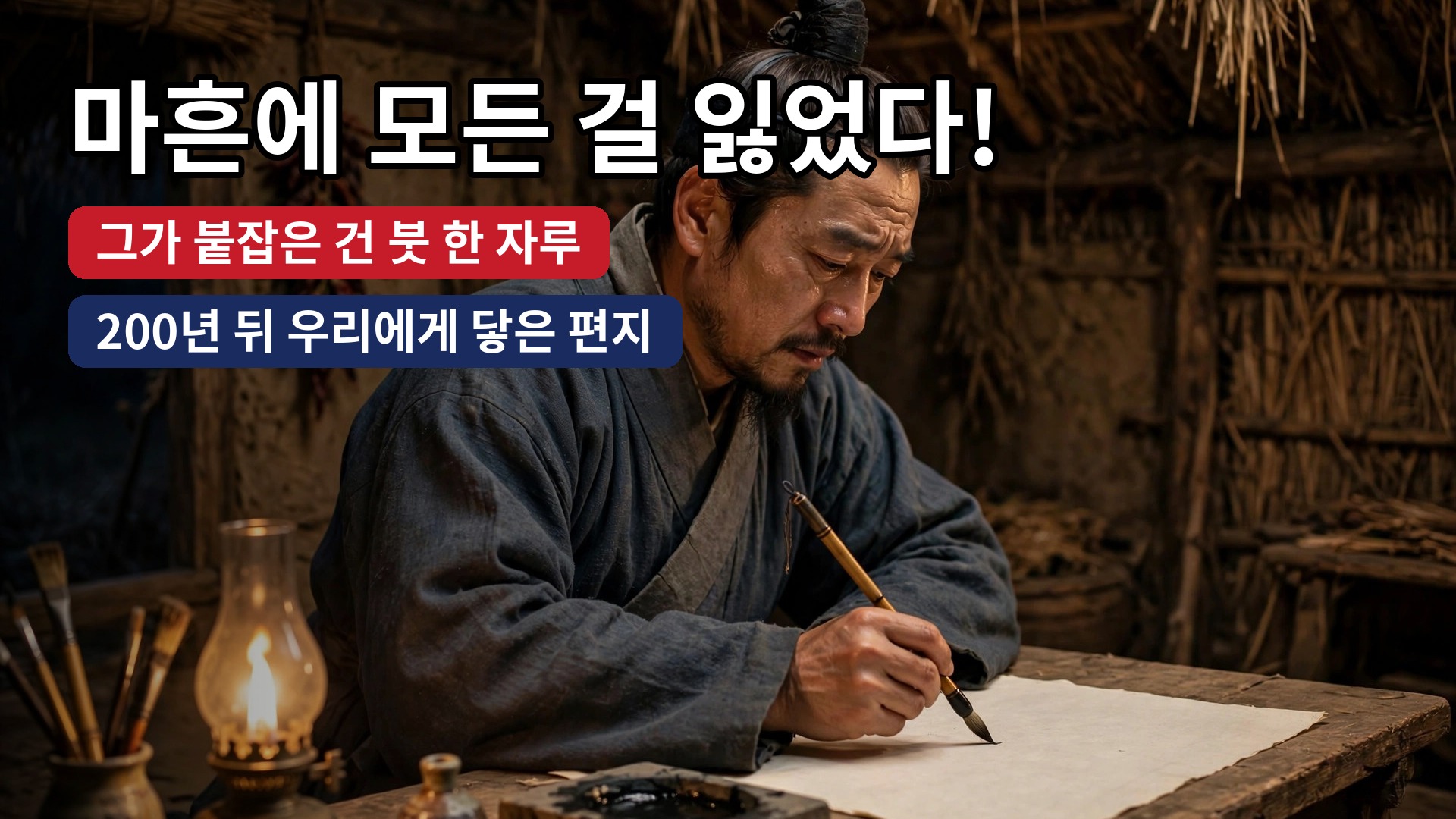
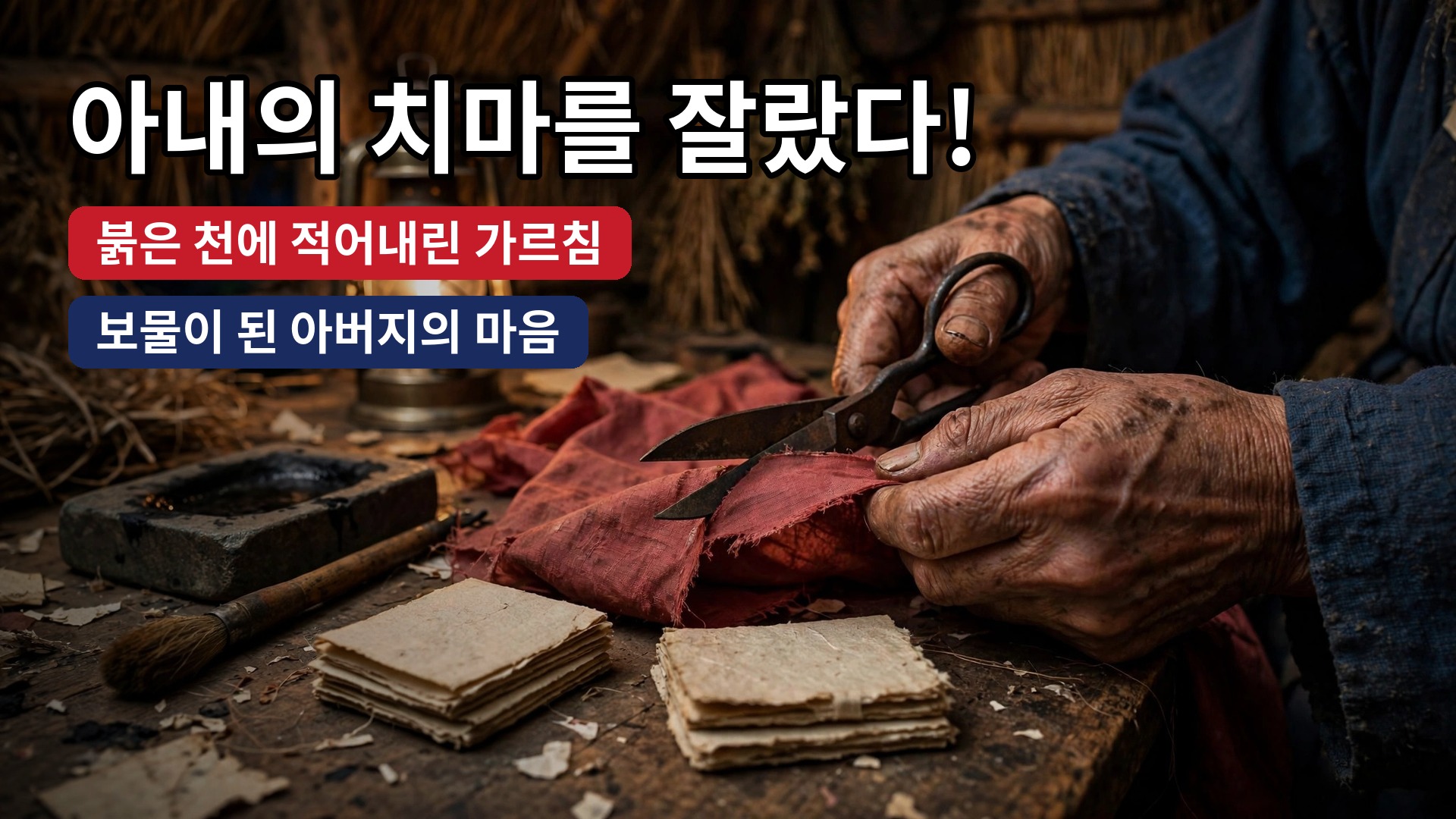
📝 제목 3안
- 인생이 막막하다면, 정약용이 딱 한마디 했다
- 유배 18년, 절망 속에서 건져 올린 인생 조언
- 정약용 — 유배지에서 쓴 아들에게 보내는 편지
🎙️ 대본 (약 24분 · Vrew 양식)
📋 Vrew '텍스트로 영상 만들기'에 그대로 붙여넣으세요. 한 줄 = 한 문장 = 한 클립·한 자막 양식입니다.
[제목 3안]
1. 인생이 막막하다면, 정약용이 딱 한마디 했다
2. 유배 18년, 절망 속에서 건져 올린 인생 조언
3. 정약용 — 유배지에서 쓴 아들에게 보내는 편지
---
자식이 걱정되신 적 있으시죠.
밤에 잠이 안 와서 뒤척인 적 있으시죠.
내가 떠난 뒤에 저 아이들은 어떻게 살까.
내가 잘못 키워서 아이 인생을 망친 건 아닐까.
나이 들수록 자식 걱정은 깊어집니다.
젊을 때는 앞만 보고 달렸습니다.
그런데 어느 날 뒤를 돌아보니 자식이 서 있습니다.
그 아이의 인생이 내 손에 달려 있다는 생각에 가슴이 먹먹해집니다.
자식은 다 컸는데도 걱정은 끝나지 않습니다.
오히려 더 커집니다.
취직은 했는지, 결혼은 했는지, 건강은 괜찮은지.
부모의 걱정은 자식이 일흔이 되어도 끝나지 않는다고 합니다.
내 나이가 일흔이 되어도 자식은 여전히 내 아이입니다.
그 걱정이 사랑이라는 것을 우리는 압니다.
하지만 가끔은 그 사랑이 무겁습니다.
내 걱정이 아이에게 짐이 될까 봐 조심스러워집니다.
오늘은 그런 분들께 한 아버지의 편지를 전해드리려 합니다.
200여 년 전, 한 아버지가 유배지에서 아들에게 쓴 편지입니다.
그 아버지의 이름은 정약용, 호는 다산입니다.
그는 절망의 끝에서 아들에게 인생의 조언을 건넸습니다.
그 편지를 끝까지 들으시면,
자식을 향한 걱정이 조금은 가벼워지실 겁니다.
그리고 부모로서의 내 삶도 다시 보게 되실 겁니다.
이야기를 시작하기 전에 한 가지만 약속해 주세요.
편안한 마음으로 들어주시는 것.
200년 전 다산의 아들들도 아버지의 편지를 그렇게 읽었습니다.
정약용은 1762년에 태어났습니다.
경기도 광주, 지금의 남양주시 조안면 마재라는 마을입니다.
어려서부터 책 읽기를 좋아했습니다.
스물두 살인 1783년에 성균관에 들어갔습니다.
이듬해인 1784년, 스물세 살 때의 일입니다.
정조가 중용에 대한 일흔 가지 질문을 내렸습니다.
다산은 여든 가지가 넘는 조항으로 답안을 올렸습니다.
율곡의 기발설을 주로 삼은 답안이었습니다.
정조가 크게 감탄했다고 전합니다.
1789년 스물여덟 살에 문과에 급제했습니다.
수원 화성을 지을 때는 거중기를 고안했습니다.
무거운 돌을 들어 올리는 도르래 기계입니다.
백성의 힘을 덜어주려는 마음에서 나온 발명이었습니다.
경기 암행어사로 지방을 돌며 백성의 삶을 가까이서 본 경험은
나중에 책이 되었습니다.
젊을 때 겪은 일들이 나이 들어 지혜가 됩니다.
헛된 경험은 하나도 없습니다.
정조는 다산의 재주를 아꼈습니다.
젊은 다산에게 큰일을 맡겼습니다.
다산도 임금의 믿음에 보답하려 애썼습니다.
그 시절 다산의 하루는 바쁘고 보람찼습니다.
앞날에 그림자 하나 없을 것 같았습니다.
그런데 1800년, 정조 임금이 갑자기 세상을 떠났습니다.
다산을 지켜주던 울타리가 사라진 겁니다.
이듬해인 1801년, 신유박해가 일어났습니다.
천주교를 탄압하는 큰 사건이었습니다.
다산은 젊은 시절 천주교와 실제로 깊은 관련이 있었습니다.
이후 그 길에서 돌아섰습니다.
셋째 형 정약종은 신유박해 때 순교했습니다.
다산은 마흔 살에 유배형이 내려졌습니다.
처음에는 경상도 장기로 갔습니다.
그런데 신유박해 와중에 황사영 백서사건이 터졌습니다.
다시 체포되어 서울로 압송되었습니다.
혹독한 심문을 받았습니다.
죽을 고비를 넘기고 전라도 강진으로 유배지가 바뀌었습니다.
강진에 도착한 다산을 반기는 사람은 거의 없었습니다.
죄인이 왔다고 사람들이 기피했습니다.
낯선 남쪽 땅에서 다산의 하루는 막막했습니다.
서울의 가족은 천 리 밖에 있었습니다.
편지 한 통이 오가는 데도 한 달이 걸렸습니다.
그럴 때 다산이 붙잡은 것은 붓이었습니다.
붓을 잡으면 마음이 가라앉았습니다.
글로 쓰면 절망이 조금은 옅어졌습니다.
다산은 유배 초기에 주막에 기거했습니다.
주막에는 고마운 마음에 이름을 지어주었습니다.
사의재, 네 가지가 마땅한 집이라는 뜻입니다.
어느 날 저녁, 주막집 노파가 다산에게 물었습니다.
아버지와 어머니에 대한 옛 가르침이 편파적이지 않느냐고.
다산이 옛책에 의거해 답하자 노파가 말했습니다.
아버지와 어머니의 차이를 나무의 종자와 토양에 비유했습니다.
자연의 이치로 풀어낸 설명이었습니다.
다산은 그 말에 크게 놀랐다고 합니다.
노파에게서 오묘한 진리를 배웠다고 형에게 보낸 편지에 적었습니다.
배움은 높은 자리에만 있는 것이 아닙니다.
주막의 노파에게서도 진리를 배운 다산이었습니다.
나중에는 백련사의 혜장선사를 만났습니다.
차와 책을 나누며 정신적 교류를 이어갔습니다.
해남 윤씨 집안의 도움도 받았습니다.
외가로 이어진 인연이었습니다.
사람들이 하나둘 다산을 돕기 시작했습니다.
유배지에서 세상과 단절된 것이 아니라 사람들과 관계를 맺은 겁니다.
자료를 구하고, 책을 필사하고,
원고를 교정하는 사람들이 있었습니다.
다산의 방대한 저술 뒤에는 이 사람들의 도움이 있었습니다.
유배지의 시간은 더디게 흘렀습니다.
하루가 일 년 같고, 일 년이 십 년 같았습니다.
그래도 다산은 매일 책을 펼쳤습니다.
읽고, 쓰고, 생각하는 하루를 반복했습니다.
그 반복이 18년의 기적이 되었습니다.
다산에게는 두 아들이 있었습니다.
큰아들 학연, 둘째 아들 학유입니다.
아버지가 유배를 떠날 때 학연은 열아홉 살이었습니다.
학유는 열여섯 살이었습니다.
한창 공부해야 할 나이였습니다.
그런데 아버지는 죄인이 되었고, 집안은 폐족이 되었습니다.
벼슬길이 막힌 겁니다.
아들들의 앞날이 캄캄했습니다.
다산은 스스로 폐족을 자처했습니다.
관직에 나갈 수 없는 신분이라는 뜻입니다.
그런 아버지가 아들에게 가장 먼저 한 말은 공부하라는 것이었습니다.
다산은 1802년 2월, 두 아들에게 장문의 편지를 썼습니다.
유배 간 지 1년 만이었습니다.
그 뒤로도 편지는 계속 이어졌습니다.
1802년 12월 22일에도 썼고, 1803년 새해에도 썼습니다.
1803년 4월에는 큰아들 학연의 편으로 둘째 학유에게 편지를
보냈습니다.
유배 초기, 가장 힘들었을 때 가장 많은 편지를 쓴 겁니다.
힘들수록 자식을 더 생각한 겁니다.
그런데 그해 겨울, 다산은 가장 아픈 소식을 들었습니다.
막내아들 농아가 세상을 떠났다는 부음이었습니다.
농아는 1799년에 태어난 여섯째 아들입니다.
고작 네 살이었습니다.
천연두가 아이의 목숨을 앗아갔습니다.
다산은 유배지에서 아들의 죽음을 전해 들었습니다.
임종도 지키지 못했습니다.
다산에게는 6남 3녀, 아홉 자녀가 있었습니다.
그중 4남 2녀가 어려서 세상을 떠났습니다.
대부분 천연두 때문이었습니다.
아홉을 낳아 여섯을 먼저 보낸 아버지.
이 아버지가 유배지에서 아들들에게 편지를 썼습니다.
그 편지가 어떤 마음으로 쓰였을지 짐작이 가시죠.
오늘은 그중 한 통을 천천히 읽어보려 합니다.
1802년 2월, 두 아들에게 보낸 편지입니다.
유배 간 지 1년, 가장 막막했을 때 쓴 편지입니다.
먼저 다산이 꺼낸 말은 뜻밖에도 꾸짖음에 가깝습니다.
"폐족(廢族)이 글을 읽지 않고 몸을 바르게
행하지 않는다면 어찌 사람 구실을 하겠느냐."
"폐족이라 벼슬은 못하지만 글을 읽는다면 성인이 되지 못하겠느냐,
문장가가 못 되겠느냐."
따뜻한 위로가 아닙니다.
읽지 않으면 사람 구실도 못 한다는 엄한 말입니다.
다산의 편지는 따뜻하기만 하지 않습니다.
독서를 게을리하지 말라는 훈계와 질책이 큰 비중을 차지합니다.
그런데 이 엄한 말 뒤에 아버지의 속마음이 나옵니다.
"이른 새벽부터 밤늦게까지 책을 읽어 이 아비의 간절한 소망을
저버리지 말아다오."
"부디 자포자기하지 말고 마음을 단단히 먹고 부지런히 책읽기에
힘쓰거라."
엄하게 꾸짖다가도 끝내는 간절해집니다.
자식 앞에서는 강한 척하지만, 속으로는 무너지는 부모.
그게 다산의 편지입니다.
여러분도 그러시지 않나요.
자식 앞에서는 괜찮은 척하지만, 돌아서면 걱정되는 마음.
다산도 똑같았습니다.
다산이 아들들에게 바란 공부는 출세를 위한 공부가 아니었습니다.
그는 편지에 이렇게 썼습니다.
"세상을 구했던 책들을 즐겨 읽어라."
"만백성에게 혜택을 주어야겠다는 생각과 만물을 자라게 해야겠다는
뜻을 가져야 참다운 독서를 할 수 있다."
공부의 목적은 세상을 이롭게 하는 것이라는 겁니다.
남을 돕겠다는 마음으로 읽어야 진짜 독서라는 겁니다.
유배지의 죄인이 아들에게 "세상을 구하라"고 말합니다.
자신은 아무것도 할 수 없는 처지인데도 아들에게는 큰 꿈을
심어줍니다.
그게 아버지의 마음입니다.
내 처지는 비참해도 자식에게는 희망을 주고 싶은 마음.
다산은 기다리면서도 놓지 않았습니다.
믿고 기다리기만 한 것이 아닙니다.
편지마다 읽으라고, 쓰라고, 포기하지 말라고 다그쳤습니다.
기다림과 다그침이 함께 있는 것, 그게 다산의 방식이었습니다.
독서의 목적을 묻는 분이 계실 겁니다.
나이 들어 무슨 공부를 하느냐고.
다산은 말합니다, 남을 이롭게 하기 위해서라고.
공부에 나이는 없습니다.
손주에게 옛이야기를 들려주는 것도 공부입니다.
이웃에게 따뜻한 말을 건네는 것도 공부입니다.
세상을 이롭게 하는 마음, 그것이 참된 독서입니다.
다산은 아들들에게 가훈도 남겼습니다.
〈두 아들에게 주는 가훈〉이라는 글입니다.
거기에 이런 구절이 있습니다.
"내가 죽은 뒤에 아무리 정결한 희생(犧牲)과 풍성한 안주를
진설해 놓고 제사를 지내주어도,"
"내가 진정 흠향하고 기뻐하는 것은 내 책 한 편을 읽고
내 책 한 장(章)을 베끼는 일이 될 것이니,"
"너희들은 그 점을 기억해 두어라."
화려한 제사보다 책 한 장을 베끼는 것이 아버지를 기쁘게 한다는
겁니다.
제사상보다 책상이 아버지의 소원이라는 겁니다.
부모의 소원은 거창하지 않습니다.
자식이 책 읽고 바르게 사는 것.
그것이면 됩니다.
다산은 죽어서도 아들들의 독서를 바랐습니다.
1808년 봄, 유배 8년째 되던 해의 일입니다.
그동안 주막과 절, 제자의 집을 전전했습니다.
그러다 강진 만덕산 기슭의 초가로 옮겼습니다.
이곳이 바로 다산초당입니다.
해남 윤씨 윤단의 도움으로 마련한 거처였습니다.
다산은 이곳에서 10여 년을 살았습니다.
그리고 놀라운 일이 일어났습니다.
유배지에서 조선 최고의 책들이 태어난 겁니다.
1810년, 유배 10년째 되던 해의 일입니다.
아내 홍씨가 낡은 치마 다섯 폭을 보내왔습니다.
시집올 때 입었던 붉은 비단 치마, 훈염이었습니다.
병든 아내가 강진까지 보내온 치마였습니다.
다산은 그 치마를 잘랐습니다.
잘라낸 천으로 작은 첩을 만들었습니다.
두 아들에게 주는 가르침을 붓 가는 대로 적었습니다.
이것이 유명한 하피첩입니다.
하피는 붉은 치마라는 뜻입니다.
지금은 보물로 지정되어 국립민속박물관에 보관되어 있습니다.
다산은 하피첩의 서문에 이렇게 적었습니다.
"내가 강진(탐진)에서 귀양살이하고 있는데 병든 아내가 낡은
치마 다섯 폭을 보내왔다."
"그것은 시집올 때 가져온 훈염(시집갈 때 입는 붉은 활옷)이다."
"붉은빛은 이미 바랬고 황색마저 옅어져 서첩으로 쓰기에 알맞았다."
"이를 잘라 마름질하고 작은 첩을 만들어 붓 가는 대로 훈계의
말을 지어 두 아들에게 전한다."
다산은 그 치마 조각에 두 글자를 적었습니다.
"경(敬)으로 마음을 바로잡고 의(義)로 일을 바르게
하라(敬直義方)."
"내가 너희에게 전답을 남겨 주지는 못하지만 평생을 살아가는
데 재물보다 소중한 두 글자를 주겠다."
"하나는 근(勤)이요, 또 하나는 검(儉)이다."
부지런할 근, 검소할 검.
부지런하고 검소하라는 겁니다.
아내가 보낸 치마를 잘라서 가르침을 적는 아버지.
얼마나 간절했으면 그랬겠습니까.
종이가 귀한 유배지에서, 아내의 치마를 자른 겁니다.
그 마음이 200년을 건너 오늘 우리에게 전해집니다.
이 하피첩은 오랜 세월 집안에 전해졌습니다.
한국전쟁의 와중에 행방이 묘연해지기도 했습니다.
그러다 2000년대 중반, 고물상의 폐지 더미에서
발견되었다고 전해집니다.
200년의 시간을 건너 우리 곁으로 돌아온 겁니다.
아버지의 간절함은 그렇게 쉽게 사라지지 않습니다.
다산은 딸에게도 그림 한 점을 주었습니다.
매화 가지 위에 새 두 마리가 앉은 매조도입니다.
지금은 고려대학교 박물관에 소장되어 있습니다.
아들에게는 글로, 딸에게는 그림으로.
자식을 향한 마음은 모양만 달랐습니다.
다산의 편지는 헛되지 않았습니다.
두 아들은 아버지의 가르침대로 자랐습니다.
둘째 아들 학유는 농가월령가라는 노래를 지었습니다.
1816년에 지었다고 전해집니다.
농가에서 일 년 열두 달 해야 할 일을 한글로 읊은 노래입니다.
농사짓는 시기와 방법, 거름의 중요성을 담았습니다.
세배와 널뛰기 같은 민속 이야기도 들어 있습니다.
농부들이 노래로 농업 기술을 익히도록 한 겁니다.
아버지가 "세상을 구하라"고 했더니,
아들은 농사 노래를 지었습니다.
백성을 이롭게 하는 글을 쓴 겁니다.
그렇게 볼 수도 있습니다.
아버지의 편지가 아들의 삶이 된 겁니다.
자식 교육의 결실은 이렇게 나타납니다.
당장 눈에 보이지 않아도 씨앗은 자라고 있습니다.
다산은 그 씨앗을 18년 동안 편지로 뿌렸습니다.
둘째 형 약전은 흑산도로 유배를 갔습니다.
형제는 편지로 학문을 논하며 서로를 의지했습니다.
멀리 떨어져 있어도 글로 마음을 나눈 겁니다.
우리도 자식과 멀리 떨어져 살지 않나요.
전화 한 통, 문자 한 줄이 형제의 편지와 같습니다.
마음을 전하는 데 거리는 문제가 되지 않습니다.
1816년, 둘째 형 약전이 세상을 떠났습니다.
다산은 가장 가까운 지기를 잃었습니다.
모든 것을 놓아버리고 싶을 만큼 무너졌습니다.
하지만 그는 다시 붓을 들었습니다.
살아남은 자만이 위로를 전할 수 있으니까요.
다산은 유배지에서 나라의 제도를 고치는 책도 썼습니다.
1808년에 경세유표를 쓰기 시작했습니다.
나라의 제도를 개혁하려는 구상을 담은 설계도입니다.
토지 제도, 관료 제도, 병제까지 아울렀습니다.
하지만 형(刑)과 공(工)에 해당하는 부분은
끝내 완성하지 못했습니다.
미완의 설계도로 남았습니다.
1818년에는 목민심서를 완성했습니다.
지방관이 백성을 어떻게 돌봐야 하는지를 담은 지침서입니다.
모두 12편 72조로 짜여 있습니다.
유배에서 풀려나던 해에 완성한 책입니다.
목민심서 자서에는 이런 구절이 있습니다.
"백성을 부양하는 것을 가리켜 목(牧)이라 한 것은 성현이
남긴 뜻이다."
백성을 기르는 것이 관리의 본분이라는 겁니다.
다산은 유배지에서 이런 책을 썼습니다.
권력을 잃은 자가 권력을 가진 자에게 주는 가르침입니다.
고난을 겪은 사람의 말은 무게가 다릅니다.
여러분의 말에도 무게가 있습니다.
여러분이 겪은 고난만큼 여러분의 말은 깊어졌습니다.
손주에게, 이웃에게 건네는 한마디가 누군가에게는 목민심서가 됩니다.
절망의 18년이 조선 지성사의 황금기가 된 겁니다.
다산이 유배를 가지 않았다면 이 책들은 태어나지 못했을 겁니다.
고난이 그를 대학자로 만든 겁니다.
우리 인생도 그렇지 않나요.
그때는 죽을 것 같았던 고난이,
지나고 보면 내 인생의 자양분이 됩니다.
사업 실패, 병, 자식 문제.
그 아픔들이 우리를 더 깊게 만들었습니다.
다산의 18년이 그것을 증명합니다.
1818년, 다산은 18년의 유배에서 풀려났습니다.
음력 5월에 귀양이 풀렸습니다.
쉰일곱 살이었습니다.
18년의 유배 끝에 고향으로 돌아온 나이입니다.
승지의 자리가 제수되었으나 다산은 사양했습니다.
그리고 음력 8월, 고향인 남양주 마재로 돌아왔습니다.
18년 만에 돌아온 고향이었습니다.
떠날 때는 마흔의 장년이었고, 돌아오니 쉰일곱의 노인이었습니다.
하지만 그는 멈추지 않았습니다.
고향에서도 저술을 이어갔습니다.
1822년에는 흠흠신서를 썼습니다.
형사 재판의 실무를 담은 법전입니다.
유배지에서 쓴 책들을 고향에서 다듬었습니다.
다산은 1822년 회갑을 맞아 자신의 묘지명을 스스로 썼습니다.
자찬묘지명이라고 합니다.
별세하기 14년 전의 일입니다.
거기에 자신의 호를 사암이라고 적었습니다.
사암은 뒷세상을 기다린다는 뜻입니다.
내가 사는 시대에는 알아주지 않아도 뒷세상이 알아줄 것이라는
뜻입니다.
자신의 책이 200년 뒤에 읽힐 것을 믿은 겁니다.
그리고 실제로 그렇게 되었습니다.
우리는 지금 200년 뒤에서 다산의 편지를 읽고 있습니다.
그의 기다림은 헛되지 않았습니다.
사암이라는 호에는 다산의 결기가 담겨 있습니다.
당대는 나를 몰라줘도 괜찮다는 결기.
뒷세상이 알아주리라는 믿음.
기다림에 대해 한 말씀 더 드리겠습니다.
우리는 나이가 들면 조급해집니다.
"내가 죽기 전에 자식이 잘되는 걸 봐야 하는데."
그런데 다산은 18년을 기다렸습니다.
유배가 풀리기를 기다린 것이 아닙니다.
뒷세상이 알아주기를 기다린 겁니다.
여러분도 기다리세요.
조급해하지 마세요.
씨앗은 땅속에서 자라고 있습니다.
눈에 보이지 않아도 자라고 있습니다.
다산의 편지가 200년을 건너 우리에게 왔듯이,
여러분의 진심도 누군가에게 닿습니다.
시간이 걸릴 뿐입니다.
큰아들 학연이 유배지를 찾아오기도 했습니다.
오랜만에 본 아들은 어느새 어른이 되어 있었습니다.
대견하면서도 미안한 아버지의 마음.
자식을 곁에서 키워주지 못한 미안함.
자식에게 미안한 마음, 누구나 있으시죠.
다산도 똑같았습니다.
하지만 그는 미안함 대신 편지를 남겼습니다.
그 편지가 아들들의 평생 재산이 되었습니다.
여러분도 자식에게 무언가를 남기고 계십니다.
돈이 아니어도 됩니다.
따뜻한 말 한마디, 정직한 삶의 모습.
그것이 자식에게는 가장 큰 유산입니다.
1836년, 다산은 세는 나이 일흔다섯이 되었습니다.
아내 홍씨와 회혼일을 맞았습니다.
결혼한 지 60년이 되는 해였습니다.
하지만 그 60년을 해로했다고만 말하기는 어렵습니다.
부부는 18년 동안 떨어져 살았습니다.
다산이 유배지에서 아내에게 보낸 회근시에는 이런 구절이 있습니다.
"살아 이별, 죽어 이별에 사람은 늙어만 가네(生離死別催人老)."
살아서도 이별, 죽어서도 이별이라는 뜻입니다.
18년의 이별이 시 한 줄에 담겼습니다.
그리고 회혼일 아침, 다산은 세상을 떠났습니다.
이 시가 다산이 남긴 마지막 작품입니다.
우리 인생도 그렇습니다.
아무리 힘들어도 곁에 있는 사람 하나면 버틸 수 있습니다.
배우자, 자식, 친구.
그 한 사람이 우리를 살게 합니다.
다산의 18년을 돌아보며 우리 인생을 생각해 봅니다.
마흔에 모든 것을 잃은 사람이 18년 만에 고향으로 돌아왔습니다.
늦었다고 생각한 나이에 최고의 책을 썼습니다.
나이는 숫자에 불과합니다.
중요한 것은 오늘 하루를 어떻게 사느냐입니다.
다산은 유배지의 하루하루를 책으로 채웠습니다.
우리도 오늘 하루를 의미 있게 채울 수 있습니다.
산책 한 번, 책 한 권, 손주와의 전화 한 통.
그 하루하루가 모여 인생이 됩니다.
오늘 다산의 편지를 전하며 마지막으로 드리고 싶은 말이 있습니다.
인생의 절망 앞에서 포기하지 말라는 것.
다산은 18년의 유배를 책으로 바꾸었습니다.
슬픔을 편지로 바꾸었습니다.
고난을 유산으로 바꾸었습니다.
여러분도 바꿀 수 있습니다.
지금 겪는 아픔이 언젠가는 누군가에게 위로가 됩니다.
자식에게, 손주에게, 이웃에게.
여러분의 이야기가 누군가의 편지가 됩니다.
다산의 편지는 200년을 건너 오늘 우리에게 도착했습니다.
여러분의 오늘도 누군가에게 도착할 편지가 됩니다.
포기하지 않고 써 내려가는 인생의 편지.
그 편지의 수신인은 자식일 수도, 손주일 수도 있습니다.
어쩌면 아직 만나지 못한 누군가일 수도 있습니다.
그러니 오늘도 한 줄을 쓰세요.
따뜻한 말 한 줄, 고마운 마음 한 줄.
혹시 지금 너무 힘드셔서 극단적인 생각이 드시는 분이 계시다면,
꼭 기억해 주세요.
다산도 가장 가까운 지기를 잃고 모든 것을 놓아버리고 싶을
만큼 무너졌습니다.
하지만 그는 살아서 편지를 썼습니다.
살아남은 자만이 위로를 전할 수 있습니다.
그가 포기했다면 200년 뒤의 우리는 이 편지를 읽지 못했을
겁니다.
여러분의 이야기도 누군가에게는 꼭 필요한 편지가 됩니다.
그러니 제발, 포기하지 마세요.
힘드시면 자살예방 상담전화 109번으로 전화하세요.
24시간 열려 있습니다.
당신의 이야기는 아직 끝나지 않았습니다.
다산의 18년처럼, 여러분의 고난도 언젠가는 누군가의 빛이 됩니다.
여러분이 오늘 흘린 눈물은 헛되지 않습니다.
여러분이 오늘 참은 한숨은 헛되지 않습니다.
그 모든 것이 쌓여 누군가의 편지가 됩니다.
다산이 그랬던 것처럼, 여러분도 누군가의 다산이 될 수 있습니다.
오늘 영상이 끝나면 한 가지만 해 보세요.
자식에게 안부 전화 한 통을 걸어 보세요.
"밥은 먹었니" 그 한마디면 됩니다.
다산이 18년 동안 편지로 한 일이 그것입니다.
마음을 전하는 일.
거창하지 않아도 됩니다.
진심이면 됩니다.
마지막으로 다산의 편지 한 구절을 다시 읽어드립니다.
"부디 자포자기하지 말고 마음을 단단히 먹고 부지런히 책읽기에
힘쓰거라."
이 말은 200년 전 두 아들에게 한 말이지만,
오늘 우리에게 하는 말입니다.
자포자기하지 마세요.
마음을 단단히 먹으세요.
그리고 오늘 하루를 부지런히 사세요.
그것이 다산이 유배지에서 건져 올린 가장 큰 인생 조언입니다.
절망 속에서도 희망을 건져 올리는 법.
그것을 다산은 편지로 보여주었습니다.
오늘 이야기가 마음에 작은 위로가 되었기를 바랍니다.
위로집이었습니다.
🖼️ 이미지 프롬프트 (대본 순서대로)
📋 Vrew 나레이션 재생 중 띄울 배경 이미지용. 따뜻한 힐링 일러스트 스타일.
## 1. 밤잠 못 이루는 걱정 (나레이션: "밤에 잠이 안 와서 뒤척인 적 있으시죠.")
Photorealistic cinematic photograph, 16:9 aspect ratio, no text, no letters, no words in the image, no watermark. Close-up of an ethnically Korean elderly man in his late 60s lying awake in bed at night, eyes open and fixed on the dark ceiling, faint moonlight filtering through window blinds and casting soft striped shadows across his weathered face, deep wrinkles telling a lifetime of labor and quiet parental worry, a blanket drawn up to his chest. He must unmistakably read as Korean, not Chinese or Japanese, with natural Korean facial features and realistic aged skin texture. Shallow depth of field, 35mm lens, low-key cinematic lighting in cool blue night tones with a faint warm glow from a bedside lamp, photorealistic detail, emotionally resonant sleepless mood.

## 2. 다 큰 자식도 끝없는 걱정 (나레이션: "자식은 다 컸는데도 걱정은 끝나지 않습니다.")
Photorealistic cinematic photograph, 16:9 aspect ratio, no text, no letters, no words in the image, no watermark. An ethnically Korean elderly couple in their early 70s sitting side by side on a sofa in a modest modern Korean living room at night, both gazing with soft worried expressions at a framed family photograph on the wall showing their grown children, the wife's hand resting gently on her husband's arm, warm lamplight against the dark window. They must unmistakably read as Korean, not Chinese or Japanese, with natural Korean facial features and realistic aged skin. Shallow depth of field, 35mm lens, warm cinematic interior lighting, photorealistic fabric and wood texture, tender melancholic atmosphere of endless parental love.

## 3. 짐이 될까 조심스러운 사랑 (나레이션: "내 걱정이 아이에게 짐이 될까 봐 조심스러워집니다.")
Photorealistic cinematic photograph, 16:9 aspect ratio, no text, no letters, no words in the image, no watermark. An ethnically Korean elderly woman in her early 70s sitting in a cozy sunlit Korean living room, holding a smartphone in both hands and hesitating before making a call, her expression a tender mix of longing and restraint, soft afternoon light through sheer curtains, family photos on the wall behind her, a steaming cup of tea on the low table. She must unmistakably read as Korean, not Chinese or Japanese, with natural Korean facial features and gentle wrinkles. Shallow depth of field, 35mm lens, warm comforting daylight, photorealistic detail, quiet emotional weight of a parent's careful love.

## 4. 부모로서의 삶을 돌아보다 (나레이션: "그리고 부모로서의 내 삶도 다시 보게 되실 겁니다.")
Photorealistic cinematic photograph, 16:9 aspect ratio, no text, no letters, no words in the image, no watermark. An ethnically Korean elderly man in his early 70s sitting at a low wooden table in a warm Korean home, slowly turning the pages of an old family photo album, his weathered hand pausing on a faded photograph, his eyes soft with reflection and quiet emotion, evening lamplight glowing on the album pages and his thoughtful face. He must unmistakably read as Korean, not Chinese or Japanese, with natural Korean facial features and realistic aged skin texture. Shallow depth of field, 35mm lens, warm nostalgic lamplight, photorealistic paper and wood detail, contemplative mood of looking back on a life as a parent.

## 5. 스물세 살의 다산 (나레이션: "이듬해인 1784년, 스물세 살 때의 일입니다.")
Photorealistic cinematic photograph, 16:9 aspect ratio, no text, no letters, no words in the image, no watermark. A young ethnically Korean Joseon scholar of twenty-three in a white dopo robe and black gat hat, seated at a low desk in a traditional study and reading an old thread-bound book with intense concentration, morning sunlight streaming through a lattice window and lighting the dust motes in the air, shelves of scrolls behind him. He must unmistakably read as Korean, not Chinese or Japanese, with natural Korean facial features, historically accurate late-Joseon scholar attire and interior, no Chinese-style props or costumes. Shallow depth of field, 35mm lens, warm morning light, photorealistic fabric and paper texture, the bright promise of a young genius.

## 6. 백성을 위한 발명 거중기 (나레이션: "백성의 힘을 덜어주려는 마음에서 나온 발명이었습니다.")
Photorealistic cinematic photograph, 16:9 aspect ratio, no text, no letters, no words in the image, no watermark. A massive Joseon-era fortress construction site at golden sunset, a large wooden crane machine with thick ropes and pulleys lifting a heavy stone block, dozens of ethnically Korean laborers in period work clothes guiding the stone with ropes, the long fortress wall stretching across green hills, dust glowing in the warm light. The workers must unmistakably read as Korean, not Chinese or Japanese, with natural Korean facial features, historically accurate late-Joseon construction scene, no modern machinery, no Chinese-style elements. Photorealistic wood, rope and stone textures, 35mm lens, epic wide shot, warm dramatic sunset lighting, human ingenuity easing the people's labor.

## 7. 보람찬 젊은 날들 (나레이션: "그 시절 다산의 하루는 바쁘고 보람찼습니다.")
Photorealistic cinematic photograph, 16:9 aspect ratio, no text, no letters, no words in the image, no watermark. A young ethnically Korean Joseon official in his late twenties in a dark blue official robe, striding energetically through a sunlit palace courtyard carrying an armful of documents, attendants and fellow officials around him, curved tile roofs and ancient trees in bright morning light, his face full of purpose and quiet confidence. He must unmistakably read as Korean, not Chinese or Japanese, with natural Korean facial features, historically accurate Joseon court attire and architecture, no Chinese-style elements. Photorealistic silk and stone detail, 35mm lens, bright hopeful morning lighting, wide dynamic composition, the busiest and most rewarding days of a young scholar's life.

## 8. 셋째 형의 순교 (나레이션: "셋째 형 정약종은 신유박해 때 순교했습니다.")
Photorealistic cinematic photograph, 16:9 aspect ratio, no text, no letters, no words in the image, no watermark. A somber Joseon scholar's home interior in 1801 at dawn, ethnically Korean family members in plain white mourning robes kneeling in silent grief around a simple wooden spirit tablet, cold gray light through paper windows, scattered books and an overturned chair telling of a night arrest, an elderly mother's trembling hands. They must unmistakably read as Korean, not Chinese or Japanese, with natural Korean facial features, historically accurate Joseon mourning scene, no Chinese-style elements. Photorealistic wood, paper and fabric detail, 35mm lens, desaturated cold lighting, restrained tragic dignity of a family that lost a son and brother to persecution.

## 9. 강진에서 외면받는 죄인 (나레이션: "죄인이 왔다고 사람들이 기피했습니다.")
Photorealistic cinematic photograph, 16:9 aspect ratio, no text, no letters, no words in the image, no watermark. A weary ethnically Korean exile in his forties in worn gray Joseon robes standing alone on a dirt road at the edge of a poor southern coastal village at dusk, villagers in the background turning away and closing wooden doors and shutters, a small tavern glowing warm in the far distance, the exile's lonely silhouette against a fading orange sky and dark mountains. He must unmistakably read as Korean, not Chinese or Japanese, with natural Korean facial features, historically accurate Joseon village, no modern elements. Photorealistic atmospheric dusk, 35mm lens, wide shot, warm-cool color contrast, poignant rejection met with quiet endurance.

## 10. 주막 사의재 (나레이션: "사의재, 네 가지가 마땅한 집이라는 뜻입니다.")
Photorealistic cinematic photograph, 16:9 aspect ratio, no text, no letters, no words in the image, no watermark. Warm interior of a humble Joseon tavern in the evening, a kind elderly ethnically Korean innkeeper woman in plain commoner's hanbok serving a bowl of warm food to a grateful exiled scholar seated at a low wooden table, oil lamp glow, steam rising from the bowls, rough wooden beams and earthen walls, simple kindness in hardship. Both must unmistakably read as Korean, not Chinese or Japanese, with natural Korean facial features, historically accurate Joseon tavern, no Chinese-style props or costumes. Photorealistic food, wood and fabric texture, 35mm lens, warm intimate lighting, the small room the scholar gratefully named the house where four things are proper.

## 11. 노파의 오묘한 진리 (나레이션: "노파에게서 오묘한 진리를 배웠다고 형에게 보낸 편지에 적었습니다.")
Photorealistic cinematic photograph, 16:9 aspect ratio, no text, no letters, no words in the image, no watermark. An elderly ethnically Korean tavern keeper woman in plain commoner's hanbok speaking earnestly across a low wooden table to a surprised exiled scholar at night, her weathered hand gesturing as if explaining a tree's seed and the soil beneath it, the scholar leaning forward with wide enlightened eyes, a single oil lamp between them casting dancing shadows on the earthen walls. Both must unmistakably read as Korean, not Chinese or Japanese, with natural Korean facial features, historically accurate Joseon, no Chinese-style elements. Photorealistic lamplight and wood detail, shallow depth of field, 35mm lens, warm intimate lighting, profound wisdom flowing from the humblest teacher.

## 12. 유배지에서 맺은 사람들 (나레이션: "유배지에서 세상과 단절된 것이 아니라 사람들과 관계를 맺은 겁니다.")
Photorealistic cinematic photograph, 16:9 aspect ratio, no text, no letters, no words in the image, no watermark. Inside a humble Joseon thatched study, an exiled ethnically Korean scholar in his forties working alongside three local helpers, one copying manuscripts with a brush, another carrying in a chest of books, another trimming a lamp wick, warm cooperation in the lamplight, scrolls and paper stacked everywhere, quiet solidarity. All must unmistakably read as Korean, not Chinese or Japanese, with natural Korean facial features, historically accurate Joseon interior, no Chinese-style elements. Photorealistic paper, ink and wood detail, 35mm lens, warm communal lighting, exile not as isolation but as new human bonds that carried his great writings.

## 13. 18년의 기적 (나레이션: "그 반복이 18년의 기적이 되었습니다.")
Photorealistic cinematic photograph, 16:9 aspect ratio, no text, no letters, no words in the image, no watermark. An ethnically Korean Joseon scholar in simple robes seated at a low desk in a thatched hermitage, writing steadily by lamplight as the paper window beside him shows the sky shifting from night through dawn, stacks of finished manuscripts growing around him, his face calm with quiet perseverance, eighteen years of repetition condensed into one frame. He must unmistakably read as Korean, not Chinese or Japanese, with natural Korean facial features, historically accurate Joseon, no Chinese-style elements. Photorealistic ink, paper and lamplight detail, 35mm lens, lighting that moves from cool night to warm dawn, the miracle built one repeated day at a time.

## 14. 폐족의 신분 (나레이션: "관직에 나갈 수 없는 신분이라는 뜻입니다.")
Photorealistic cinematic photograph, 16:9 aspect ratio, no text, no letters, no words in the image, no watermark. A humble Joseon country home courtyard at morning, two ethnically Korean teenage boys in plain scholar's robes studying books with quiet determination on the wooden porch while the closed main gate of the house stands in the background, their elderly father watching them with a resolute and tender gaze, light falling on the boys' earnest faces. All must unmistakably read as Korean, not Chinese or Japanese, with natural Korean facial features, historically accurate Joseon, no Chinese-style elements. Photorealistic wood, paper and fabric detail, 35mm lens, soft dignified morning light, a fallen family whose sons study on because the path of office is closed but the path of learning is not.

## 15. 학연의 편으로 보낸 편지 (나레이션: "1803년 4월에는 큰아들 학연의 편으로 둘째 학유에게 편지를 보냈습니다.")
Photorealistic cinematic photograph, 16:9 aspect ratio, no text, no letters, no words in the image, no watermark. At the gate of a Joseon mountain hermitage at dawn, an exiled ethnically Korean scholar in his forties pressing a sealed letter into the hands of his eldest son, a young man of about twenty in travel robes, both with solemn loving expressions, the son's small bundle ready for the long road to his younger brother, mist in the pines behind them. Both must unmistakably read as Korean, not Chinese or Japanese, with natural Korean facial features, historically accurate Joseon, no Chinese-style elements. Photorealistic paper, fabric and mist detail, 35mm lens, tender dawn light, a father's words entrusted to his son's journey.

## 16. 막내아들의 부음 (나레이션: "다산은 유배지에서 아들의 죽음을 전해 들었습니다.")
Photorealistic cinematic photograph, 16:9 aspect ratio, no text, no letters, no words in the image, no watermark. An ethnically Korean exiled scholar in his forties in a dim thatched room on a winter night, holding a just-arrived letter with trembling hands, his face collapsing in silent grief, tears falling onto the paper, a cold wind stirring the paper window, a small child's straw shoes placed neatly by the door in soft focus behind him. He must unmistakably read as Korean, not Chinese or Japanese, with natural Korean facial features showing devastating paternal sorrow, historically accurate Joseon. Photorealistic paper and tear detail, shallow depth of field, 35mm lens, cold blue night tones against a single warm lamp, a father in exile receiving news of his four-year-old son's death.

## 17. 1802년의 편지를 읽다 (나레이션: "오늘은 그중 한 통을 천천히 읽어보려 합니다.")
Photorealistic cinematic photograph, 16:9 aspect ratio, no text, no letters, no words in the image, no watermark. Close-up of aged hanji letter paper covered in elegant classical brush writing, a traditional brush resting across it, warm lamplight revealing paper fibers and ink gradations, the letter slightly unrolled as if being read slowly, blurred scrolls and a small oil lamp in the background, the visible writing kept soft and illegible so no readable text appears in frame. Photorealistic ink and paper detail, shallow depth of field, 35mm lens, warm amber lighting, historically accurate Joseon correspondence, no Chinese-style elements, the weight of a father's words from 1802 being read with care.

## 18. 엄한 꾸짖음의 편지 (나레이션: "따뜻한 위로가 아닙니다.")
Photorealistic cinematic photograph, 16:9 aspect ratio, no text, no letters, no words in the image, no watermark. An ethnically Korean exiled scholar in his forties writing a stern letter by lamplight in a Joseon study, his brush pressing down with upright severe strokes, his face a mixture of strictness and suppressed anguish, bold unyielding brushwork on hanji paper kept soft and illegible in frame, hard shadows cutting across the desk. He must unmistakably read as Korean, not Chinese or Japanese, with natural Korean facial features, historically accurate Joseon, no Chinese-style elements. Photorealistic ink, brush and wood detail, shallow depth of field, 35mm lens, hard dramatic lighting, a father's severe love written in iron strokes, not warm comfort.

## 19. 간절한 당부 (나레이션: "부디 자포자기하지 말고 마음을 단단히 먹고 부지런히 책읽기에 힘쓰거라.")
Photorealistic cinematic photograph, 16:9 aspect ratio, no text, no letters, no words in the image, no watermark. Two ethnically Korean teenage boys in Joseon scholar's robes studying with fierce devotion at a low wooden desk, the elder copying writing with a brush while the younger reads aloud from a thread-bound book, tall stacks of books around them, the window behind showing the sky changing from dawn to night as a single oil lamp burns on, determination on their young faces. They must unmistakably read as Korean, not Chinese or Japanese, with natural Korean facial features, historically accurate Joseon study, no Chinese-style elements. Photorealistic book and lamplight detail, 35mm lens, light shifting from warm dawn to cool night, filial devotion answering a father's desperate plea never to give up.

## 20. 세상을 구하는 독서 (나레이션: "세상을 구했던 책들을 즐겨 읽어라.")
Photorealistic cinematic photograph, 16:9 aspect ratio, no text, no letters, no words in the image, no watermark. A young ethnically Korean scholar in Joseon robes reading by a wide-open window overlooking green rice fields and distant mountains, his face lifted and illuminated with idealistic hope, books about governance and the people's welfare stacked around him, bright sunlight streaming in as a symbol of purpose beyond the self. He must unmistakably read as Korean, not Chinese or Japanese, with natural Korean facial features, historically accurate Joseon, no Chinese-style elements. Photorealistic book and landscape detail, 35mm lens, bright hopeful lighting, reading not for office but to save the world.

## 21. 비참한 처지, 큰 꿈 (나레이션: "자신은 아무것도 할 수 없는 처지인데도 아들에게는 큰 꿈을 심어줍니다.")
Photorealistic cinematic photograph, 16:9 aspect ratio, no text, no letters, no words in the image, no watermark. An ethnically Korean exiled scholar in shabby Joseon robes writing a letter in a bare thatched room, his surroundings poor and cramped, yet his face lifted with warmth and far-seeing hope as his brush moves, a faint light from the small window touching his hopeful eyes, the contrast between his wretched condition and the great dream he plants in his sons. He must unmistakably read as Korean, not Chinese or Japanese, with natural Korean facial features, historically accurate Joseon, no Chinese-style elements. Photorealistic fabric, paper and light detail, shallow depth of field, 35mm lens, tender hopeful lighting, a father's heart that gives hope even from nothing.

## 22. 나이 들어 하는 공부 (나레이션: "나이 들어 무슨 공부를 하느냐고.")
Photorealistic cinematic photograph, 16:9 aspect ratio, no text, no letters, no words in the image, no watermark. An ethnically Korean elderly grandmother in her early 70s sitting on the floor of a warm modern Korean living room, telling an old tale with animated expression to her young grandchild who listens wide-eyed beside her, picture books and a cup of tea on the low table, soft afternoon sunlight through the curtains. Both must unmistakably read as Korean, not Chinese or Japanese, with natural Korean facial features and realistic aged skin texture. Shallow depth of field, 35mm lens, warm gentle daylight, photorealistic detail, learning that has no age, passed from grandparent to grandchild in stories.

## 23. 두 아들에게 주는 가훈 (나레이션: "거기에 이런 구절이 있습니다.")
Photorealistic cinematic photograph, 16:9 aspect ratio, no text, no letters, no words in the image, no watermark. An elderly ethnically Korean scholar in his sixties brushing solemn family precepts onto a hanging scroll in a quiet Joseon study, each stroke laid down with lifelong conviction, his two adult sons watching reverently from the side, warm lamplight on the drying ink, the scroll glowing like a testament, the writing kept soft and illegible in frame. All must unmistakably read as Korean, not Chinese or Japanese, with natural Korean facial features, historically accurate Joseon, no Chinese-style elements. Photorealistic ink, silk and wood detail, shallow depth of field, 35mm lens, warm reverent lighting, a father's final commandments given in ink.

## 24. 제사상보다 책상 (나레이션: "제사상보다 책상이 아버지의 소원이라는 겁니다.")
Photorealistic cinematic photograph, 16:9 aspect ratio, no text, no letters, no words in the image, no watermark. A humble Joseon scholar's study at morning, a simple low desk holding an open thread-bound book and a brush resting on an inkstone, warm sunlight falling across the pages, while in the soft-focus background a modest ancestral memorial table stands quietly, the quiet message that a copied page of a book pleases a father more than a lavish memorial feast. Photorealistic book, wood and paper detail, 35mm lens, tender morning light, historically accurate Joseon, no Chinese-style elements, no readable text in frame, a parent's unadorned wish that the child read and live rightly.

## 25. 다산초당으로 (나레이션: "해남 윤씨 윤단의 도움으로 마련한 거처였습니다.")
Photorealistic cinematic landscape photograph, 16:9 aspect ratio, no text, no letters, no words in the image, no watermark. The historic Dasan Chodang thatched-roof hermitage nestled on a forested mountainside in Gangjin at golden hour, a small humble grass-roofed house with wooden pillars and stone walls, a clear spring nearby, overlooking the vast Gangjin bay and scattered islands, warm sunlight on the weathered thatch, pines swaying. Photorealistic thatch, stone and water detail, 35mm lens, wide breathtaking composition, historically accurate Joseon hermitage, no modern structures, the quiet refuge prepared with a kinsman's help where ten years of great writing would unfold.

## 26. 치마를 잘라 만든 첩 (나레이션: "잘라낸 천으로 작은 첩을 만들었습니다.")
Photorealistic cinematic still life photograph, 16:9 aspect ratio, no text, no letters, no words in the image, no watermark. On a dark wooden table in a Joseon room, pieces of deep-red silk cloth freshly cut from a wife's skirt, a pair of old scissors and a writing brush with an inkstone beside them, the small folded booklet taking shape under warm lamplight, rich crimson silk glowing against the dark wood, the moment a mother's garment becomes a father's teaching. Photorealistic silk weave, metal and wood detail, shallow depth of field, 35mm lens, warm dramatic lighting, historically accurate Joseon textile and tools, no Chinese-style elements, no readable text in frame.

## 27. 시집올 때 입은 붉은 치마 (나레이션: "그것은 시집올 때 가져온 훈염(시집갈 때 입는 붉은 활옷)이다.")
Photorealistic cinematic still life photograph, 16:9 aspect ratio, no text, no letters, no words in the image, no watermark. A folded deep-red silk ceremonial robe, the kind a Korean bride wore when marrying, laid with care on a dark wooden table in a Joseon room, the luxurious fabric dulled and faded with age yet still glowing crimson under warm lamplight, beside it a letter just arrived from far away, dust motes in the light. Photorealistic silk weave and wood detail, shallow depth of field, 35mm lens, warm reverent lighting, historically accurate Joseon Korean bridal garment, not Chinese-style, no readable text in frame, a sick wife's love sent across a thousand li to her exiled husband.

## 28. 재물보다 소중한 두 글자 (나레이션: "내가 너희에게 전답을 남겨 주지는 못하지만 평생을 살아가는 데 재물보다 소중한 두 글자를 주겠다.")
Photorealistic cinematic photograph, 16:9 aspect ratio, no text, no letters, no words in the image, no watermark. An ethnically Korean exiled scholar's weathered hand guiding a brush over a cut piece of deep-red silk cloth on a low Joseon desk, two large powerful characters taking shape in bold black ink that bleeds softly into the silk fibers, warm lamplight, the characters kept soft and illegible in frame, the scholar's face in soft focus full of solemn tenderness. He must unmistakably read as Korean, not Chinese or Japanese, with natural Korean facial features, historically accurate Joseon, no Chinese-style elements. Photorealistic ink-on-silk texture, shallow depth of field, 35mm lens, warm reverent lighting, diligence and frugality given instead of fields, more precious than wealth for a lifetime.

## 29. 200년을 건너온 마음 (나레이션: "그 마음이 200년을 건너 오늘 우리에게 전해집니다.")
Photorealistic cinematic photograph, 16:9 aspect ratio, no text, no letters, no words in the image, no watermark. Inside a modern Korean museum gallery, a small aged booklet with deep-red silk fragments displayed in a softly lit glass case, two ethnically Korean visitors, an elderly man and a young woman, leaning in with quiet emotion to look at it, the booklet glowing under the museum spotlight like a small sun, dark gallery around them. They must unmistakably read as Korean, not Chinese or Japanese, with natural Korean facial features. Photorealistic glass, paper and silk detail, 35mm lens, dramatic single-spot lighting, a father's desperate love crossing two hundred years to reach the people of today.

## 30. 딸에게 준 매조도 (나레이션: "매화 가지 위에 새 두 마리가 앉은 매조도입니다.")
Photorealistic cinematic still life photograph, 16:9 aspect ratio, no text, no letters, no words in the image, no watermark. An elegant traditional Korean ink painting of plum blossom branches with two small birds perched among the blossoms, delicate brushwork on aged hanji paper, the scroll partially unrolled on a dark wooden table beside a brush and an inkstone, warm lamplight revealing paper texture and subtle ink gradations. Photorealistic ink wash and paper detail, shallow depth of field, 35mm lens, warm reverent lighting, historically accurate Joseon Korean literati painting, not Chinese-style, no readable text in frame, a father's love painted for his daughter where his sons received words.

## 31. 농가월령가 (나레이션: "농가에서 일 년 열두 달 해야 할 일을 한글로 읊은 노래입니다.")
Photorealistic cinematic photograph, 16:9 aspect ratio, no text, no letters, no words in the image, no watermark. An ethnically Korean scholar in his thirties in Joseon robes writing at a sunlit desk, his brush filling a thread-bound book with rhythmic verses in the Korean hangul script, small sketches of farming tools in the margins, bright daylight through lattice windows, his expression joyful and purposeful, the writing kept soft and illegible in frame. He must unmistakably read as Korean, not Chinese or Japanese, with natural Korean facial features, historically accurate Joseon, no Chinese-style elements. Photorealistic paper, brush and wood detail, 35mm lens, bright warm daylight, a son answering his father's call to save the world by writing farming wisdom in the people's own letters.

## 32. 편지가 된 아들의 삶 (나레이션: "아버지의 편지가 아들의 삶이 된 겁니다.")
Photorealistic cinematic photograph, 16:9 aspect ratio, no text, no letters, no words in the image, no watermark. Ethnically Korean Joseon-era farmers in straw hats and work clothes singing together in rhythm while planting rice seedlings in flooded paddies at golden hour, joyful synchronized movement, water mirroring the sunset, distant mountains and a village of thatched roofs behind them. They must unmistakably read as Korean, not Chinese or Japanese, with natural Korean facial features, historically accurate Joseon farming, no Chinese-style elements. Photorealistic water, mud and fabric detail, 35mm lens, warm golden backlight, the farming song carrying knowledge from mouth to mouth, a father's letter become his son's living work.

## 33. 형제의 편지, 오늘의 전화 (나레이션: "전화 한 통, 문자 한 줄이 형제의 편지와 같습니다.")
Photorealistic cinematic photograph, 16:9 aspect ratio, no text, no letters, no words in the image, no watermark. An ethnically Korean elderly man in his early 70s sitting in a warm modern Korean living room, holding a smartphone and speaking with a bright relieved smile as if his distant child were right beside him, soft afternoon sunlight through sheer curtains, an old bundle of letters tied with string resting on the low table next to a cup of tea, past and present meeting in one frame. He must unmistakably read as Korean, not Chinese or Japanese, with natural Korean facial features and realistic aged skin. Shallow depth of field, 35mm lens, warm comforting daylight, photorealistic detail, distance no obstacle to a heart that wants to be conveyed.

## 34. 경세유표 집필 (나레이션: "1808년에 경세유표를 쓰기 시작했습니다.")
Photorealistic cinematic photograph, 16:9 aspect ratio, no text, no letters, no words in the image, no watermark. An ethnically Korean scholar in his fifties at night in a Joseon hermitage study, spreading large diagrams of government institutions across the floor, a brush in his hand and law code scrolls around him, candlelight illuminating his face of deep concentration, the diagrams kept soft and illegible in frame, two sections of the grand plan left conspicuously blank. He must unmistakably read as Korean, not Chinese or Japanese, with natural Korean facial features, historically accurate Joseon, no Chinese-style elements. Photorealistic paper, ink and wood detail, 35mm lens, dramatic candlelight, an exile designing the reform of a nation he can no longer serve.

## 35. 목민심서 12편 72조 (나레이션: "모두 12편 72조로 짜여 있습니다.")
Photorealistic cinematic photograph, 16:9 aspect ratio, no text, no letters, no words in the image, no watermark. Neat stacks of thread-bound Joseon volumes arranged in twelve orderly sections on a scholar's wide wooden desk, an ethnically Korean scholar in his late fifties in formal robes placing the final volume with trembling hands, morning sun streaming through the paper door, quiet tears of completion in his eyes, the volumes' covers kept free of readable text in frame. He must unmistakably read as Korean, not Chinese or Japanese, with natural Korean facial features, historically accurate Joseon bookbinding, no Chinese-style elements. Photorealistic paper, thread and wood detail, 35mm lens, triumphant morning light, eighteen years of exile crystallized into a guide for those who govern the people.

## 36. 고난만큼 깊어진 말 (나레이션: "여러분의 말에도 무게가 있습니다.")
Photorealistic cinematic photograph, 16:9 aspect ratio, no text, no letters, no words in the image, no watermark. An ethnically Korean elderly grandfather in his early 70s sitting on a park bench in warm afternoon light, speaking gently to his young grandson who listens with complete attention, the old man's weathered face full of quiet authority earned through hardship, green trees and soft sunlight around them. Both must unmistakably read as Korean, not Chinese or Japanese, with natural Korean facial features and realistic aged skin texture. Shallow depth of field, 35mm lens, warm golden-hour lighting, photorealistic detail, words grown deep in proportion to the suffering they have survived, a grandfather's sentence becoming the child's guidebook.

## 37. 고난은 인생의 자양분 (나레이션: "그때는 죽을 것 같았던 고난이, 지나고 보면 내 인생의 자양분이 됩니다.")
Photorealistic cinematic photograph, 16:9 aspect ratio, no text, no letters, no words in the image, no watermark. An ethnically Korean elderly scholar silhouette standing on a mountain path at dawn after a night storm, dark clouds parting to let golden light flood the valley below, his worn robes stirring in the wind, his face lifted toward the breaking light with quiet triumph, wet pine branches glistening around him. He must unmistakably read as Korean, not Chinese or Japanese, with natural Korean facial features, historically accurate Joseon robes, no Chinese-style elements. Photorealistic mist, fabric and light detail, 35mm lens, wide composition moving from darkness to gold, the suffering that once felt like death become the nourishment of a life.

## 38. 승지 자리를 사양하다 (나레이션: "승지의 자리가 제수되었으나 다산은 사양했습니다.")
Photorealistic cinematic photograph, 16:9 aspect ratio, no text, no letters, no words in the image, no watermark. At the wooden gate of a humble Joseon country house, an elderly ethnically Korean scholar in his late fifties in simple robes bowing deeply and respectfully declining a court messenger who holds out an official appointment document, the messenger in formal court attire, the scholar's aged wife watching quietly from the courtyard, late afternoon sun on the tiled roof. Both must unmistakably read as Korean, not Chinese or Japanese, with natural Korean facial features, historically accurate Joseon attire and architecture, no Chinese-style elements, the document kept free of readable text. Photorealistic silk, wood and stone detail, 35mm lens, calm dignified lighting, freedom chosen over office after eighteen years of exile.

## 39. 자찬묘지명 (나레이션: "다산은 1822년 회갑을 맞아 자신의 묘지명을 스스로 썼습니다.")
Photorealistic cinematic photograph, 16:9 aspect ratio, no text, no letters, no words in the image, no watermark. An elderly ethnically Korean scholar in his sixties writing his own epitaph by lamplight in a quiet Joseon country study, his brush moving slowly over fine paper, his face serene with transcendent patience, a small window showing stars over dark mountains, the unwritten future glowing beyond the glass, the writing kept soft and illegible in frame. He must unmistakably read as Korean, not Chinese or Japanese, with natural Korean facial features, historically accurate Joseon, no Chinese-style elements. Photorealistic ink, paper and night-sky detail, 35mm lens, contemplative lamplight against starlight, a man writing his own farewell at sixty, trusting posterity to understand.

## 40. 200년 뒤의 독자 (나레이션: "그리고 실제로 그렇게 되었습니다.")
Photorealistic cinematic photograph, 16:9 aspect ratio, no text, no letters, no words in the image, no watermark. A modern ethnically Korean elderly reader in his early 70s sitting in a sunlit library corner, absorbed in a thick traditional thread-bound book, warm afternoon light falling across the pages and his peaceful concentrated face, tall bookshelves stretching behind him, a quiet smile of recognition as two centuries collapse into one reading. He must unmistakably read as Korean, not Chinese or Japanese, with natural Korean facial features and realistic aged skin, the book's pages kept free of readable text in frame. Shallow depth of field, 35mm lens, warm serene daylight, photorealistic detail, the waiting was not in vain, the book found its reader two hundred years later.

## 41. 18년의 기다림 (나레이션: "그런데 다산은 18년을 기다렸습니다.")
Photorealistic cinematic photograph, 16:9 aspect ratio, no text, no letters, no words in the image, no watermark. An elderly ethnically Korean scholar in his sixties in simple Joseon robes standing alone on a quiet hillside at dusk, gazing across layered mountain ridges toward a distant glowing horizon, his hands folded behind his back, his weathered face calm with a patience that has outlasted eighteen years, wind moving gently through the pines. He must unmistakably read as Korean, not Chinese or Japanese, with natural Korean facial features, historically accurate Joseon, no Chinese-style elements. Photorealistic mist, fabric and landscape detail, 35mm lens, wide contemplative composition in dusky violet and gold, waiting not for release but for posterity to understand.

## 42. 유배지를 찾은 큰아들 (나레이션: "오랜만에 본 아들은 어느새 어른이 되어 있었습니다.")
Photorealistic cinematic photograph, 16:9 aspect ratio, no text, no letters, no words in the image, no watermark. An elderly ethnically Korean exiled scholar embracing his grown eldest son who has journeyed to the mountain hermitage, the son now a bearded young man in his twenties in travel-worn robes, both with tears glistening, thatched roof and pine trees around them, warm afternoon light filtering through the branches. Both must unmistakably read as Korean, not Chinese or Japanese, with natural Korean facial features across generations, historically accurate Joseon, no Chinese-style elements. Photorealistic fabric, skin and landscape detail, 35mm lens, emotional warm lighting, years of longing released in one embrace, a boy become a man in his father's absence.

## 43. 가장 큰 유산 (나레이션: "따뜻한 말 한마디, 정직한 삶의 모습.")
Photorealistic cinematic photograph, 16:9 aspect ratio, no text, no letters, no words in the image, no watermark. A modern ethnically Korean elderly father in his early 70s and his middle-aged son laughing together over tea at a low wooden table in a warm Korean home, the father's hand resting warmly on his son's shoulder, genuine joy and deep trust on both faces, soft evening lamplight, family warmth filling the room. Both must unmistakably read as Korean, not Chinese or Japanese, with natural Korean facial features and realistic aged skin texture. Shallow depth of field, 35mm lens, warm intimate lighting, photorealistic detail, the greatest inheritance no money can buy, one warm word and an honest life.

## 44. 회근시의 이별 (나레이션: "살아 이별, 죽어 이별에 사람은 늙어만 가네(生離死別催人老).")
Photorealistic cinematic photograph, 16:9 aspect ratio, no text, no letters, no words in the image, no watermark. An elderly ethnically Korean scholar's trembling hand writing final verses by a dying lamp at dawn in a Joseon room, pale blossom petals drifting onto the paper, his peaceful aged face in soft focus behind, a lifetime of books surrounding him like a fortress of meaning, the writing kept soft and illegible in frame. He must unmistakably read as Korean, not Chinese or Japanese, with natural Korean facial features, historically accurate Joseon, no Chinese-style elements. Photorealistic petal, ink and paper detail, shallow depth of field, 35mm lens, tender dawn lighting, eighteen years of parting condensed into a single line, a farewell written in blossoms.

## 45. 곁에 있는 한 사람 (나레이션: "그 한 사람이 우리를 살게 합니다.")
Photorealistic cinematic photograph, 16:9 aspect ratio, no text, no letters, no words in the image, no watermark. A modern ethnically Korean elderly couple in their seventies walking hand in hand along a riverside path at sunset, warm golden light on their peaceful smiling faces, willows swaying and the glowing river ahead, their long shadows stretching behind them, quiet triumph in an ordinary life. Both must unmistakably read as Korean, not Chinese or Japanese, with natural Korean facial features and realistic aged skin texture. 35mm lens, warm healing sunset lighting, photorealistic detail, wide gentle composition, spouse, child, friend, the one person beside us who keeps us alive.

## 46. 오늘 하루를 채우다 (나레이션: "산책 한 번, 책 한 권, 손주와의 전화 한 통.")
Photorealistic cinematic photograph, 16:9 aspect ratio, no text, no letters, no words in the image, no watermark. A modern ethnically Korean elderly man in his early 70s on a morning walk along a tree-lined riverside park path, a book tucked under his arm, smiling warmly as he holds a phone to his ear talking with his grandchild, fresh morning light through the leaves, joggers and pigeons soft in the background. He must unmistakably read as Korean, not Chinese or Japanese, with natural Korean facial features and realistic aged skin. 35mm lens, fresh bright morning lighting, photorealistic detail, one walk, one book, one phone call, the small full things that a day is made of.

## 47. 아픔은 누군가의 위로가 된다 (나레이션: "지금 겪는 아픔이 언젠가는 누군가에게 위로가 됩니다.")
Photorealistic cinematic photograph, 16:9 aspect ratio, no text, no letters, no words in the image, no watermark. Two modern ethnically Korean elderly women in their seventies sitting close together on a bench in a sunlit garden, one gently holding the other's hand as she wipes away tears, compassion and shared understanding on their faces, soft flowers and warm afternoon light surrounding them. Both must unmistakably read as Korean, not Chinese or Japanese, with natural Korean facial features and realistic aged skin texture. Shallow depth of field, 35mm lens, warm healing lighting, photorealistic detail, the pain you carry today becoming someone else's comfort tomorrow.

## 48. 오늘도 한 줄을 쓰세요 (나레이션: "그러니 오늘도 한 줄을 쓰세요.")
Photorealistic cinematic photograph, 16:9 aspect ratio, no text, no letters, no words in the image, no watermark. Close-up of an elderly ethnically Korean hand holding a brush pen over an open journal on a warm wooden desk, a single fresh line of writing just begun, a cup of tea steaming beside it, soft morning light from a nearby window, the written line kept soft and illegible in frame. The hand must unmistakably read as Korean with realistic aged skin texture. Shallow depth of field, 35mm lens, warm gentle morning lighting, photorealistic paper and wood detail, one warm line, one grateful line, the letter of a life written one day at a time.

## 49. 살아서 쓴 편지 (나레이션: "그가 포기했다면 200년 뒤의 우리는 이 편지를 읽지 못했을 겁니다.")
Photorealistic cinematic photograph, 16:9 aspect ratio, no text, no letters, no words in the image, no watermark. An ethnically Korean Joseon scholar in his fifties writing by a small oil lamp deep in the night, his face set with quiet resolve after grief, the flame steady beside tall stacks of letters, the paper window beginning to pale with approaching dawn, darkness giving way to faint gold at the edges of the frame. He must unmistakably read as Korean, not Chinese or Japanese, with natural Korean facial features, historically accurate Joseon, no Chinese-style elements, the writing kept soft and illegible in frame. Photorealistic flame, paper and wood detail, 35mm lens, lighting that moves from darkness toward dawn, he lived and wrote, and so the letter reached us.

## 50. 헛되지 않은 한숨 (나레이션: "여러분이 오늘 참은 한숨은 헛되지 않습니다.")
Photorealistic cinematic photograph, 16:9 aspect ratio, no text, no letters, no words in the image, no watermark. A modern ethnically Korean elderly woman in her early 70s standing by a window at sunrise, gently wiping a tear from her cheek, her expression shifting from sorrow toward quiet hope as warm golden light fills the room and touches her face, a new day beginning outside. She must unmistakably read as Korean, not Chinese or Japanese, with natural Korean facial features and realistic aged skin texture. Shallow depth of field, 35mm lens, tender dawn lighting moving from cool to warm, photorealistic detail, the tears shed today and the sigh held back today are not in vain, they gather into someone's letter.

## 51. 안부 전화 한 통 (나레이션: "거창하지 않아도 됩니다.")
Photorealistic cinematic photograph, 16:9 aspect ratio, no text, no letters, no words in the image, no watermark. A modern ethnically Korean elderly woman in her early 70s in a cozy living room, holding a smartphone to her ear with a warm relieved smile, as if hearing the simple words she longed for, soft afternoon sunlight through curtains, family photos on the wall behind her, a cup of tea steaming on the table. She must unmistakably read as Korean, not Chinese or Japanese, with natural Korean facial features and realistic aged skin. Shallow depth of field, 35mm lens, warm comforting daylight, photorealistic detail, it does not need to be grand, one sincere phone call carries a parent's whole heart.

## 52. 유배지에서 건져 올린 인생 조언 (나레이션: "그것이 다산이 유배지에서 건져 올린 가장 큰 인생 조언입니다.")
Photorealistic cinematic photograph, 16:9 aspect ratio, no text, no letters, no words in the image, no watermark. A bundle of aged Korean letters tied with string resting beside a still-burning oil lamp in a dark Joseon room, warm light slowly brightening as dawn approaches through the paper window, dust motes rising like stars in the light, the letters glowing with two hundred years of paternal love, the writing kept soft and illegible in frame. Photorealistic flame, paper and string detail, shallow depth of field, 35mm lens, lighting that moves from darkness to warm gold, historically accurate Joseon, no Chinese-style elements, the greatest lesson salvaged from despair, shown to us in letters.
📄 설명란
18년 유배지에서 아들에게 쓴 아버지의 편지, 다산 정약용의 인생 조언
"부디 자포자기하지 말고 마음을 단단히 먹고 부지런히 책읽기에 힘쓰거라."
1801년 신유박해로 유배길에 오른 다산 정약용(1762~1836).
마흔 살에 모든 것을 잃은 아버지가 18년의 유배지에서 두 아들 학연·학유에게 보낸 편지에는
절망 속에서도 건져 올린 인생의 지혜가 담겨 있습니다.
📌 오늘의 다섯 가지 가르침
1. 공부 — "폐족이 글을 읽지 않고 몸을 바르게 행하지 않는다면 어찌 사람 구실을 하겠느냐" (두 아들에게 보낸 편지)
2. 포기 금지 — "부디 자포자기하지 말고 마음을 단단히 먹고 부지런히 책읽기에 힘쓰거라" (두 아들에게 쓰는 편지)
3. 독서의 목적 — "세상을 구했던 책들을 즐겨 읽어라" (아들에게 보낸 편지)
4. 근검 — 근(勤)과 검(儉) (하피첩, 1810년)
5. 기다림 — 사암(俟庵), 뒷세상을 기다린다는 뜻 (자찬묘지명)
✅ 팩트체크
- 정약용(丁若鏞): 1762년 8월 5일(음력 6월 16일) ~ 1836년 4월 7일, 향년 73세
- 자 미용(美鏞), 호 다산(茶山), 본관 나주
- 1789년 문과 급제, 정조의 총애를 받음. 수원 화성 축조 시 거중기 고안
- 1800년 정조 승하, 1801년 신유박해로 장기 유배 → 황사영 백서사건으로 강진에 이배 (40세)
- 강진 유배 1801~1818년, 18년. 1808년 봄 다산초당 입주 (사적 제107호)
- 두 아들: 장남 정학연(丁學淵, 1783~1859), 차남 정학유(丁學游, 1786~1855)
- 정학유, 1816년 『농가월령가』(한글, 518구) 저술
- 하피첩(1810년): 아내 홍씨의 다홍치마를 잘라 가르침을 적은 첩. 보물 지정, 국립민속박물관 소장
- 경세유표 1817년 완성, 목민심서 1818년(순조 18) 완성·유배 해제
- 자찬묘지명에 호를 사암(俟菴)이라 표기 — 뒷세상을 기다린다는 뜻
- 1836년 아내와 회혼(결혼 60주년)일에 사망
- 본 영상의 인용구는 모두 검증된 편지·저서·시의 실제 구절이며, 출처를 표기했습니다
📚 참고 자료
- 매일경제 「허연의 책과 지성」 다산 정약용 (1762~1836): https://www.mk.co.kr/news/culture/7750439
- 다음뉴스 「다산의 유배지 삶과 학문」(제주대 고봉진 교수): https://v.daum.net/v/20260316090652594
- 다음뉴스 「'내 새끼 지상' '각자도생' 틈에서 죽은 아내 그리는 悼亡詩를 읽다」(다산의 시도 인용): https://v.daum.net/v/20240411090309195
- Wikipedia 정약용: https://ko.wikipedia.org/wiki/정약용
- Wikipedia 목민심서: https://ko.wikipedia.org/wiki/목민심서
- Wikipedia 강진 정약용 유적: https://ko.wikipedia.org/wiki/강진_정약용_유적
💛 마음이 많이 지치신 분께
자살예방 상담전화 109번 (24시간)
#위로집 #정약용 #다산 #다산편지 #유배지편지 #아들에게보내는편지 #인생조언 #아버지 #자식교육 #인생명언 #조선실학자 #다산초당 #목민심서 #명언 #좋은글 #노후위로 #마음위로 #시니어위로 #인생이야기 #위인전
🏷️ 태그
위로집정약용다산다산편지유배지편지아들에게보내는편지인생조언아버지자식교육인생명언조선실학자다산초당목민심서명언좋은글노후위로마음위로시니어위로인생이야기위인전