주제 9. 외로운 밤에 읽는 명언 10가지
명언·좋은 글 롱폼 완성 ★★★★☆
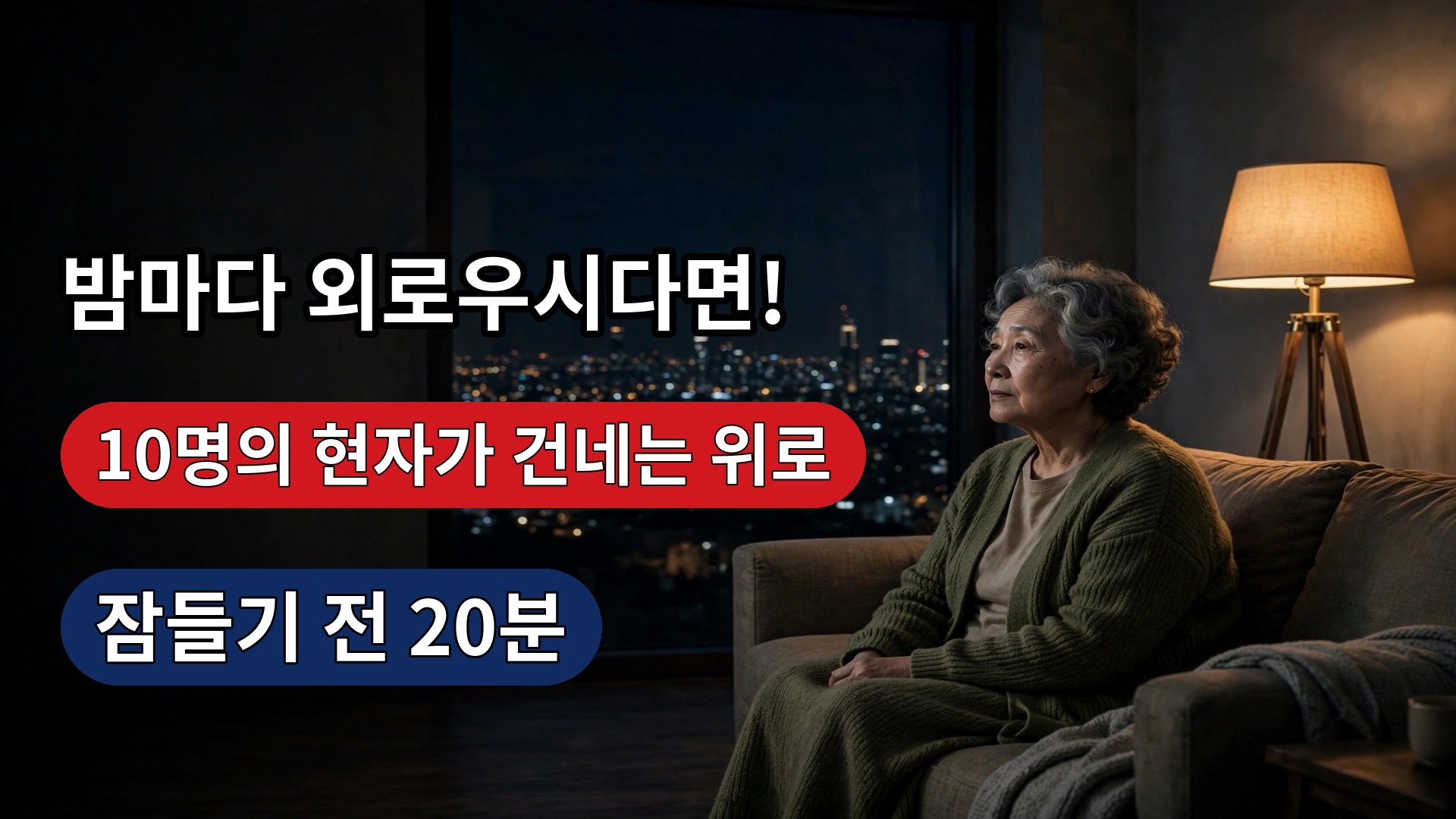
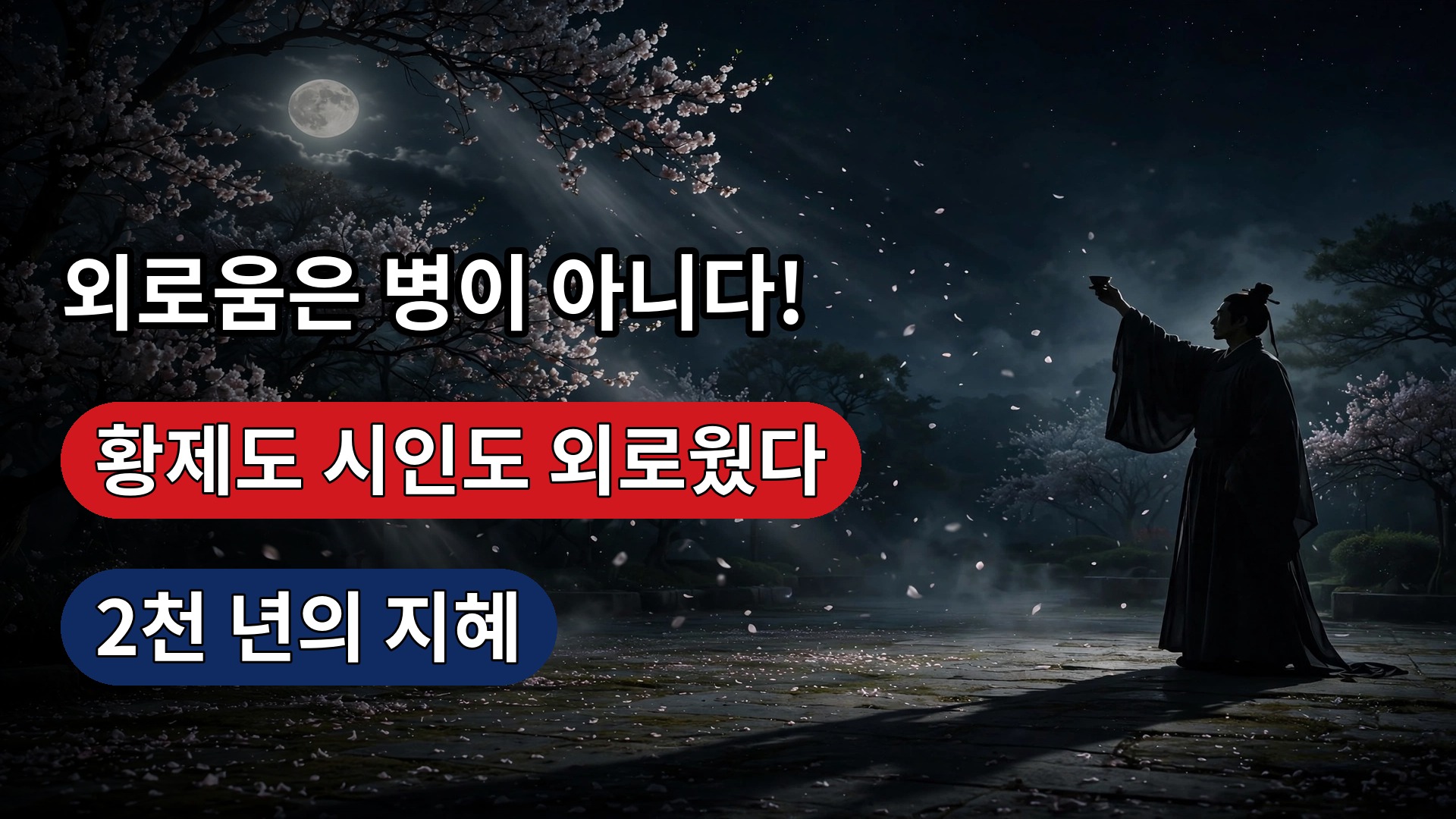
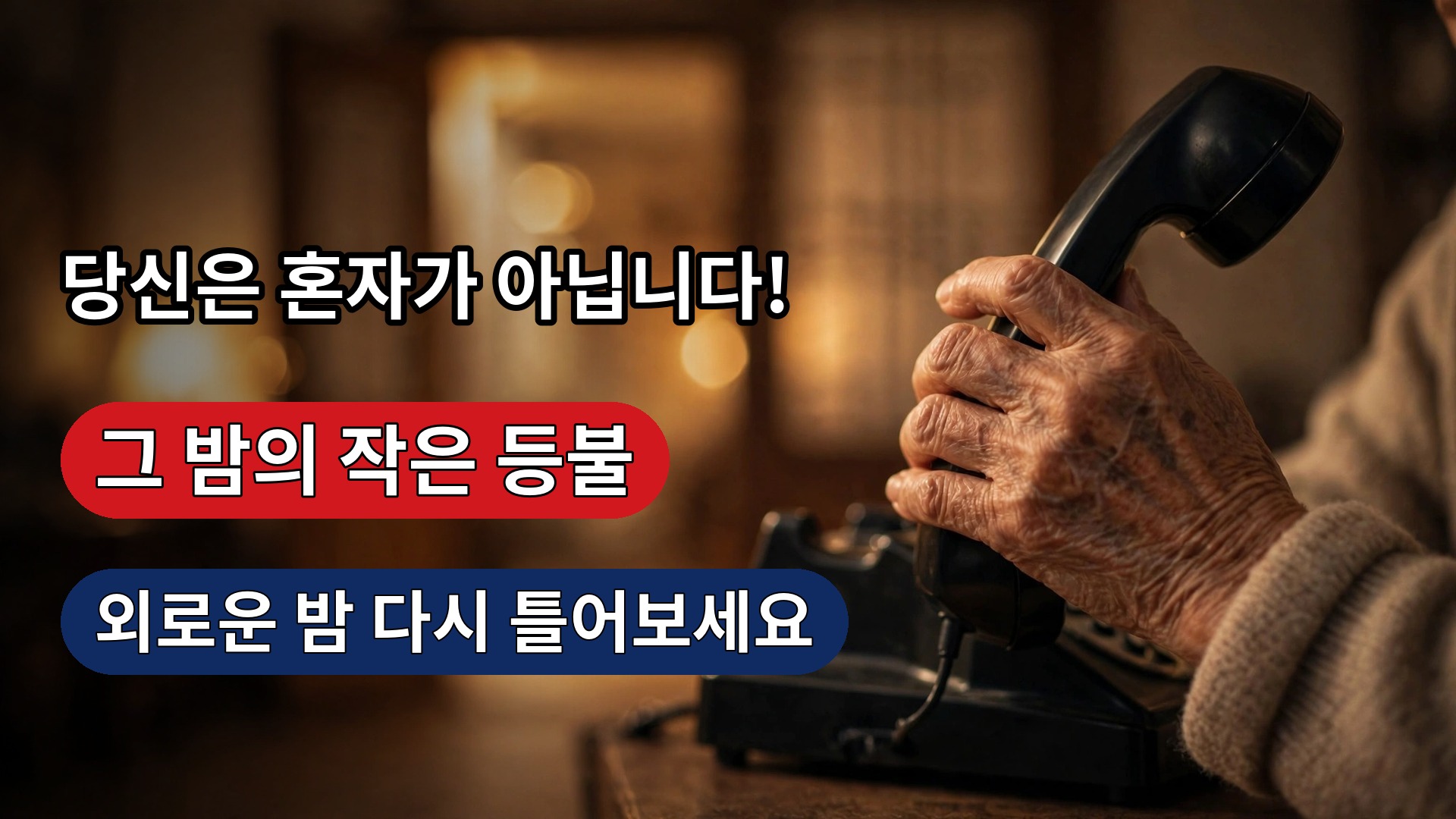
📝 제목 3안
- 외로운 밤에 읽는 명언 10가지
- 밤마다 외로우시다면, 10명의 현자가 건네는 위로
- "고독은 모든 뛰어난 정신의 운명이다" — 외로운 밤의 명언 10선
🎙️ 대본 (약 23분 · Vrew 양식)
📋 Vrew '텍스트로 영상 만들기'에 그대로 붙여넣으세요. 한 줄 = 한 문장 = 한 클립·한 자막 양식입니다.
[제목 3안]
1. 외로운 밤에 읽는 명언 10가지
2. 밤마다 외로우시다면, 10명의 현자가 건네는 위로
3. "고독은 모든 뛰어난 정신의 운명이다" — 외로운 밤의 명언 10선
---
밤이 되면 유독 외로움이 깊어지시죠.
낮에는 바쁘게 움직이다가도,
해가 지고 불을 끄면 빈 방이 더 크게 느껴집니다.
자식들은 각자의 집에 있고, 친구들은 하나둘 연락이 뜸해지고,
배우자가 먼저 떠난 집은 더 적막합니다.
텔레비전 소리로 빈틈을 메워보지만,
소리가 꺼지면 외로움이 다시 밀려옵니다.
이런 밤을 보내시는 분, 혼자가 아닙니다.
외로움은 병이 아닙니다.
사람이기에 느끼는 자연스러운 마음입니다.
밤 11시, 불을 끄고 누웠는데 잠이 오지 않는 밤.
시계 초침 소리만 들립니다.
누군가에게 전화하고 싶지만 "밤늦게 미안해서" 참게 됩니다.
그 마음, 잘 압니다.
오늘 이 영상이 그 밤의 작은 등불이 되길 바랍니다.
쇼펜하우어, 아리스토텔레스, 파스칼, 마르쿠스 아우렐리우스,
몽테뉴, 소로우, 릴케, 괴테, 에피쿠로스, 이백.
동서양을 넘나드는 열 명의 현자가 오늘 밤 당신의 벗이 됩니다.
편하게 누워서 들어도 됩니다.
눈을 감고 들어도 됩니다.
말이 스르르 스며들게 두세요.
오늘은 이 외로움을 다스리는 지혜를 2천 년의 시간을 건너온 열
명의 현자에게 물어보려 합니다.
철학자, 시인, 황제까지.
그들은 모두 외로움을 겪었고, 그것을 글로 남겼습니다.
오늘의 열 마디는 모두 그분들의 실제 저작에서 가져온 진짜
구절입니다.
출처가 불분명한 말은 넣지 않았습니다.
끝까지 들으시면, 외로운 밤이 조금 달라질 겁니다.
이 영상은 약 20분 분량입니다.
차 한 잔과 함께 편하게 들어주세요.
중간에 쉬어가셔도 됩니다.
자, 시작합니다.
본격적으로 시작하기 전에,
외로움에 대한 오해 두 가지를 풀어보겠습니다.
첫째, 외로움은 약한 사람의 것이라는 오해.
천만의 말씀입니다.
외로움은 마음이 살아 있다는 증거입니다.
아무것도 느끼지 못하는 게 더 슬픈 일입니다.
둘째, 외로움은 없애야 한다는 오해.
외로움은 없애는 게 아니라 다루는 것입니다.
파도처럼 밀려왔다 밀려가는 것.
파도를 없앨 순 없지만, 파도타기는 배울 수 있습니다.
오늘의 열 마디는 그 파도타기를 가르쳐주는 열 명의 스승입니다.
첫 번째 명언입니다.
독일의 철학자 쇼펜하우어의 말입니다.
"고독은 모든 뛰어난 정신의 운명이다."
독일어 원문은 이렇습니다.
"아인잠카이트 이스트 다스 로스 알러 헤어보어라겐더 가이스터."
『여록과 부록』 2권에 실린 구절로,
「인생의 지혜에 대한 잠언」 5장에 나옵니다.
쇼펜하우어는 1788년에 태어난 철학자로,
평생을 외롭게 살았습니다.
어머니와는 사이가 나빴고, 결혼도 하지 않았으며,
주요 저작은 출간 후 30년 가까이 아무도 읽지 않았습니다.
그런 그가 일흔이 넘어서야 세상의 인정을 받았습니다.
그가 말하는 고독은 버림받은 외로움이 아닙니다.
깊이 생각하는 사람이 자연스럽게 맞이하는 운명이라는 뜻입니다.
밤에 혼자 있는 시간이 길어질 때,
'이런 내가 이상한 걸까' 자책하지 마세요.
그 시간은 당신을 더 깊게 만드는 운명 같은 시간일 수 있습니다.
그는 예순두 살에 이 글을 썼습니다.
나이가 들어서야 깨달은 진실이었습니다.
젊을 때는 외로움이 두려웠지만,
나이 들어보니 외로움 속에서 가장 깊은 생각이 자란다는 걸
알았습니다.
외로움은 결핍이 아니라 성숙입니다.
사람들 틈에 있어도 외로운 때가 있습니다.
그건 당신이 얕은 관계에 만족하지 못하는 깊이의 증거입니다.
밤에 혼자 있는 당신, 당신은 깊어지고 있는 중입니다.
자식들이 바빠서 전화 한 통 없는 날, 서운해하지 마세요.
그 시간에 당신만의 깊이가 자랍니다.
책 한 권, 차 한 잔, 혼자만의 시간을 즐겨보세요.
외로움은 깊이의 다른 이름입니다.
오늘 밤 당신의 외로움이 깊이로 바뀌길 바랍니다.
두 번째 명언입니다.
그리스의 철학자 아리스토텔레스의 말입니다.
"혼자 살 수 있는 자는 야수이거나 신이다."
『정치학』 1권에 나오는 구절입니다.
아리스토텔레스는 기원전 384년에 태어나 플라톤의 제자로 철학을
배운 뒤, 알렉산드로스 대왕의 스승이 된 인물입니다.
그가 말하려는 건 단순합니다.
사람은 원래 함께 살도록 만들어졌다는 것입니다.
그러니 외로움을 느끼는 건 당신이 고장 났다는 증거가 아닙니다.
오히려 당신이 제대로 된 사람이라는 증거입니다.
연결을 원하고, 누군가를 그리워하는 마음.
그건 인간의 본래 모습입니다.
외로움을 느낄 때 스스로를 탓하지 마세요.
그건 야수도, 신도 아닌, 사람이 느끼는 당연한 마음입니다.
그는 우정에 대해서도 깊이 썼습니다.
『니코마코스 윤리학』 8권에서 우정을 인생의 큰 행복이라 했습니다.
외로움을 느낀다는 건 아직 누군가를 사랑할 마음이 살아 있다는
뜻입니다.
그 마음이 살아 있는 한, 당신은 결코 혼자가 아닙니다.
연결을 원하는 마음 자체가 이미 연결의 시작입니다.
경로당에서, 이웃과, 작은 인사를 나눠보세요.
거창한 만남이 아니어도 됩니다.
마주 보고 웃는 것만으로도 마음은 연결됩니다.
외로움은 혼자만의 것이 아닙니다.
나누면 반이 됩니다.
세 번째 명언입니다.
프랑스의 사상가 파스칼의 말입니다.
"인간의 모든 불행은 방에 고요히 앉아 있지 못하는 데서 온다."
『팡세』 139번 단장에 나오는 구절입니다.
파스칼은 1623년에 태어난 천재로, 수학자이자 물리학자,
그리고 신앙의 사상가였습니다.
서른아홉의 짧은 생을 살았지만,
그가 남긴 짧은 메모들은 오늘날까지 읽힙니다.
그는 사람들이 왜 끊임없이 밖으로 나가려 하는지 물었습니다.
사람들을 만나고, 소음을 찾고, 바쁘게 움직이는 이유 말입니다.
그의 답은 이랬습니다.
고요히 혼자 있으면 자기 마음을 마주해야 하기 때문입니다.
외로움이 두려워 텔레비전을 크게 틀어놓는다면,
그건 이상한 게 아닙니다.
다만 가끔은 소리를 줄이고, 고요 속에 앉아 있는 연습을 해보세요.
처음엔 어색하지만,
그 고요 속에서 자기 마음을 처음 만날 수 있습니다.
『팡세』는 그가 죽은 뒤에 출간된 메모 모음입니다.
그는 스스로에게 물었습니다.
"왜 나는 가만히 있지 못하는가."
그 답이 이 한 문장이었습니다.
그는 외로움을 피하려 애쓰는 게 아니라,
고요 속에 앉는 연습을 권했습니다.
오늘 밤 5분만 해보세요.
불을 끄고 창밖을 바라보세요.
아무것도 하지 않는 5분.
그 5분이 마음을 쉬게 합니다.
라디오를 끄고, 텔레비전을 끄고, 5분만 고요해 보세요.
처음엔 불안할 수 있습니다.
하지만 그 불안을 지나면 평온이 옵니다.
고요는 외로움의 반대가 아닙니다.
고요는 외로움을 다스리는 약입니다.
네 번째 명언입니다.
로마의 황제 마르쿠스 아우렐리우스의 말입니다.
"가장 고요하고 근심 없는 피난처는 자기 자신의 영혼이다."
『명상록』 4권 3장에 나오는 구절입니다.
그는 161년부터 180년까지 로마 제국을 다스린 황제였습니다.
전쟁터의 막사에서, 남들이 볼 거라곤 생각도 못한 일기를 썼습니다.
그게 바로 『명상록』입니다.
황제는 이렇게 적었습니다.
사람들은 시골집, 바닷가, 산속에 피난처를 찾으려 한다고.
나 자신도 그런 곳을 간절히 원한다고.
하지만 언제든 원하면 자기 내면으로 물러날 수 있다고.
어디에도 자기 영혼보다 고요한 피난처는 없다고 말입니다.
외로울 때 어딘가로 도망가고 싶어지시죠.
그런데 가장 가까운 피난처는 밖이 아니라 안입니다.
눈을 감고 깊이 숨을 쉬어보세요.
그곳에 당신만의 고요한 방이 있습니다.
그는 19년 동안 황제로 살며 전쟁터에서 밤을 새운 적이
많았습니다.
그럴 때마다 이 일기를 썼습니다.
황제에게도 외로운 밤이 있었습니다.
권력과 부가 외로움을 막아주지 못했습니다.
그가 찾은 답은 내면이었습니다.
눈을 감고 천천히 호흡하세요.
들이쉬고, 내쉬고.
마음속에 작은 방을 그려보세요.
그 방에 들어가 쉬는 겁니다.
누구의 허락도 필요 없습니다.
잠이 오지 않는 밤, 이부자리에서 뒤척이지 마세요.
일어나 차를 한 잔 타세요.
창가에 앉아 호흡하세요.
내면의 방으로 들어가는 겁니다.
황제도 했던 방법입니다.
다섯 번째 명언입니다.
프랑스의 사상가 몽테뉴의 말입니다.
"세상에서 가장 위대한 일은 자기 자신에게 속하는 법을 아는
것이다."
『수상록』 1권 38장 「고독에 대하여」에 나오는 구절입니다.
몽테뉴는 1533년에 태어난 귀족으로,
서른여덟 살에 관직을 그만두고 자신의 서재 탑에 들어갔습니다.
그리고 10년 넘게 자기 자신을 관찰하며 글을 썼습니다.
그게 『수상록』입니다.
그는 말했습니다.
남에게 빌려줄 수는 있어도, 자신까지 내주어서는 안 된다고.
사람들과 어울리되, 마음의 주인은 자신이어야 한다고 말입니다.
나이가 들면 관계가 줄어듭니다.
그걸 상실로만 보지 마세요.
자기 자신에게 돌아갈 시간으로 보세요.
혼자 밥을 먹고, 혼자 산책하고, 혼자만의 시간을 즐기는 법.
그게 세상에서 가장 위대한 일입니다.
그는 서재 탑에서 혼자 묻고 답했습니다.
"나는 누구인가."
10년의 기록이 3권의 책이 되었습니다.
그는 외로움을 두려워하지 않았습니다.
오히려 외로움을 공부했습니다.
나이가 들면 혼자 있는 시간이 늘어납니다.
그 시간을 자기 공부의 시간으로 바꾸세요.
오늘 하루를 돌아보세요.
잘한 일 하나, 고마운 일 하나.
자기 자신과 대화하는 밤.
그게 몽테뉴가 말한 가장 위대한 일입니다.
은퇴 후 시간이 많아졌습니다.
그 시간을 허송하지 마세요.
몽테뉴처럼 자신을 관찰하세요.
오늘 느낀 것을 적어보세요.
고마웠던 일, 서운했던 일.
적다 보면 마음이 정리됩니다.
다섯 마디를 들었습니다.
잠시 숨을 고르고 가겠습니다.
차 한 모금 하세요.
이제 후반 다섯 마디입니다.
밤이 깊어질수록 말은 더 깊어집니다.
여섯 번째 명언입니다.
미국의 사상가 헨리 데이비드 소로우의 말입니다.
"고독만큼 사귀기 좋은 벗을 나는 일찍이 만나지 못했다."
『월든』 5장 「고독」에 나오는 구절입니다.
소로우는 1845년,
스물여덟 살의 나이에 숲속 호숫가의 작은 오두막에 들어갔습니다.
2년 2개월 동안 혼자 살며 자연과 책과 사색으로 지냈습니다.
그 기록이 『월든』입니다.
그는 이렇게 썼습니다.
사람들 사이에 나가 있을 때가 방에 혼자 있을 때보다 더 외롭다고.
고독은 사람들 사이의 거리가 아니라 마음의 상태라고 말입니다.
외로움과 고독은 다릅니다.
외로움은 연결이 끊긴 아픔이고, 고독은 스스로 선택한 충만함입니다.
오늘 밤 혼자 있는 시간을 외로움이 아니라 고독으로 불러보세요.
이름을 바꾸는 것만으로도 밤의 맛이 달라집니다.
그는 숲에서 콩을 심고, 책을 읽고, 호수를 바라보며 살았습니다.
돈도, 명예도 없이 가장 부유한 2년을 보냈다고 했습니다.
자연은 말없이 위로합니다.
바람 소리, 물결 소리, 새벽 안개 속의 새소리.
외로울 때 창문을 열어보세요.
자연의 소리를 들어보세요.
세상에는 당신을 잊은 적 없는 벗들이 있습니다.
새벽에 일찍 깨신다면, 가까운 공원을 걸어보세요.
아직 잠든 세상의 고요함.
새소리, 바람 소리.
그게 소로우의 숲입니다.
집 앞에서도 만날 수 있습니다.
숲이 멀다면 창가면 됩니다.
하늘을 올려다보세요.
일곱 번째 명언입니다.
오스트리아의 시인 릴케의 말입니다.
"외로움을 사랑하십시오."
『젊은 시인에게 보내는 편지』에 나오는 구절입니다.
릴케는 1875년에 태어난 시인으로,
1903년 한 젊은 시인의 편지를 받았습니다.
외롭고 불안하다는 고백에 그는 이렇게 답했습니다.
외로움을 사랑하라고.
외로움이 주는 아픔을 견디며 그 안에서 노래를 길어 올리라고
말입니다.
외로움과 싸우지 마세요.
외로움을 미워하지도 마세요.
외로움은 당신을 찾아온 손님 같은 것입니다.
문을 열어주고 차를 내어주세요.
"와줘서 고마워.
덕분에 나를 돌아보게 됐어."
이렇게 말해보는 겁니다.
외로움을 사랑하는 순간, 외로움은 적이 아니라 스승이 됩니다.
그는 1903년부터 1908년까지 젊은 시인과 열 통의 편지를
주고받았습니다.
편지마다 같은 조언이었습니다.
안으로 들어가라고.
외로움은 창작의 자양분이라고 했습니다.
외로울 때 글을 써보세요.
일기라도 좋습니다.
마음을 종이에 내려놓으면 외로움이 문장이 됩니다.
문장이 되면 외로움은 더 이상 적이 아닙니다.
편지를 써보세요.
자식에게, 친구에게.
보내지 않아도 됩니다.
쓰는 것만으로 마음이 풀립니다.
릴케도 편지로 외로움을 이겨냈습니다.
당신의 외로움도 글이 될 수 있습니다.
일기장에 한 줄만 적어보세요.
여덟 번째 명언입니다.
독일의 대문호 괴테의 시 구절입니다.
"모든 산봉우리 위에 고요가 있다.
머잖아 그대도 쉬리라."
「방랑자의 밤 노래」 두 번째 시의 첫머리와 끝 구절입니다.
괴테는 1780년 9월의 어느 저녁,
일메나우의 키켈한 산에 올랐습니다.
사냥 오두막의 나무 벽에 연필로 이 시를 직접 썼습니다.
"모든 산봉우리 위에 고요가 있고,
모든 나뭇가지 끝에는 바람 한 점 느껴지지 않는다.
숲속의 새들은 잠잠하다.
기다려라, 머잖아 그대도 쉬리라."
외로운 밤, 잠이 오지 않을 때 이 시를 속으로 읊어보세요.
산도 쉬고, 새도 쉬고, 이제 당신 차례라고,
괴테가 250년 전 밤에 당신에게 속삭이는 것 같습니다.
그는 51년 뒤인 1831년,
여든두 살의 노인이 되어 그 오두막을 다시 찾았습니다.
벽에 새겨진 시를 읽고 눈물을 흘렸다고 전해집니다.
"기다려라, 머잖아 그대도 쉬리라."
젊은 날의 자신이 늙은 자신에게 건넨 위로였습니다.
당신도 젊은 날의 당신에게 편지를 써보세요.
그때의 당신이 지금의 당신을 위로할 겁니다.
오늘 밤 달을 보세요.
구름 뒤에 숨어 있어도 달은 그곳에 있습니다.
당신의 외로움도 구름 같은 것입니다.
지나갑니다.
아홉 번째 명언입니다.
그리스의 철학자 에피쿠로스의 말입니다.
"지혜가 마련해 주는 것 중 가장 큰 것은 우정의 소유이다."
『주요 교설』 27번에 나오는 구절입니다.
에피쿠로스는 기원전 341년에 태어난 철학자로,
아테네에 '정원'이라는 공동체를 세웠습니다.
제자들과 함께 밥을 먹고, 이야기를 나누며 살았습니다.
쾌락을 말한 철학자로 오해받지만,
그가 말한 최고의 기쁨은 친구와 나누는 소박한 삶이었습니다.
외로움이 깊어질 때 기억해야 할 한 가지가 있습니다.
문밖에는 아직 당신을 기다리는 사람이 있다는 것입니다.
오래된 친구에게 전화 한 통, 이웃에게 건네는 인사 한마디.
우정은 거창한 게 아닙니다.
지혜가 주는 가장 큰 선물은 바로 사람입니다.
그의 정원은 철학 학교가 아니라 삶의 공동체였습니다.
함께 밥을 먹고, 함께 웃고, 함께 아픔을 나눴습니다.
그는 말했습니다.
친구와 나누는 보리죽 한 그릇이 혼자 먹는 진수성찬보다 낫다고.
외로울 땐 기다리지 마세요.
먼저 다가가세요.
먼저 안부를 물어보세요.
당신의 한마디가 누군가의 밤을 밝힙니다.
오늘 저녁, 친구에게 전화 한 통 걸어보세요.
용건이 없어도 됩니다.
"밥은 먹었어?"
한마디.
그 한마디가 우정입니다.
에피쿠로스의 정원은 전화 한 통으로 시작됩니다.
정원에서는 노예도, 여자도, 신분에 상관없이 함께했습니다.
그 시대에는 혁명적인 일이었습니다.
그는 사람을 가리지 않았습니다.
외로움도 사람을 가리지 않습니다.
누구에게나 오지만, 누구나 이겨낼 수 있습니다.
열 번째 명언입니다.
중국 당나라의 시인 이백의 시 구절입니다.
"잔을 들어 밝은 달을 맞이하니,
그림자와 함께 세 사람이 되었네."
「월하독작」 첫머리에 나오는 구절입니다.
이백은 701년에 태어난 시인으로, '시선'이라 불린 천재였습니다.
744년, 벼슬에서 물러난 뒤의 어느 봄밤,
꽃밭에 술 한 병을 놓고 홀로 마시며 이 시를 썼습니다.
"꽃밭에 술 한 병, 홀로 마시니 함께할 이가 없네.
잔을 들어 밝은 달을 맞이하니, 그림자와 함께 세 사람이 되었네."
외로움을 달과 그림자를 벗 삼아 잔치로 바꾼 시인의 여유입니다.
오늘 밤 달이 보이면 창문을 열어보세요.
이백처럼 달에게 잔을 들어보세요.
외로움을 벗 삼는 낭만,
그게 시인이 우리에게 남긴 마지막 선물입니다.
그는 평생 벼슬과 방랑 사이를 오갔습니다.
뜻을 이루지 못한 밤이 많았습니다.
그런 밤마다 시를 썼습니다.
달은 그를 배신하지 않았고, 그림자는 그를 떠나지 않았습니다.
외로움을 원망 대신 시로 바꾼 것입니다.
당신도 외로운 밤에 시 한 구절을 읊어보세요.
이백의 달이 당신의 창가에도 뜹니다.
이백은 외로움을 시로 바꿨습니다.
당신도 바꿀 수 있습니다.
외로운 밤, 시 한 편을 읽어보세요.
이백의 시가 아니어도 됩니다.
마음에 닿는 글 하나.
그게 당신의 달입니다.
외로움은 누구에게나 옵니다.
시인에게도, 황제에게도, 철학자에게도 왔습니다.
그들은 외로움을 글로 이겼습니다.
당신도 이길 수 있습니다.
방법은 달라도 마음은 같습니다.
열 마디를 다 들었습니다.
열 명의 현자가 한 말을 모아보면, 공통점이 보입니다.
첫째, 외로움을 부끄러워하지 말 것.
둘째, 고요를 두려워하지 말 것.
셋째, 자기 자신과 친해질 것.
넷째, 그래도 사람은 필요할 것.
외로움과 고독 사이, 그 가운데를 걷는 법.
그게 현자들이 2천 년 동안 우리에게 전하려 한 지혜입니다.
영상을 마치기 전에,
오늘 밤 바로 해볼 수 있는 세 가지를 정리해 드립니다.
첫째, 한 마디를 골라 종이에 적어보세요.
마음에 남은 문장을 탁자 위에 올려두세요.
밤에 눈이 가면 위로가 됩니다.
둘째, 5분의 고요를 가져보세요.
불을 끄고 창밖을 바라보는 5분.
아무것도 하지 않아도 됩니다.
셋째, 한 사람에게 안부를 전해보세요.
문자로도 좋습니다.
"잘 지내지?"
한마디면 됩니다.
외로움은 혼자 다스리는 게 아니라 함께 나누며 옅어집니다.
한 번에 복습해 보겠습니다.
쇼펜하우어 — 고독은 뛰어난 정신의 운명.
아리스토텔레스 — 외로움은 인간의 증거.
파스칼 — 고요 속에 앉는 연습.
마르쿠스 아우렐리우스 — 내면으로의 피신.
몽테뉴 — 자기 자신에게 속하는 법.
소로우 — 고독을 벗 삼으라.
릴케 — 외로움을 사랑하라.
괴테 — 머잖아 그대도 쉬리라.
에피쿠로스 — 우정이 가장 큰 선물.
이백 — 달과 그림자와 셋이서.
열 마디 중 한 마디라도 마음에 남으셨다면,
오늘 영상은 성공입니다.
외로움은 사라지지 않습니다.
하지만 바라보는 눈이 달라지면, 외로움은 고독이 되고,
고독은 벗이 됩니다.
오늘 밤 외로우시거든, 이 중 한 마디를 꺼내 읽어보세요.
외로운 밤이 오면 이 영상을 다시 틀어주세요.
열 명의 현자가 당신 곁에 앉아 있을 겁니다.
하지만 바라보는 눈이 달라지면, 외로움은 고독이 되고,
고독은 벗이 됩니다.
오늘 밤 외로우시거든, 이 중 한 마디를 꺼내 읽어보세요.
그리고 꼭 기억해 주세요.
외로움이 깊어져 극단적인 생각이 드실 때는 혼자 견디지 마세요.
외로움은 느낄 수 있지만,
생명을 끊는 선택은 어떤 현자도 권하지 않았습니다.
쇼펜하우어는 삶 자체를 긍정했고,
스토아의 현자들은 이성으로 고통을 다스리라고 했습니다.
사는 동안에는 언제든 마음이 바뀔 수 있습니다.
밤이 지나면 아침이 옵니다.
기억하세요.
어떤 밤도 영원하지 않습니다.
밤이 깊을수록 새벽은 가깝습니다.
당신이 사라지면 당신을 그리워할 사람들이 남습니다.
그분들에게 그 슬픔을 물려주지 마세요.
당신은 아직 할 이야기가 남았고, 들을 귀가 있습니다.
당신의 오늘이 외로웠다면, 그건 당신이 따뜻한 사람이라는 뜻입니다.
차가운 사람은 외로움을 모릅니다.
외로움은 마음의 온도계입니다.
힘드시면 자살예방 상담전화 109번으로 전화해 주세요.
24시간, 언제든 들어주는 분들이 있습니다.
당신은 혼자가 아닙니다.
위로집이 함께합니다.
내일 아침, 해가 뜨면 어제의 외로움은 옅어져 있을 겁니다.
밤은 깊었지만, 당신은 혼자가 아닙니다.
이 영상이 도움이 되셨다면, 외로운 누군가에게 공유해 주세요.
당신의 공유가 누군가의 밤을 밝힙니다.
위로집은 매일 아침 위로 한 줄을 전합니다.
오늘도 들어주셔서 감사합니다.
편안한 밤 되세요.
내일 아침에 다시 만나요.
위로집이었습니다.
🖼️ 이미지 프롬프트 (대본 순서대로)
📋 Vrew 나레이션 재생 중 띄울 배경 이미지용. 따뜻한 힐링 일러스트 스타일.
## 1. 외로운 밤의 방 (나레이션: "밤이 되면 유독 외로움이 깊어지시죠.")
Photorealistic cinematic interior scene, 16:9 aspect ratio, no text, no letters, no signage, no watermark. A quiet Korean living room at night bathed in the warm dim glow of a single floor lamp, an elderly Korean woman in her late 60s, ethnically Korean with natural Korean facial features, must unmistakably read as Korean, not Chinese or Japanese, short gray permed hair, sitting alone on a fabric sofa and gazing toward a dark window, gentle melancholy softening her expression, soft shadows falling across plain wallpaper, a small ceramic teacup steaming on a low wooden table, shallow depth of field, natural realistic skin texture, contemplative lonely nighttime mood, photorealistic detail, 16:9, no text or typography anywhere in the image.

## 2. 꺼진 텔레비전 (나레이션: "텔레비전 소리로 빈틈을 메워보지만,소리가 꺼지면 외로움이 다시 밀려옵니다.")
Photorealistic cinematic interior, 16:9, no text, no letters, no signage. Close-up of an old television switched off, its dark screen faintly reflecting a dim empty Korean living room at night, a tiny red standby light glowing, behind it the soft-focus silhouette of an elderly Korean man with neat gray hair, ethnically Korean with natural Korean facial features, must unmistakably read as Korean, not Chinese or Japanese, seated in an armchair, a remote control resting on a wooden side table, warm tungsten lamplight from the corner, the heavy stillness after the sound stops, shallow depth of field, realistic textures of fabric and wood, lonely evening atmosphere, photorealistic, 16:9, no text or written characters.

## 3. 작은 등불 (나레이션: "오늘 이 영상이 그 밤의 작은 등불이 되길 바랍니다.")
Photorealistic warm symbolic night scene, 16:9, no text, no letters, no signage. A small glowing paper lantern sitting on a wooden windowsill inside a dark quiet Korean room, its soft amber light spilling gently across the sill and the wall, beyond the window a deep blue night with faint distant city lights, a ceramic teacup beside the lantern catching the glow, tiny dust motes drifting in the light, tender hopeful mood of a small light standing against the darkness, shallow depth of field, rich cinematic color grading, fine art photography quality, photorealistic, 16:9, no text or typography.

## 4. 열 명의 현자 (나레이션: "동서양을 넘나드는 열 명의 현자가 오늘 밤 당신의 벗이 됩니다.편하게 누워서 들어도 됩니다.눈을 감고 들어도 됩니다.말이 스르르 스며들게 두세요.오늘은 이 외로움을 다스리는 지혜를 2천 년의 시간을 건너온 열명의 현자에게 물어보려 합니다.")
Photorealistic conceptual library scene, 16:9, no text, no letters, no signage. A vast ancient library corridor stretching into warm golden depth, tall bookshelves on both sides holding thousands of old volumes, soft beams of light falling through high windows, floating dust motes in the light, ten softly glowing empty chairs arranged in a semicircle at the far end as if wise teachers are about to take their seats, a long carpet runner down the middle, timeless reverent atmosphere spanning two thousand years of wisdom, cinematic composition, photorealistic, 16:9, no text or written characters.

## 5. 달라질 밤 (나레이션: "끝까지 들으시면, 외로운 밤이 조금 달라질 겁니다.")
Photorealistic hopeful night scene, 16:9, no text, no letters, no signage. A dark bedroom window viewed from inside at night, the first pale light of dawn beginning to touch the horizon beyond quiet rooftops, the calm silhouette of an elderly person resting peacefully in bed, a warm bedside lamp still glowing softly, the night slowly giving way to morning blue, quiet promise of a changed tomorrow, gentle cinematic lighting, shallow depth of field, natural textures, photorealistic, 16:9, no text or typography.

## 6. 살아 있는 마음 (나레이션: "아무것도 느끼지 못하는 게 더 슬픈 일입니다.")
Photorealistic emotional close-up, 16:9, no text, no letters, no signage. An elderly Korean woman in her 60s, ethnically Korean with natural Korean facial features, must unmistakably read as Korean, not Chinese or Japanese, gentle deep wrinkles and warm glistening eyes holding tender emotion, soft window light sculpting her face, a faint bittersweet smile, blurred cozy home interior behind, shallow depth of field, natural realistic skin texture, intimate portrait photography conveying a heart still alive and feeling, photorealistic, 16:9, no text or written characters.

## 7. 쇼펜하우어의 고독 (나레이션: "고독은 모든 뛰어난 정신의 운명이다.")
Photorealistic historical portrait scene, 16:9, no text, no letters, no signage. Arthur Schopenhauer as an elderly 19th century European philosopher, bald head with distinctive long white side hair, deep-set serious eyes, dark frock coat with high collar, seated in a dim Frankfurt study surrounded by tall bookshelves, a single candle burning on a cluttered desk, dramatic Rembrandt lighting on his weathered face, oil-painting-like photographic realism, contemplative profound solitude, cinematic detail, photorealistic, 16:9, no text or typography.

## 8. 무명의 세월 (나레이션: "『여록과 부록』 2권에 실린 구절로,「인생의 지혜에 대한 잠언」 5장에 나옵니다.쇼펜하우어는 1788년에 태어난 철학자로,평생을 외롭게 살았습니다.어머니와는 사이가 나빴고, 결혼도 하지 않았으며,주요 저작은 출간 후 30년 가까이 아무도 읽지 않았습니다.")
Photorealistic historical scene, 16:9, no text, no letters, no signage. A middle-aged 19th century European philosopher writing alone at a worn wooden desk in a cold dim attic room, quill pen in hand, tall stacks of unsold manuscripts tied with string beside him, pale morning light through a small grimy window, dust particles drifting in the beam, sparse humble furniture, a sense of decades of unrecognized solitary labor, muted desaturated palette, cinematic period detail, photorealistic, 16:9, no text or written characters.

## 9. 자책하지 마세요 (나레이션: "밤에 혼자 있는 시간이 길어질 때,'이런 내가 이상한 걸까' 자책하지 마세요.")
Photorealistic warm night interior, 16:9, no text, no letters, no signage. An elderly Korean woman in her early 70s, ethnically Korean with natural Korean facial features, must unmistakably read as Korean, not Chinese or Japanese, sitting on the edge of her bed at night in a softly lit bedroom, hands gently folded in her lap, looking down with a tender reassuring expression as if comforting herself, warm bedside lamp glow, a folded blanket and a book on the nightstand, intimate compassionate mood, shallow depth of field, natural skin texture, photorealistic, 16:9, no text or typography.

## 10. 성숙의 시간 (나레이션: "외로움은 결핍이 아니라 성숙입니다.")
Photorealistic nature macro scene, 16:9, no text, no letters, no signage. An ancient tree trunk with deeply furrowed bark in a quiet forest, golden light filtering through leaves overhead, a cut stump nearby showing growth rings with a small green seedling sprouting from rich soil beside it, symbolic image of maturity growing through lonely seasons, dramatic warm side lighting, ultra-detailed bark and moss textures, shallow depth of field, meditative peaceful mood, photorealistic, 16:9, no text or written characters.

## 11. 깊이의 다른 이름 (나레이션: "외로움은 깊이의 다른 이름입니다.")
Photorealistic ocean scene at night, 16:9, no text, no letters, no signage. A calm deep sea surface under a bright full moon, the moon's reflection forming a long silver path across dark water, subtle mysterious depth visible beneath gentle waves, tiny stars scattered overhead, tranquil majestic mood of hidden profundity, long exposure silky water texture, deep blue and silver palette, meditative stillness, photorealistic, 16:9, no text or typography.

## 12. 아리스토텔레스의 학당 (나레이션: "두 번째 명언입니다.그리스의 철학자 아리스토텔레스의 말입니다."혼자 살 수 있는 자는 야수이거나 신이다."『정치학』 1권에 나오는 구절입니다.아리스토텔레스는 기원전 384년에 태어나 플라톤의 제자로 철학을배운 뒤, 알렉산드로스 대왕의 스승이 된 인물입니다.")
Photorealistic historical scene, 16:9, no text, no letters, no signage. Aristotle as a bearded ancient Greek philosopher in his 50s wearing a draped himation, walking and talking with students along a colonnaded peripatos path in ancient Athens, olive trees and marble columns around, warm Mediterranean afternoon light, scrolls in hand, lively philosophical discussion, historically accurate 4th century BC attire and architecture, cinematic depth, photorealistic, 16:9, no text or written characters.

## 13. 탓하지 마세요 (나레이션: "외로움을 느낄 때 스스로를 탓하지 마세요.")
Photorealistic emotional close-up, 16:9, no text, no letters, no signage. An elderly Korean man in his late 60s, ethnically Korean with natural Korean facial features, must unmistakably read as Korean, not Chinese or Japanese, neat short gray hair, eyes gently closed with a forgiving peaceful expression, one hand resting over his heart, soft morning window light on his face, blurred warm home interior behind, shallow depth of field, natural realistic skin texture, self-compassion and comfort, intimate portrait photography, photorealistic, 16:9, no text or typography.

## 14. 살아 있는 마음 (나레이션: "그 마음이 살아 있는 한, 당신은 결코 혼자가 아닙니다.")
Photorealistic symbolic warm scene, 16:9, no text, no letters, no signage. Two hands reaching toward each other across a small gap, an elderly Korean hand with age spots and a younger hand almost touching, warm golden hour backlight, soft bokeh of a park at sunset behind, hopeful emotional moment of human connection, detailed natural skin texture, cinematic lighting, hopeful tender mood, photorealistic, 16:9, no text or written characters.

## 15. 파스칼의 질문 (나레이션: ""인간의 모든 불행은 방에 고요히 앉아 있지 못하는 데서 온다."")
Photorealistic historical scene, 16:9, no text, no letters, no signage. Blaise Pascal as a frail thoughtful European man in his 30s with long dark hair, 17th century French scholarly attire, seated alone at a candlelit desk covered with geometric diagrams and manuscript pages, deep night outside a leaded window, chin resting on his hand in deep contemplation, chiaroscuro lighting, authentic 1600s Parisian study detail, melancholic genius atmosphere, photorealistic, 16:9, no text or typography.

## 16. 끊임없이 밖으로 (나레이션: "그는 사람들이 왜 끊임없이 밖으로 나가려 하는지 물었습니다.")
Photorealistic cinematic street scene at dusk, 16:9, no text, no letters, no signage. A busy modern Korean city street at dusk, crowds of hurrying people with blurred motion streaming past bright shopfronts, one elderly Korean man standing still amid the flow, ethnically Korean with natural Korean facial features, must unmistakably read as Korean, not Chinese or Japanese, watching the rushing crowd with quiet questioning eyes, neon and streetlight glow, cinematic contrast between motion and stillness, photorealistic, 16:9, no text or written characters.

## 17. 고요 속의 만남 (나레이션: "고요히 혼자 있으면 자기 마음을 마주해야 하기 때문입니다.외로움이 두려워 텔레비전을 크게 틀어놓는다면,그건 이상한 게 아닙니다.다만 가끔은 소리를 줄이고, 고요 속에 앉아 있는 연습을 해보세요.처음엔 어색하지만,그 고요 속에서 자기 마음을 처음 만날 수 있습니다.")
Photorealistic serene interior, 16:9, no text, no letters, no signage. An elderly Korean man in his late 60s, ethnically Korean with natural Korean facial features, must unmistakably read as Korean, not Chinese or Japanese, sitting quietly in meditation posture on a cushion by a large window at dawn, eyes gently closed, serene expression, soft blue morning light washing over a minimalist room, a small potted plant on the windowsill, absolute stillness and peace, fine art photography, photorealistic, 16:9, no text or typography.

## 18. 창밖을 바라보는 5분 (나레이션: "불을 끄고 창밖을 바라보세요.")
Photorealistic night interior, 16:9, no text, no letters, no signage. View from inside a dark Korean apartment looking out a large window at a quiet city night, distant apartment lights scattered like stars, the calm silhouette of an elderly person sitting still in a chair facing the window, a cup of tea steaming on the windowsill, deep blue night tones, contemplative peaceful calm, photorealistic, 16:9, no text or written characters.

## 19. 내면의 피난처 (나레이션: ""가장 고요하고 근심 없는 피난처는 자기 자신의 영혼이다."")
Photorealistic historical scene, 16:9, no text, no letters, no signage. Marcus Aurelius as a weary Roman emperor in his 50s with gray-streaked beard and philosopher's brow, simple military cloak over a tunic, writing in a small notebook by oil lamp inside a campaign tent at night, maps and a sheathed sword resting nearby, rain faintly streaking the canvas, profound inner solitude despite imperial power, cinematic chiaroscuro, photorealistic, 16:9, no text or typography.

## 20. 황제의 기록 (나레이션: "황제는 이렇게 적었습니다.")
Photorealistic intimate historical interior, 16:9, no text, no letters, no signage. Inside a Roman campaign tent at night, a small wooden writing desk with a flickering oil lamp, an open wax tablet notebook with a bronze stylus, a half-finished letter, the emperor's worn leather armor hanging on a wooden stand, raindrops streaking the tent canvas, deep shadows against warm lamplight, lonely contemplative mood of a ruler writing only to himself, ultra-detailed textures, photorealistic, 16:9, no text or written characters.

## 21. 눈을 감고 호흡하세요 (나레이션: "눈을 감고 깊이 숨을 쉬어보세요.")
Photorealistic calming close-up, 16:9, no text, no letters, no signage. Close-up of an elderly Korean woman in her 60s, ethnically Korean with natural Korean facial features, must unmistakably read as Korean, not Chinese or Japanese, eyes closed in peaceful slow breathing, soft morning light on her serene face, faint visible breath in cool air, blurred green garden bokeh behind, ultimate tranquility and retreat into oneself, macro portrait detail with natural skin texture, healing mood, photorealistic, 16:9, no text or typography.

## 22. 마음속 작은 방 (나레이션: "마음속에 작은 방을 그려보세요.")
Photorealistic conceptual scene, 16:9, no text, no letters, no signage. A tiny warm glowing room floating like a lantern inside a vast calm dark blue space, seen through an open doorway a cozy armchair and a small lamp with golden light, soft steps of light leading inward, symbolic visualization of the inner citadel where the soul retreats, dreamlike yet photographic realism, deep blue surroundings with a golden center, peaceful and safe, photorealistic, 16:9, no text or written characters.

## 23. 몽테뉴의 지혜 (나레이션: "내면의 방으로 들어가는 겁니다.황제도 했던 방법입니다.다섯 번째 명언입니다.프랑스의 사상가 몽테뉴의 말입니다."세상에서 가장 위대한 일은 자기 자신에게 속하는 법을 아는것이다."")
Photorealistic historical scene, 16:9, no text, no letters, no signage. Michel de Montaigne as a thoughtful 16th century French nobleman in his 40s with a trimmed beard, wearing a dark doublet, seated in a round tower library lined floor to ceiling with books, a large wooden desk with manuscripts and a quill, carved ceiling beams, panoramic view of the French countryside through narrow windows, scholarly peaceful solitude, warm window light, photorealistic, 16:9, no text or typography.

## 24. 서재 탑으로 (나레이션: "프랑스의 사상가 몽테뉴의 말입니다."세상에서 가장 위대한 일은 자기 자신에게 속하는 법을 아는것이다."『수상록』 1권 38장 「고독에 대하여」에 나오는 구절입니다.몽테뉴는 1533년에 태어난 귀족으로,서른여덟 살에 관직을 그만두고 자신의 서재 탑에 들어갔습니다.")
Photorealistic historical scene, 16:9, no text, no letters, no signage. A 16th century French stone tower library at golden hour, a nobleman in his late 30s in period attire climbing a spiral stone staircase carrying a stack of books, tall narrow windows casting long beams of light, walls lined with ancient volumes, the liberating moment of retiring from public office into a life of study, rich authentic period detail, warm cinematic light, photorealistic, 16:9, no text or written characters.

## 25. 가장 위대한 일 (나레이션: "그게 세상에서 가장 위대한 일입니다.")
Photorealistic warm interior, 16:9, no text, no letters, no signage. An elderly Korean man in his 70s, ethnically Korean with natural Korean facial features, must unmistakably read as Korean, not Chinese or Japanese, sitting alone at a low wooden table in a traditional Korean room, peacefully drinking tea from a ceramic cup, gentle contented smile, warm afternoon light through a lattice window, books and a small plant nearby, dignified serene enjoyment of one's own company, photorealistic, 16:9, no text or typography.

## 26. 하루를 돌아보며 (나레이션: "오늘 하루를 돌아보세요.")
Photorealistic warm evening scene, 16:9, no text, no letters, no signage. An elderly Korean woman in her late 60s, ethnically Korean with natural Korean facial features, must unmistakably read as Korean, not Chinese or Japanese, sitting by a window at sunset with a warm shawl over her shoulders, gazing thoughtfully at the orange sky, a closed diary resting on her lap, soft golden light on her reflective gentle face, quiet moment of reviewing the day with gratitude, shallow depth of field, natural skin texture, photorealistic, 16:9, no text or written characters.

## 27. 잠시 숨 고르기 (나레이션: "잠시 숨을 고르고 가겠습니다.")
Photorealistic cozy scene, 16:9, no text, no letters, no signage. A steaming cup of traditional Korean tea on a low wooden table beside a window, soft evening light, an elderly person's hands wrapped warmly around the cup just out of sharp focus, gentle steam curling upward, a small plate of rice cakes beside the cup, peaceful intermission mood, shallow depth of field, warm amber tones, ultra-detailed steam and ceramic texture, photorealistic, 16:9, no text or typography.

## 28. 월든으로의 결심 (나레이션: "여섯 번째 명언입니다.미국의 사상가 헨리 데이비드 소로우의 말입니다."고독만큼 사귀기 좋은 벗을 나는 일찍이 만나지 못했다."『월든』 5장 「고독」에 나오는 구절입니다.소로우는 1845년,스물여덟 살의 나이에 숲속 호숫가의 작은 오두막에 들어갔습니다.")
Photorealistic historical scene, 16:9, no text, no letters, no signage. A young Henry David Thoreau in his late 20s, bearded, in simple 1840s work clothes, carrying an axe and a bundle of rough boards through a sunlit pine forest toward a clearing where a small cabin frame stands, determined purposeful stride, dappled forest light, the beginning of a two-year experiment in deliberate solitude, authentic period detail, cinematic composition, photorealistic, 16:9, no text or written characters.

## 29. 외로움과 고독 (나레이션: "외로움과 고독은 다릅니다.")
Photorealistic conceptual scene, 16:9, no text, no letters, no signage. A lone figure standing at a forest fork where one path leads into a dark crowded city street full of blurred hurrying people and the other into a sunlit quiet forest clearing, the figure turning toward the warm forest light, visual metaphor distinguishing painful loneliness from chosen solitude, cinematic composition, rich color contrast, photorealistic, 16:9, no text or typography.

## 30. 말없는 위로 (나레이션: "자연은 말없이 위로합니다.")
Photorealistic nature scene, 16:9, no text, no letters, no signage. A quiet pine forest at dawn with soft mist drifting between tall trunks, gentle sunbeams piercing through the canopy, a small stream reflecting the light, a bird perched on a mossy branch, dew sparkling on ferns, the silent comforting presence of nature, fine art landscape photography, peaceful healing mood, ultra-detailed textures, photorealistic, 16:9, no text or written characters.

## 31. 집 앞 공원 (나레이션: "집 앞에서도 만날 수 있습니다.")
Photorealistic morning scene, 16:9, no text, no letters, no signage. An elderly Korean man in his 70s, ethnically Korean with natural Korean facial features, must unmistakably read as Korean, not Chinese or Japanese, taking a slow morning walk in a small neighborhood park at dawn, soft mist between pine trees, a few birds on an empty bench, gentle sunlight breaking through branches, peaceful everyday encounter with nature's comfort, realistic active senior lifestyle, photorealistic, 16:9, no text or typography.

## 32. 릴케의 답장 (나레이션: "외롭고 불안하다는 고백에 그는 이렇게 답했습니다.")
Photorealistic historical scene, 16:9, no text, no letters, no signage. Rainer Maria Rilke as a young European poet in 1903 with intense eyes and dark wavy hair, seated at a writing desk in a Parisian garret, penning a heartfelt letter by soft window light, scattered manuscript pages and a small vase of dried flowers on the desk, overcast daylight, profound empathy in his expression, authentic early 1900s European interior, cinematic detail, photorealistic, 16:9, no text or written characters.

## 33. 찾아온 손님 (나레이션: "외로움은 당신을 찾아온 손님 같은 것입니다.")
Photorealistic warm symbolic scene, 16:9, no text, no letters, no signage. An open wooden front door of a cozy Korean home at dusk with warm golden light spilling out onto the doorstep, a pair of neat guest slippers placed at the entrance as if welcoming a visitor, a small potted plant beside the door, soft blue evening beyond the warm interior, heartwarming metaphor of welcoming loneliness as an honored guest, gentle and tender, photorealistic, 16:9, no text or typography.

## 34. 문장이 되는 외로움 (나레이션: "마음을 종이에 내려놓으면 외로움이 문장이 됩니다.")
Photorealistic close-up still life, 16:9, no text, no letters, no signage. An open diary with gently blurred handwritten lines and a fountain pen resting across the page, warm lamplight from the side casting soft shadows, a small pressed flower marking the page, shallow depth of field, cozy nostalgic mood of evening journaling, ultra-detailed paper and ink texture, the quiet moment when feelings become words, photorealistic, 16:9, no text or typography.

## 35. 괴테의 밤 노래 (나레이션: "독일의 대문호 괴테의 시 구절입니다.")
Photorealistic night mountain scene, 16:9, no text, no letters, no signage. Snow-dusted mountain peaks under a vast starry night sky, absolute stillness, faint moonlight tracing pine silhouettes, a tiny warm light glowing from a distant wooden hunting hut window, profound silence made visible, the opening of a famous night song, fine art night photography, deep blue and silver palette, photorealistic, 16:9, no text or written characters.

## 36. 산봉우리의 고요 (나레이션: "「방랑자의 밤 노래」 두 번째 시의 첫머리와 끝 구절입니다.괴테는 1780년 9월의 어느 저녁,일메나우의 키켈한 산에 올랐습니다.사냥 오두막의 나무 벽에 연필로 이 시를 직접 썼습니다."모든 산봉우리 위에 고요가 있고,모든 나뭇가지 끝에는 바람 한 점 느껴지지 않는다.")
Photorealistic tranquil mountain scene at dusk, 16:9, no text, no letters, no signage. Layered mountain ridges fading into soft purple twilight, every treetop perfectly still with not a breath of wind, a few birds gliding home to the forest in soft focus, the last warm light touching the highest peaks, deep serene stillness spreading over the land, cinematic color grading, fine art landscape photography, photorealistic, 16:9, no text or typography.

## 37. 51년 뒤의 재회 (나레이션: "기다려라, 머잖아 그대도 쉬리라."외로운 밤, 잠이 오지 않을 때 이 시를 속으로 읊어보세요.산도 쉬고, 새도 쉬고, 이제 당신 차례라고,괴테가 250년 전 밤에 당신에게 속삭이는 것 같습니다.그는 51년 뒤인 1831년,여든두 살의 노인이 되어 그 오두막을 다시 찾았습니다.")
Photorealistic emotional historical scene, 16:9, no text, no letters, no signage. An elderly European man in his 80s with white hair, 1830s attire, standing inside a rustic wooden hunting hut, gently touching an old wooden wall with a moved expression, tears glistening in his eyes, warm lantern light, dust motes drifting in the beam, the poignant moment of an old poet revisiting the hut where he wrote his famous verse half a century ago, cinematic emotional depth, photorealistic, 16:9, no text or written characters.

## 38. 구름 뒤의 달 (나레이션: "구름 뒤에 숨어 있어도 달은 그곳에 있습니다.")
Photorealistic night sky scene, 16:9, no text, no letters, no signage. A luminous full moon partially veiled by thin drifting clouds over a quiet Korean village, dark tiled roofs silhouetted below, one small window glowing warmly, the moon as a steadfast companion even when hidden, deep blue night with silver highlights, serene contemplative mood, fine art night photography, photorealistic, 16:9, no text or typography.

## 39. 에피쿠로스의 정원 (나레이션: "에피쿠로스는 기원전 341년에 태어난 철학자로,아테네에 '정원'이라는 공동체를 세웠습니다.")
Photorealistic historical scene, 16:9, no text, no letters, no signage. A lush walled garden in ancient Athens with olive trees and grapevines, a gentle bearded Greek philosopher in simple robes talking with a small group of diverse friends seated around a low stone table with simple bowls of bread and olives, everyone relaxed and smiling in warm afternoon light, a community of friendship and simple joy, historically authentic Hellenistic setting, photorealistic, 16:9, no text or written characters.

## 40. 안부 한마디 (나레이션: "오래된 친구에게 전화 한 통, 이웃에게 건네는 인사 한마디.")
Photorealistic warm everyday scene, 16:9, no text, no letters, no signage. An elderly Korean woman in her 60s, ethnically Korean with natural Korean facial features, must unmistakably read as Korean, not Chinese or Japanese, smiling warmly while talking on a telephone in her cozy living room, afternoon sunlight through lace curtains, family photos softly blurred on the wall, genuine joy of reaching out to an old friend, natural realistic expression, photorealistic, 16:9, no text or typography.

## 41. 먼저 다가가기 (나레이션: "먼저 안부를 물어보세요.")
Photorealistic warm neighborhood scene, 16:9, no text, no letters, no signage. Two elderly Korean neighbors, a man and a woman in their 70s, ethnically Korean with natural Korean facial features, must unmistakably read as Korean, not Chinese or Japanese, greeting each other with bright smiles and a friendly wave on a quiet residential alley in the morning, warm sunlight, a small garden and potted plants along the wall, genuine warmth of a first hello, shallow depth of field, photorealistic, 16:9, no text or written characters.

## 42. 가리지 않는 외로움 (나레이션: "외로움도 사람을 가리지 않습니다.")
Photorealistic symbolic dawn scene, 16:9, no text, no letters, no signage. A row of silhouetted people of different ages standing on a hilltop at dawn watching the sunrise, an elderly person, a middle-aged worker and a young adult side by side, golden light breaking over the horizon touching them all equally, the universal nature of loneliness and hope, cinematic wide composition, warm hopeful palette, photorealistic, 16:9, no text or typography.

## 43. 월하독작의 밤 (나레이션: "「월하독작」 첫머리에 나오는 구절입니다.")
Photorealistic poetic night scene, 16:9, no text, no letters, no signage. A moonlit flower garden in an old East Asian courtyard at night, blossoming trees heavy with petals, a stone table holding a single wine jar and an empty cup, the brilliant full moon reflected in a small pond, drifting petals in silver moonlight, the serene setting of a famous moonlit poem, dreamlike historical beauty, photorealistic, 16:9, no text or written characters.

## 44. 달과의 잔치 (나레이션: "외로움을 달과 그림자를 벗 삼아 잔치로 바꾼 시인의 여유입니다.")
Photorealistic artistic night scene, 16:9, no text, no letters, no signage. A poet's silhouette in flowing robes raising a wine cup toward a brilliant full moon among flowering trees, his long shadow stretching across the stone courtyard as a second companion, petals drifting through moonbeams, three companions in joyful stillness, the romantic triumph of turning loneliness into a feast, magical yet photographic realism, photorealistic, 16:9, no text or typography.

## 45. 배신하지 않는 달 (나레이션: "달은 그를 배신하지 않았고, 그림자는 그를 떠나지 않았습니다.")
Photorealistic melancholic night scene, 16:9, no text, no letters, no signage. A lone poet's silhouette sitting quietly in a moonlit flower garden, a single wine jar on a stone table beside him, his long faithful shadow lying on the ground next to him, the full moon watching steadily above, petals falling slowly, quiet dignity of solitude, silver-blue moonlight palette, poetic and moving, photorealistic, 16:9, no text or written characters.

## 46. 당신의 달 (나레이션: "그게 당신의 달입니다.")
Photorealistic closing night scene, 16:9, no text, no letters, no signage. A modern Korean apartment window at night framing a beautiful full moon, the peaceful faint reflection of an elderly Korean person, ethnically Korean with natural Korean facial features, must unmistakably read as Korean, not Chinese or Japanese, gazing up at the moon, a small potted plant on the windowsill, warm interior light behind, the same moon that comforted a poet thirteen centuries ago, comforting hopeful finale, photorealistic, 16:9, no text or typography.

## 47. 고요를 두려워 말 것 (나레이션: "둘째, 고요를 두려워하지 말 것.")
Photorealistic serene scene, 16:9, no text, no letters, no signage. A perfectly still mountain lake at dawn reflecting snow-capped peaks and soft pink clouds, a single wooden dock extending into mirror-like water, morning mist rising gently, absolute tranquility, the healing stillness the wise ones taught, ultra-detailed reflection, fine art landscape photography, photorealistic, 16:9, no text or written characters.

## 48. 한 마디를 적어보세요 (나레이션: "첫째, 한 마디를 골라 종이에 적어보세요.")
Photorealistic warm close-up, 16:9, no text, no letters, no signage. An elderly Korean hand with visible age spots, ethnically Korean, holding a brush pen just touching a blank sheet of traditional paper on a wooden desk, warm lamplight from the left, a small ink stone beside, the quiet hopeful moment before writing down one comforting sentence, shallow depth of field, ultra-detailed skin and paper texture, photorealistic, 16:9, no text or typography.

## 49. 나누면 옅어진다 (나레이션: "외로움은 혼자 다스리는 게 아니라 함께 나누며 옅어집니다.")
Photorealistic warm scene, 16:9, no text, no letters, no signage. Two elderly Korean friends, a man and a woman in their 70s, ethnically Korean with natural Korean facial features, must unmistakably read as Korean, not Chinese or Japanese, sharing tea and talking softly at a small table in a neighborhood alley at dusk, warm string lights above, genuine gentle smiles, steaming cups, cozy atmosphere of shared warmth, shallow depth of field, photorealistic, 16:9, no text or written characters.

## 50. 열 마디 복습 (나레이션: "괴테 — 머잖아 그대도 쉬리라.")
Photorealistic symbolic scene, 16:9, no text, no letters, no signage. Ten small glowing candles arranged in a gentle arc on a dark wooden table, each flame steady and warm, soft light illuminating a quiet room, an elderly person's hands resting peacefully nearby out of focus, the ten sayings gathered like ten small lights against the night, tender reverent mood, shallow depth of field, cinematic warm glow, photorealistic, 16:9, no text or typography.

## 51. 한 마디를 꺼내 읽어보세요 (나레이션: "오늘 밤 외로우시거든, 이 중 한 마디를 꺼내 읽어보세요.")
Photorealistic intimate night scene, 16:9, no text, no letters, no signage. An elderly Korean woman in her 60s, ethnically Korean with natural Korean facial features, must unmistakably read as Korean, not Chinese or Japanese, reading a small folded paper note by warm bedside lamplight, a soft comforted smile spreading across her face, a book and reading glasses on the nightstand, cozy safe bedroom, the moment a single sentence brings comfort, shallow depth of field, natural skin texture, photorealistic, 16:9, no text or written characters.

## 52. 혼자 견디지 마세요 (나레이션: "외로움이 깊어져 극단적인 생각이 드실 때는 혼자 견디지 마세요.")
Photorealistic compassionate scene, 16:9, no text, no letters, no signage. A caring hand gently resting on the shoulder of an elderly Korean person sitting with bowed head on a park bench at dusk, ethnically Korean with natural Korean facial features, must unmistakably read as Korean, not Chinese or Japanese, warm streetlight glow, blurred trees behind, the tender message that no one must endure alone, emotional supportive mood, shallow depth of field, cinematic lighting, photorealistic, 16:9, no text or typography.

## 53. 새벽은 가깝다 (나레이션: "밤이 깊을수록 새벽은 가깝습니다.")
Photorealistic hopeful dawn scene, 16:9, no text, no letters, no signage. The darkest hour before dawn over a calm sea, a thin band of golden light breaking on the eastern horizon, stars fading overhead, a lone figure standing on a rocky shore facing the coming light, silhouetted against deep blue and emerging gold, the promise that no night lasts forever, powerful emotional release, fine art photography, photorealistic, 16:9, no text or written characters.

## 54. 도움을 청하는 용기 (나레이션: "힘드시면 자살예방 상담전화 109번으로 전화해 주세요.")
Photorealistic reassuring scene, 16:9, no text, no letters, no signage. An elderly Korean person's hand, ethnically Korean, gently lifting a classic telephone receiver with a plain unmarked keypad in a warmly lit cozy room at night, soft lamp glow, warm light spilling from a half-open doorway suggesting a caring presence nearby, the quiet courage of reaching out for help, shallow depth of field, tender hopeful mood, ultra-detailed hand and phone texture, photorealistic, 16:9, no text or typography.

## 55. 공유의 밤 (나레이션: "당신의 공유가 누군가의 밤을 밝힙니다.")
Photorealistic heartwarming night scene, 16:9, no text, no letters, no signage. Two small warm lights glowing in neighboring windows across a quiet night street, one light seemingly reaching toward the other, a full moon above, the tender image of one person's sharing brightening another's night, deep blue night with golden window glow, hopeful connected finale, fine art photography, photorealistic, 16:9, no text or written characters.
📄 설명란
외로운 밤에 읽는 명언 10가지
밤이 되면 유독 깊어지는 외로움.
2천 년의 시간을 건너온 열 명의 현자가
그 외로움에 건네는 위로의 말.
쇼펜하우어, 아리스토텔레스, 파스칼,
마르쿠스 아우렐리우스, 몽테뉴, 소로우,
릴케, 괴테, 에피쿠로스, 이백 —
동서양을 넘나드는 열 마디 진짜 명언을
원전 출처와 함께 전합니다.
📌 오늘의 열 마디
1. "고독은 모든 뛰어난 정신의 운명이다." — 쇼펜하우어, 『여록과 부록』 2권 「인생의 지혜에 대한 잠언」 5장
2. "혼자 살 수 있는 자는 야수이거나 신이다." — 아리스토텔레스, 『정치학』 1권 1253a27
3. "인간의 모든 불행은 방에 고요히 앉아 있지 못하는 데서 온다." — 파스칼, 『팡세』 139번(Brunschvicg)/136번(Lafuma)
4. "가장 고요하고 근심 없는 피난처는 자기 자신의 영혼이다." — 마르쿠스 아우렐리우스, 『명상록』 4권 3장
5. "세상에서 가장 위대한 일은 자기 자신에게 속하는 법을 아는 것이다." — 몽테뉴, 『수상록』 1권 38장 「고독에 대하여」
6. "고독만큼 사귀기 좋은 벗을 나는 일찍이 만나지 못했다." — 소로우, 『월든』 5장 「고독」(1854)
7. "외로움을 사랑하십시오." — 릴케, 『젊은 시인에게 보내는 편지』(1903)
8. "모든 산봉우리 위에 고요가 있다. 머잖아 그대도 쉬리라." — 괴테, 「방랑자의 밤 노래」 2(1780)
9. "지혜가 마련해 주는 것 중 가장 큰 것은 우정의 소유이다." — 에피쿠로스, 『주요 교설』 27
10. "잔을 들어 밝은 달을 맞이하니, 그림자와 함께 세 사람이 되었네." — 이백, 「월하독작」 其一(744년)
✅ 팩트체크
- 쇼펜하우어(1788~1860): "Einsamkeit ist das Los aller hervorragenden Geister" — 『Parerga und Paralipomena』 II, 「Aphorismen zur Lebensweisheit」 V장. 「인생의 지혜에 대한 잠언」은 1850년(62세) 저술
- 아리스토텔레스(기원전 384~322): 『정치학』 1권 1253a27. "He who is unable to live in society, or who has no need because he is sufficient for himself, must be either a beast or a god." 플라톤의 제자, 알렉산드로스 대왕의 스승
- 파스칼(1623~1662): 『팡세』 "Divertissement" 단장. "tout le malheur des hommes vient d'une seule chose, qui est de ne savoir pas demeurer en repos, dans une chambre." 팡세는 사후 출간된 메모 모음
- 마르쿠스 아우렐리우스(121~180): 161~180년 로마 황제. 『명상록』 4.3 "Men seek retreats for themselves... for nowhere either with more quiet or more freedom from trouble does a man retire than into his own soul." 전쟁터 막사에서 쓴 일기
- 몽테뉴(1533~1592): 『수상록』 1권 38장 "De la solitude"(고독에 대하여). "La plus grande chose du monde, c'est de savoir être à soi." 38세에 은퇴 후 서재 탑에서 10여 년 집필. ※ 장 번호는 판본에 따라 39장으로 표기되기도 함(1580년 초판 번호체계)
- 소로우(1817~1862): 『월든』(1854) 5장 "Solitude". "I never found the companion that was so companionable as solitude." 1845년 월든 호숫가 오두막에서 2년 2개월 생활
- 릴케(1875~1926): 『Briefe an einen jungen Dichter』(1929 출간). "Darum, lieber Herr, lieben Sie Ihre Einsamkeit..." 1903~1908년 카푸스와 10통의 편지 왕복
- 괴테(1749~1832): 「Wandrers Nachtlied II」(Ein Gleiches). "Über allen Gipfeln / Ist Ruh..." 1780년 9월 6일 일메나우 키켈한 사냥 오두막 벽에 연필로 집필. 1831년 82세에 재방문
- 에피쿠로스(기원전 341~270): 『주요 교설』(Kuriai Doxai) 27. "Of all the things which wisdom provides to make life entirely happy, much the greatest is the possession of friendship." 아테네 '정원' 공동체 설립
- 이백(701~762): 「월하독작」 其一 "花間一壺酒,獨酌無相親。擧杯邀明月,對影成三人。" 천보 3년(744년) 작. '시선(詩仙)'으로 불림
- ⚠️ 오귀속 주의: "어둠 속에서 친구와 함께 걷는 것이..."는 헬렌 켈러의 말이 아닙니다. "가장 큰 병은 외로움이다"는 마더 테레사의 말이 아닙니다. 본 영상의 인용구는 모두 각 저작의 실제 구절이며 출처를 표기했습니다
- 본 영상의 모든 인용구는 공용(public domain) 고전 저작의 실제 구절을 바탕으로 하며, 한국어 번역은 이해를 돕기 위한 것입니다
📚 참고 자료
- Project Gutenberg Walden: https://gutenberg.org/ebooks/205
- Project Gutenberg Meditations (George Long): https://gutenberg.org/ebooks/2680
- Project Gutenberg Principal Doctrines: https://classics.mit.edu/Epicurus/princdoc.html
- Fordham Aristotle Politics: https://sourcebooks.fordham.edu/ancient/aristotle-politics.txt
- Lexundria Meditations 4.3: https://lexundria.com/m_aur_med/4.3/lg
💛 마음이 많이 지치신 분께
자살예방 상담전화 109번 (24시간)
#위로집 #외로운밤 #명언10가지 #인생명언 #쇼펜하우어 #파스칼 #아리스토텔레스 #소로우 #릴케 #마르쿠스아우렐리우스 #몽테뉴 #괴테 #에피쿠로스 #이백 #명상록 #월든 #팡세 #고독 #외로움극복 #시니어위로
🏷️ 태그
위로집외로운밤명언10가지인생명언쇼펜하우어파스칼아리스토텔레스소로우릴케마르쿠스아우렐리우스몽테뉴괴테에피쿠로스이백명상록월든팡세고독외로움극복시니어위로