주제 11. 외로우십니까 — 혼자 있는 시간이 길어진 당신에게
위로 에세이 롱폼 완성 ★★★★★
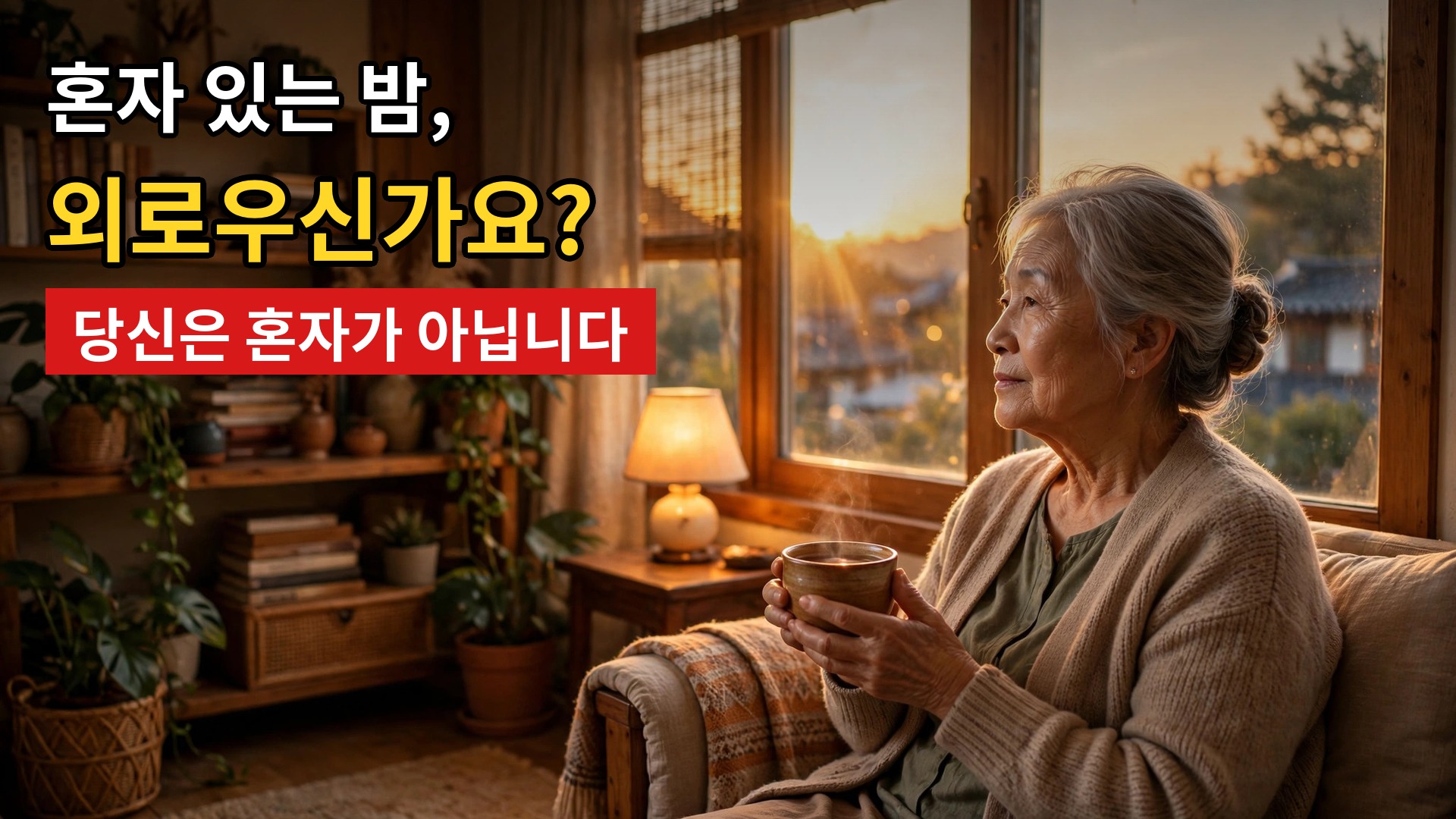
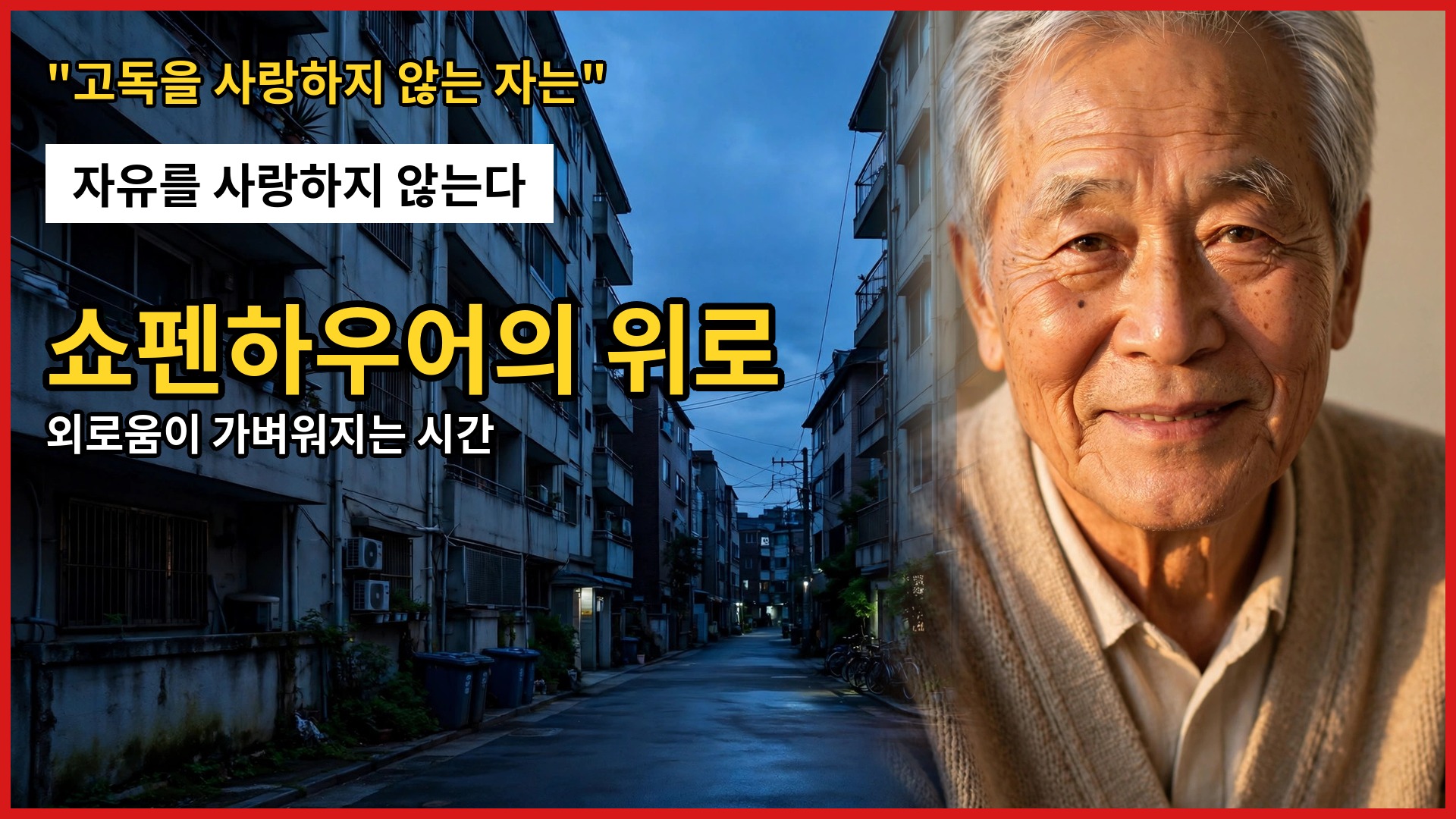
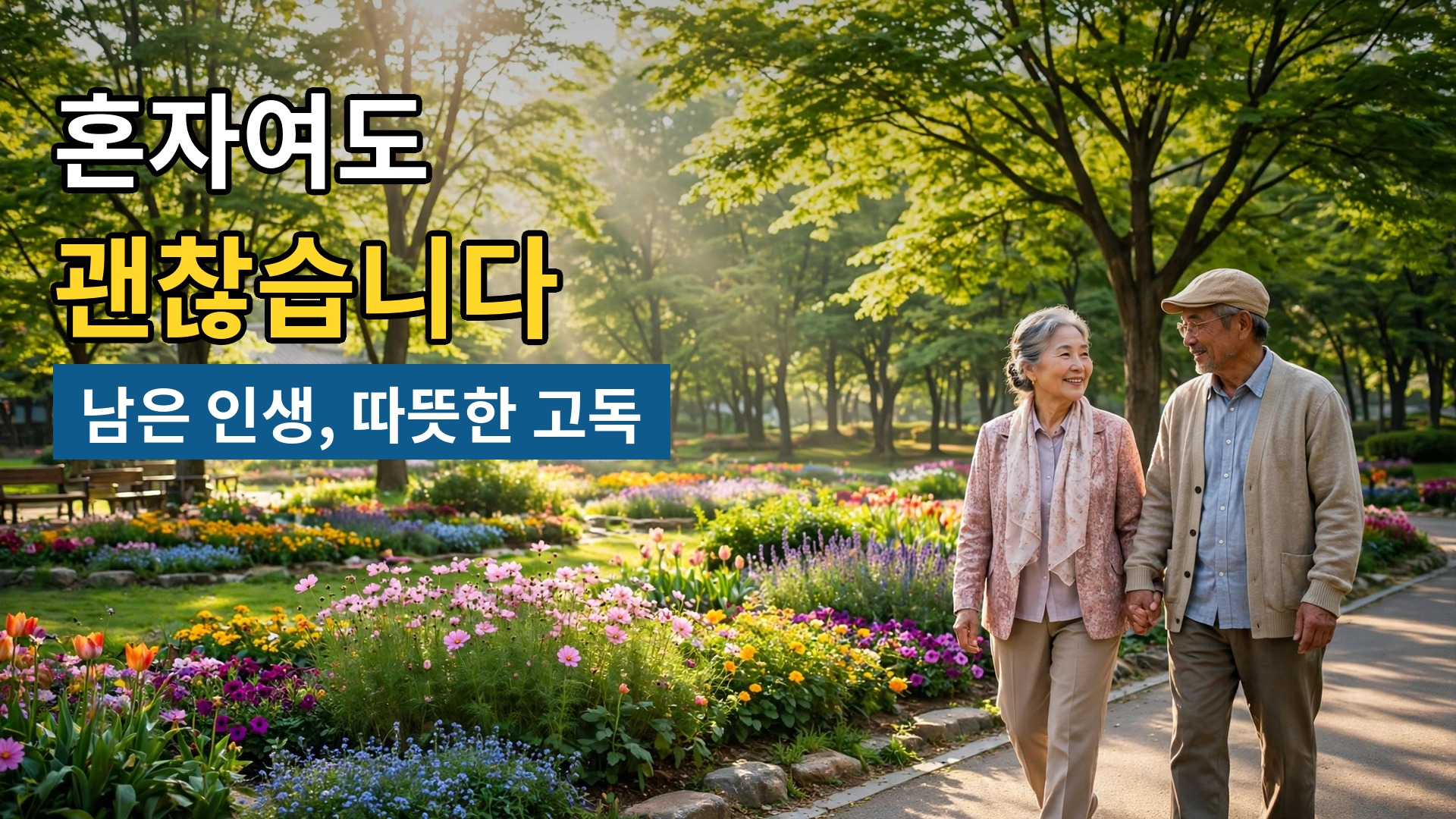
📝 제목 3안
- 밤마다 혼자라서, 괜히 눈물 나신 적 있으세요? — 외로운 밤을 건너는 법 | 시니어 위로 · 고독 명언
- 혼자일 때 비로소 자유로워집니다 — 쇼펜하우어가 전한 고독의 역설 | 인생론 명언 · 시니어 위로
- 외로움이 밀려올 때 이 3가지를 해보세요 — 남은 인생이 가벼워지는 고독 습관 | 시니어 위로 에세이
🎙️ 대본 (약 30분 · Vrew 양식)
📋 Vrew '텍스트로 영상 만들기'에 그대로 붙여넣으세요. 한 줄 = 한 문장 = 한 클립·한 자막 양식입니다.
해가 지고 나면, 집이 유난히 조용해집니다.
낮에는 바쁘게 오가던 소리들이 하나둘 잦아들고,
저녁의 고요가 방 안 가득 내려앉습니다.
밥을 먹고 설거지를 마치고 나면,
그다음 할 일이 문득 떠오르지 않는 저녁이 있습니다.
낮에는 들리지도 않던 소리들이 밤이 되면
하나둘 귀에 들어옵니다.
냉장고 돌아가는 소리, 벽시계 초침 소리,
가끔 멀리서 들리는 자동차 소리.
창밖에서는 다른 집 창문들에 불이 켜지고,
그 불빛 너머의 저녁은 왠지 더 따뜻해 보입니다.
티비를 켜 놓아도, 그 소리가 마음을 채우지는 못합니다.
드라마 속 사람들은 웃고 떠드는데,
나는 저 웃음 속에 들어갈 수 없습니다.
리모컨을 들고 채널을 돌리다가 결국 전원을 끕니다.
고요가 다시 방을 채웁니다.
물 한 잔을 따라 마셔도 목마름과는 다른 허전함이 남습니다.
불을 끄고 누우면 천장이 보입니다.
오늘 하루를 되짚어봅니다.
밥은 혼자 먹었고, 산책도 혼자 했고,
전화벨은 울리지 않았습니다.
누구와 말 한마디 나눈 게 있었던가,
기억을 더듬어봅니다.
마트 계산대 직원과 나눈 "봉투 필요하세요?"
"아니요." 그게 오늘의 대화 전부였습니다.
휴대폰을 열어봐도 읽지 않은 메시지는 없고,
괜히 사진첩만 넘기다가 다시 내려놓습니다.
오래된 사진 속 얼굴들은 웃고 있는데,
그 웃음이 오늘따라 더 멀게 느껴집니다.
사진 속 나는 지금보다 젊었고,
곁의 사람들도 모두 그 자리에 있었습니다.
그 시절이 멀어진 것이 서러워지는 밤이 있습니다.
마음 한구석이 서늘해지며,
쓸쓸함이 스멀스멀 올라옵니다.
이 느낌을 뭐라고 불러야 할까요.
외로움입니다.
그런데 먼저 꼭 말씀드리고 싶은 게 있습니다.
외로움은 나쁜 감정이 아닙니다.
외로움은 마음이 보내는 신호입니다.
"나는 연결되고 싶다"는 마음의 외침입니다.
몸이 아프면 통증이 알려주듯, 마음이 외로우면
외로움이 알려주는 것입니다.
그 외침에 귀를 기울이는 것, 그게 위로의 시작입니다.
그러니 이 감정을 밀어내지 마세요.
외로움은 예고 없이 찾아옵니다.
바쁜 낮에는 잊고 있다가,
고요한 밤에 불쑥 얼굴을 내밉니다.
장 보러 나갔다가 젊은 부부가 다정히 걷는 모습을 볼 때,
외로움은 예고 없이 찾아옵니다.
친구와 통화하다가 "우리 손주는 벌써 유치원
다녀"라는 말을 들을 때도 그렇습니다.
병원 대기실에서 차례를 기다리며 주위를 둘러볼 때,
외로움은 마음의 빈틈으로 스며듭니다.
명절이 지난 다음 날, 자식들이 돌아가고
난 빈집에서 외로움은 더 깊어집니다.
친구의 부고 소식을 듣고 난 저녁에도 마찬가지입니다.
북적이던 집이 한꺼번에 비워지면,
그 빈자리가 소리 없이 마음을 누릅니다.
설거지할 그릇이 줄어든 것까지 서운하게 느껴집니다.
이사 간 지 오래된 동네에서 아는 얼굴 하나
없이 걷는 아침에도, 외로움은 찾아옵니다.
외로움은 혼자 있는 시간의 길이가 아니라 마음의 온도로 재는 감정입니다.
그래서 이 감정은 나이와 형편을 가리지 않습니다.
오늘 이 영상은 그런 밤을 위한 영상입니다.
외로움을 느끼는 당신에게 건네는 조용한 위로 한 편입니다.
외로움은 부끄러운 감정이 아니라,
마음이 살아 있다는 증거입니다.
연결을 원하고, 따뜻함을 원하고,
누군가를 그리워할 수 있다는 증거입니다.
그리워할 줄 아는 마음은 아직 식지 않은 마음입니다.
그러니 오늘은 외로움을 미워하지 말고,
잠시 마주 앉아 이야기를 나눠봅시다.
외로움이 무엇인지, 옛 현자들은 뭐라고 했는지,
그리고 이 마음을 어떻게 다스리면 좋을지.
천천히, 차근차근 가보겠습니다.
이 영상은 틀어놓고 들으셔도 됩니다.
설거지를 하면서, 산책을 하면서,
잠들기 전에 이불 속에서 들어도 됩니다.
목소리가 당신의 밤을 조금 덜 외롭게 만들 수 있다면,
그걸로 충분합니다.
외로움은 혼자라서 생기는 게 아닙니다.
사람들 사이에 있어도 외로울 수 있습니다.
북적이는 명절 밥상에서도, 웃음이 넘치는 모임에서도,
마음 한구석이 비어 있는 느낌.
그게 외로움입니다.
외로움은 마음이 연결을 원하는데
그 연결이 닿지 않을 때 생기는 감정입니다.
그래서 자식이 있어도 외로울 수 있고,
친구가 있어도 외로울 수 있습니다.
함께 있어도 마음이 닿지 않으면 외롭고,
혼자 있어도 마음이 차 있으면 외롭지 않습니다.
혼자 사는 것과 외로운 것은 다릅니다.
혼자 사는 건 생활의 형태이고,
외로움은 마음의 상태입니다.
그리고 외로움과 고독도 다릅니다.
외로움은 누군가를 그리워하는 마음, 고독은 나
자신과 마주하는 시간입니다.
외로움은 아픈 감정이고, 고독은 단단해지는 시간입니다.
외로움은 자꾸 밖을 보게 하고,
고독은 조용히 안을 보게 합니다.
이 차이를 아는 것만으로도 마음이 한결 가벼워집니다.
외로움에도 종류가 있습니다.
사람이 그리운 외로움, 역할을 잃은 외로움,
세상에서 잊힌 것 같은 외로움.
어떤 외로움은 사람이 있어도 풀리지 않고,
어떤 외로움은 작은 역할 하나만 생겨도 옅어집니다.
내 외로움이 어떤 종류인지 아는 것이 다스리는 첫걸음입니다.
사람이 그리운 외로움은 누군가의 목소리가 듣고
싶어지는 외로움입니다.
역할을 잃은 외로움은 아침에 일어날 이유가 흐릿해지는 외로움입니다.
잊힌 것 같은 외로움은 세상과 나
사이에 벽이 생긴 듯한 외로움입니다.
어떤 날은 셋이 한꺼번에 밀려오기도 합니다.
그런 날은 유난히 길고, 유난히 조용합니다.
그래도 괜찮습니다.
외로움의 얼굴을 알아보는 것만으로,
그 감정은 한결 다스리기 쉬워집니다.
이름을 붙일 수 있는 감정은 이름을 붙일 수 없는 감정보다
덜 무섭습니다.
막연히 무겁기만 하던 마음에 이름을 붙이면,
마음은 그 크기를 가늠할 수 있게 됩니다.
은퇴하고 나면 출근하던 발걸음이 멈추고
전화벨이 뜸해지며 아침이 달라집니다.
알람 없이 맞는 아침이 처음에는 편한데, 날이 갈수록
하루가 길게 느껴집니다.
'나는 이제 필요 없는 사람인가' 그런 생각이 드는 날이 있습니다.
수십 년 몸담은 자리에서 물러나면,
사라지는 것은 명함 속 이름만이 아닙니다.
하루의 리듬까지 함께 사라집니다.
배우자를 먼저 보낸 분의 외로움은 더 깊습니다.
수십 년을 함께한 빈자리는 어떤 말로도 채워지지 않습니다.
밥상을 차려도 수저는 하나,
말을 걸어도 대답이 없습니다.
같이 보던 드라마가 시작되면,
옆자리를 한 번 더 돌아보게 됩니다.
이런 외로움 앞에서 "힘내세요"라는 말은 너무 가볍습니다.
오늘은 가벼운 위로가 아니라 깊은 이해를 나누려 합니다.
오늘 이 영상의 목표는 외로움을 없애는 게 아닙니다.
외로움은 없앨 수 있는 게 아니라,
사람의 마음이 있는 한 찾아오는 감정입니다.
대신 외로움을 조금 더 가볍게 만들고,
고독을 조금 더 따뜻하게 만드는 것.
그게 오늘 이야기의 목표입니다.
외로움은 당신만의 이야기가 아니라는 것을,
숫자가 말해줍니다.
국가데이터처가 2025년 12월에 발표한 '2025
통계로 보는 1인 가구' 조사입니다.
2024년 기준, 우리나라 1인 가구는 804만 5천 가구였습니다.
전체 가구의 36.
1퍼센트, 열 집 중 세 집이 넘는 수치입니다.
연령대별로 보면 70세 이상이 19.
8퍼센트로 가장 많았습니다.
그리고 이런 응답이 있었습니다.
'평소 자주 또는 가끔 외롭다'는 응답이 48.
9퍼센트, 절반에 가까웠습니다.
전체 가구 평균 38.
2퍼센트보다 10퍼센트포인트 넘게 높은 수치입니다.
혼자 사는 분이 늘고 있고, 외롭다고
느끼는 분도 늘고 있습니다.
이 숫자는 남의 이야기가 아니라 우리 동네,
우리 세대의 이야기입니다.
몸이 아플 때 도움을 받을 수 있다는 응답도,
돈이 필요할 때 도움을 받을 수 있다는 응답도,
전체 평균보다 낮았습니다.
기댈 곳이 멀게 느껴지는 마음이 숫자에도 담겨 있습니다.
외로움이 오래되면 마음도 몸도 지쳐, 잠이 얕아지고,
입맛이 떨어지고, 사소한 일에도 눈물이 납니다.
밤에 자꾸 깨고, 깨면 다시 잠들기 어렵고,
그런 밤이 쌓이면 낮의 기운까지 빠져나갑니다.
그래서 외로움은 혼자 삭일 일이 아닙니다.
마음의 감기처럼, 초기에 돌봐야 하는 감정입니다.
그러니 외로움을 느낀다고 해서 자신을 탓하지 마세요.
외로움은 당신의 약점이 아니라,
이 시대를 함께 사는 많은 분들의 마음입니다.
밤에 잠 못 이루는 당신이 이상한 게 아닙니다.
당신은 혼자가 아니라는 이 말을,
오늘 밤 마음에 새겨두세요.
당신의 외로움은 당신만의 것이 아닙니다.
수많은 창문 너머에서 같은 마음을 가진 분들이 있습니다.
우리는 보이지 않는 실로 서로 연결되어 있습니다.
숫자 너머의 마음을 생각해봅니다.
804만 5천 가구, 그 숫자 하나하나가 누군가의 저녁입니다.
불 켜진 창문 하나하나에 누군가의 하루가 담겨 있습니다.
그 창문 안에서는 누군가 혼자 밥을 먹고,
누군가 혼자 티비를 보다 잠이 듭니다.
오늘 밤에도 수많은 창문에서 같은 서늘함을 느끼는 분이 계십니다.
외로움은 당신만의 방이 아니라 많은 이들이 함께 머무는 방입니다.
그 방의 문을 조금씩 열어봅시다.
이 외로움을 가장 깊이 들여다본 철학자가 있습니다.
독일의 철학자 쇼펜하우어입니다.
1788년에 태어나 1860년에 세상을 떠났습니다.
그는 평생 혼자 사색하며 글을 쓴 철학자였습니다.
젊은 시절부터 사람들의 무리에 섞이기보다
책과 사색을 벗 삼았습니다.
아침마다 글을 쓰고, 정해진 시간에 산책을 하고,
혼자만의 질서 안에서 평생을 살았습니다.
사람들은 그를 염세주의자라 불렀습니다.
세상을 비관적으로 본 사람이라는 뜻입니다.
그런데 이상한 일이 벌어졌습니다.
그의 글을 읽는 많은 사람들이 오히려 위로를 받기 시작한 겁니다.
아픈 마음을 가장 정직하게
알아본 사람이었기 때문입니다.
달콤한 말로 덮지 않고,
외로움의 얼굴을 정면으로 바라본 사람이었기 때문입니다.
그는 1851년에 『인생론』이라는 책을 냈습니다.
원래 제목은 『소품과 부록』,
그 안에 실린 '인생의 지혜를 위한 격언'입니다.
이 책으로 그는 60대에 비로소 세상의 주목을 받기 시작했습니다.
평생 무명이던 철학자의 글이 늦은 나이에 빛을 본 겁니다.
인생은 언제 빛날지 모른다는 것,
그의 삶 자체가 보여준 위로입니다.
꽃이 늦게 피는 나무도 있듯,
그의 삶이 바로 그런 삶이었습니다.
이 책에서 그는 고독에 대해 깊이 말했습니다.
인간은 홀로 있을 때만 온전히 자기 자신이 되고,
진정으로 자유로울 수 있다는 것입니다.
사람들과 어울릴 때 우리는 조금씩 자신을 양보합니다.
상대방 기분을 맞추고, 할 말을 고르고,
웃지 않아도 될 때 웃습니다.
집에 돌아오면 왜 그렇게 피곤한지,
그 까닭이 여기에 있습니다.
몸보다 마음이 먼저 지치는 만남이 많기 때문입니다.
며느리 앞에서는 좋은 시어머니로,
친구 앞에서는 밝은 친구로,
자식 앞에서는 걱정 없는 부모로.
역할을 바꿔가며 하루를 삽니다.
그러니 혼자 있을 때 비로소 가면을 벗을 수 있다는 뜻입니다.
혼자 있는 시간은 나를 잃는 시간이 아니라
나를 되찾는 시간이라는 뜻입니다.
되찾은 나로 무엇을 할지는 천천히 생각해도 됩니다.
좋아하던 음악을 듣고, 미뤄둔 책을 펼치고,
그저 창밖을 바라보는 것도 좋습니다.
누구의 평가도 받지 않는 시간,
누구에게 보여줄 필요도 없는 시간.
그 시간이 쌓이면 혼자 있는 방이 조금씩 아늑해집니다.
하루 종일 누구의 눈치도 보지 않고,
내 속도로 밥을 먹고 내 취향대로 하루를 보내는 시간.
그는 또 이렇게 말했습니다.
"고독을 사랑하지 않는 자는 자유를 사랑하지 않는 자다."
고독을 두려워하지 말라는 뜻이 아닙니다.
고독을 피하지 말고, 그 안에서 나를 지키라는 뜻입니다.
남의 시선에 맞춰 살지 말고,
내 마음의 소리에 귀 기울이라는 뜻입니다.
쇼펜하우어는 사교적인 사람을 경계했습니다.
정신이 풍요로운 사람일수록 고독을 즐긴다고 했습니다.
혼자 있어도 마음이 따뜻하면
굳이 무리에 섞일 필요가 없다는 겁니다.
마음이 비어 있으면 사람이 많아도 허전하고,
마음이 차 있으면 혼자여도 허전하지 않습니다.
그가 말한 고독은 사람을 밀어내는 차가운 고독이 아닙니다.
나를 지키는 따뜻한 고독입니다.
억지로 웃지 않아도 되고, 맞장구치지 않아도 되고,
내 속도로 숨 쉴 수 있는 시간입니다.
외로울 때 우리는 자꾸 "누가 나를 찾아주지 않을까" 기다립니다.
쇼펜하우어는 그 기다림을 내려놓으라고 합니다.
기다림이 길어지면 서운함이 되고, 서운함이 쌓이면
마음이 닫힙니다.
전화기를 자꾸 들여다보는 밤이 길어질수록,
오지 않는 연락이 마음을 더 무겁게 합니다.
기다리는 마음은 주는 마음보다 훨씬 빨리 지칩니다.
그래서 기다림을 줄이는 것이 외로움을 줄이는 첫걸음이 됩니다.
대신 혼자 있는 시간을 나에게 쓰는 시간으로 바꿔보라고 합니다.
쇼펜하우어의 삶이 더 궁금하신 분은 위로집의 1번 영상을 찾아보세요.
세상을 부정한 철학자가 건네는 가장 정직한 위로를 담았습니다.
물론 그는 사람 사이의 온정도 알았습니다.
다만 그 온정을 얻기 위해 나를 버리지 말라고 했습니다.
사람에게 맞추느라 나를 잃으면,
사람이 곁에 있어도 외로움은 가시지 않습니다.
외로울 때 자꾸 사람을 찾게 됩니다.
누구라도 좋으니 옆에 있었으면 합니다.
그 마음은 자연스러운 겁니다.
하지만 쇼펜하우어는 말합니다.
그럴 때일수록 잠시 멈추라고.
혼자 있는 이 시간을 나를 돌보는 시간으로 바꿔보라고.
프랑스의 사상가 파스칼도 비슷한 말을 남겼습니다.
1623년에 태어나 1662년에 세상을 떠났습니다.
39년의 짧은 생애였지만,
깊은 사색을 남긴 사상가입니다.
그는 뛰어난 수학자이자 물리학자였고,
인생의 후반에는 신앙과 철학에 몰두했습니다.
『팡세』는 그가 세상을 떠난 뒤에 정리되어 전해진 유작입니다.
미완성의 단상들이지만, 그 깊이 때문에
수백 년째 읽히고 있습니다.
짧은 문장 한 줄 한 줄에 인생을 꿰뚫는 눈이 담겨 있기 때문입니다.
그는 『팡세』라는 책에 이렇게 적었습니다.
"인간의 모든 불행은 방 안에서 혼자 가만히 있을 줄 모르는 데서
온다." 혼자 있는 시간을 견디지 못해서
사람들은 자꾸 밖으로 나간다고 했습니다.
소란스러운 모임에 나가고, 끊임없이 누군가를 찾습니다.
휴대폰을 붙잡고 뉴스를 보고,
티비 채널을 이리저리 돌립니다.
고요함이 두려워서 자꾸 소음을 찾는 겁니다.
하지만 돌아오면 마음은 더 비어 있습니다.
밖에서 얻은 즐거움은 금방 식고, 방으로 돌아오면
외로움은 그대로 있습니다.
소음으로 덮은 외로움은 소음이 멈추는 순간 두 배로 크게 돌아옵니다.
파스칼은 혼자 있는 연습이 필요하다고 했습니다.
혼자 있는 시간을 두려워하지 않는 사람이 사람들과 있을 때도 편안하다고
했습니다.
혼자 있음이 익숙해지면, 외로움은 덜 아픕니다.
고요함이 적이 아니라 친구가 됩니다.
처음에는 5분의 고요도 길게 느껴집니다.
그런데 그 5분을 견디고 나면,
마음속에서 조용한 생각들이 올라오기 시작합니다.
파스칼은 사람들이 고요함을 피해 자꾸 '기분전환'에 매달린다고 했습니다.
끊임없는 모임, 끊임없는 소음, 멈추지 않는 바쁨.
하지만 기분전환이 끝나면 마음은 다시 비어 있습니다.
진짜 채움은 고요함 속에서 온다고 했습니다.
고요한 방에 앉아 있으면, 차 한 잔을 앞에 두고
창밖을 바라보는 시간이 생깁니다.
그 시간에 마음이 정돈됩니다.
오늘 있었던 일을 되짚어보고,
내일 할 일을 그려봅니다.
나 자신과 대화하는 시간입니다.
파스칼이 말한 연습이란 이런 작은 고요의 연습입니다.
외로울 때 마음을 붙잡아주는 글도 있습니다.
성경 시편 23편입니다.
목동 출신의 왕 다윗이 지은 시로 전해집니다.
"내가 사망의 음침한 골짜기로 다닐지라도 해를 두려워하지
않을 것은 주께서
나와 함께 하심이라."
가장 어두운 골짜기를 지날 때도 혼자가 아니라는 고백입니다.
사망의 음침한 골짜기, 인생에서 가장 외롭고
무서운 시간입니다.
그런 시간에도 함께하시는 분이 있다는 것.
믿음이 있든 없든, 이 문장은 이렇게 읽을 수 있습니다.
외로운 밤에도 당신 곁에는 당신을 지켜보는 눈이 있다는 것.
세상이 나를 잊어도 나는 잊히지 않았다는 것.
혼자라고 느낄 때 이 구절을 떠올려보세요.
골짜기는 지나가는 곳이지 머무는 곳이 아니듯,
외로움의 밤도 지나갑니다.
아침은 오고, 밤이 깊을수록 새벽은 가깝습니다.
이 말을 외로울 때마다 되뇌어보세요.
소리 내어 읽으면 마음에 더 깊이 새겨집니다.
우리 시인 한용운도 외로움을 시로 남겼습니다.
1879년에 태어나 1944년에 세상을 떠났습니다.
3.
1운동 때 민족대표 33인 중 한 분으로,
나라를 위해 옥고를 치른 독립운동가이기도 합니다.
그런 그가 남긴 시집 『님의 침묵』은 "님은 갔습니다"로 시작합니다.
사랑하는 이를 떠나보낸 그리움,
그 그리움이 곧 외로움입니다.
님은 사랑하는 사람일 수도 있고,
지나간 시절일 수도 있고,
돌아오지 않을 젊음일 수도 있습니다.
한용운은 그 외로움을 시로 바꿨습니다.
아픈 마음을 글로 쓰는 순간,
외로움은 예술이 되었습니다.
읽는 사람의 마음에도 스며들었습니다.
100년이 지난 지금도 그 시를 읽으며
위로받는 분이 있습니다.
글 한 줄이 백 년을 건너 사람의 마음을 안아준 것입니다.
당신의 외로움도 그렇습니다.
그냥 흘려보내지 마세요.
일기 한 줄, 편지 한 통, 마음을 적어보세요.
오늘 느낀 서늘함을, 창밖 풍경을,
문득 떠오른 옛일을.
쓰는 동안 외로움은 조금 가벼워집니다.
글은 마음의 창문이라, 적어 놓으면 마음이 정리됩니다.
엉켜 있던 생각이 문장이 되는 순간,
마음 한구석에 바람이 통하기 시작합니다.
누구에게 보이지 않아도 괜찮습니다.
나를 위한 기록이면 됩니다.
오래 간직할 필요도 없습니다.
쓰는 그 순간 마음이 풀리면, 그걸로 충분합니다.
외로운 밤을 보내는 작은 의식 하나를 만들어보시는 것도 좋습니다.
따뜻한 차 한 잔을 우려내고, 좋아하는 음악을 작게
틀어놓고, 창밖을 바라보는 10분.
그 10분이 마음의 온도를 바꿉니다.
매일 같은 시간에 반복하면,
그 의식이 밤의 길잡이가 되어줍니다.
외로움은 없애는 게 아니라 함께 가는 법을 배우는 것입니다.
밤이 깊어도 아침은 옵니다.
이 말을 마음에 새겨두세요.
이제 외로움을 다스리는 작은 실천 세 가지를 말씀드립니다.
거창한 게 아니라, 오늘부터 할 수 있는 일입니다.
하루에 다 하려고 애쓰지 마세요.
하나씩, 되는 것부터 시작하면 됩니다.
첫째, 아침에 커튼을 여세요.
햇빛을 받는 것만으로 마음이 달라지고,
아침 햇빛은 몸의 리듬을 깨웁니다.
밤에 잠도 더 잘 오고, 잠이 바뀌면 마음도 바뀝니다.
커튼을 여는 김에 창문도 열어보세요.
아침 공기가 방에 들어오면 마음도 함께 환기됩니다.
세수를 하고 물을 한 잔 마시고,
베란다의 화분이라도 한 번 들여다보세요.
아침의 작은 순서들이 하루의 뼈대가 되어줍니다.
가까운 공원을 천천히 한 바퀴 도세요.
같은 시간에 산책하는 분들과 눈인사를 나누세요.
처음에는 어색해도, 며칠 지나면 고개가 숙여집니다.
인사는 가장 작은 연결이지만, 그 작은 연결이 모이면
외로움의 벽에 금이 갑니다.
걷는 동안에는 발소리에 귀를 기울여보세요.
생각이 발걸음을 따라 차분히 가라앉습니다.
비가 오는 날에는 창가에 앉아 빗소리를 들으면,
자연의 소리가 마음을 가라앉힙니다.
둘째, 하루에 한 번, 누군가에게 연락하세요.
자식에게 짧은 안부 문자를 보내세요.
"밥은 먹었니?" 그 한마디면 됩니다.
사진 한 장을 곁들이면 더 좋습니다.
텃밭의 채소든, 산책길의 꽃이든,
당신의 하루를 보여주는 사진이면 충분합니다.
오래된 친구에게 전화를 걸어보세요.
"잘 지내지?" 그 한마디면 됩니다.
연락이 오지 않는다고 서운해하지 마세요.
바쁜 자식을 탓하지 마세요.
자식도 자식의 하루를 삽니다.
바쁘다는 건 잘 살고 있다는 뜻이기도 합니다.
내가 먼저 건네는 인사가 외로움을 여는 열쇠입니다.
답장이 늦거나 짧아도,
전한 마음은 전한 것으로 이미 닿아 있으니
마음을 두지 마세요.
예를 들어, 이런 경우를 생각해 보세요.
명절에만 보던 딸에게 매주 수요일마다 사진을 보내는 분이 있습니다.
텃밭에서 딴 상추 사진, 산책길에 핀 꽃 사진.
딸의 답장은 짧습니다.
"엄마도 건강해." 그 짧은 답장 하나로 일주일이 따뜻해집니다.
연락은 길지 않아도 되니, 자주, 가볍게,
따뜻하게 전해보세요.
그게 오래가는 연결의 비결입니다.
예를 들어, 이런 경우를 생각해 보세요.
매일 아침 같은 벤치에 앉아 책을 읽는 분이 있습니다.
처음에는 혼자였습니다.
어느 날 옆 벤치 분과 눈이 마주쳤습니다.
"무슨 책 읽으세요?"
그 한마디로 시작된 인사가 지금은 산책 친구가 되었습니다.
함께 걷고, 함께 차를 마십니다.
외로움은 문을 닫으면 깊어지고, 문을 열면 옅어집니다.
문은 거창하게 열 필요가 없습니다.
현관문을 열고 바람을 맞는 것, 창문을 열고
햇빛을 들이는 것, 마음의 문을 열고
인사를 건네는 것.
그 작은 열림들이 모여 외로움의 방에 공기가 통합니다.
공기가 통하면 마음도 숨을 쉽니다.
오늘, 작은 문 하나를 열어보세요.
그 문 너머에 따뜻함이 기다립니다.
외로움의 반대말은 북적임이 아니라 따뜻함입니다.
따뜻함은 멀리 있지 않습니다.
당신의 마음 안에 있습니다.
오늘 밤, 그 따뜻함을 느껴보세요.
셋째, 좋아하는 일을 하나 붙잡으세요.
텃밭을 가꾸든, 책을 읽든, 글을 쓰든,
손으로 무언가를 만드세요.
몰입하는 시간에는 외로움이 비집고
들어올 틈이 없습니다.
젊었을 때 좋아했던 일을 떠올려보세요.
그림, 노래, 바느질, 목공, 요리.
나이 들어 다시 시작해도 늦지 않습니다.
처음부터 잘하려 하지 않아도,
서툰 첫 작품이 오히려 웃음을 줍니다.
그 웃음 한 번이 하루를 밝힙니다.
배우는 즐거움은 외로움을 밀어냅니다.
무언가를 만들어내는 기쁨은 마음을 든든하게 채웁니다.
완성한 작은 물건 하나가 방 안에 놓이면,
그 방은 어제보다 조금 덜 비어 보입니다.
예를 들어, 이런 경우를 생각해 보세요.
퇴직 후 매일 텃밭에 나가는 분이 있습니다.
처음에는 상추 몇 포기 심는 게 다였습니다.
이제는 옆 밭 어르신들과 모종을 나누고
김치를 나눠 먹습니다.
흙을 만지는 손이 바쁘면
외로운 생각이 들 틈이 없습니다.
수확의 기쁨은 덤입니다.
계절이 바뀌는 것을 몸으로 느끼는 일,
그것만으로도 하루가 단단해집니다.
그런데 이런 말씀도 꼭 드려야겠습니다.
외로움이 너무 깊어져서
삶이 버거워지시는 분도 계십니다.
밤마다 눈물이 나고, 아침에 눈 뜨는 게 두렵고,
'이런 내가 무슨 소용인가' 하는 생각이 드신다면,
그건 혼자 참을 일이 아닙니다.
그 생각은 당신의 잘못이 아닙니다.
마음이 너무 지쳐서 내는 신호입니다.
몸이 아프면 병원에 가듯이, 마음이 아프면
도움을 청해야 합니다.
도움을 청하는 것은 약해서가 아니라 용기가 있어서
하는 일입니다.
그럴 때는 꼭 손을 내미세요.
가족에게, 친구에게, 이웃에게 말씀하세요.
말하기 어려우시면 전화하세요.
자살예방 상담전화 109번, 24시간 열려 있습니다.
109번, 세 자리만 기억하세요.
밤중에도, 새벽에도, 언제든
전화를 받을 분이 계십니다.
전화를 거는 데에는 어떤 자격도 필요 없습니다.
그저 힘들다고 말씀하시면 됩니다.
살아 있다는 것은 아직 이야기가 끝나지 않았다는 뜻입니다.
외로움의 밤도 이야기의 한 장면일 뿐,
결말이 아닙니다.
당신의 이야기는 아직 끝나지 않았습니다.
외로움은 당신을 무너뜨리러 온 게 아닙니다.
마음이 보내는 편지입니다.
"나를 좀 돌봐달라"는 마음의 편지입니다.
그 편지를 읽어주는 것, 그게
오늘 이 영상의 마지막 부탁입니다.
외로움을 대하는 마음가짐 하나를 마지막으로 나눕니다.
외로움과 싸우지 마세요.
싸우면 질 수밖에 없습니다.
외로움은 없앨 수 있는 게
아니라 안아줘야 하는 것이기 때문입니다.
외로운 날에는 이렇게 말해보세요.
"오늘은 좀 외롭네. 그래, 그럴 수 있지."
마음을 인정하는 순간, 외로움은 절반으로 줄어듭니다.
부정하면 커지고, 인정하면 작아집니다.
그게 마음의 법칙입니다.
외로움을 인정하는 것은 항복이 아니라,
오늘의 마음을 오늘의 마음으로 받아들이는 일입니다.
잠들기 전의 시간도 조금만 다듬어보세요.
불을 끄기 전에 내일 입을 옷을 꺼내두고,
마실 물을 머리맡에 준비해두세요.
몸이 할 일을 마치면 마음도 따라 가라앉습니다.
오늘 있었던 일 중 고마웠던 일 하나를 떠올려보세요.
별것 아닌 일이라도 괜찮습니다.
따뜻했던 햇볕, 맛있었던 반찬, 스치며
들은 인사 한마디.
고마운 일 하나를 안고 잠들면,
밤의 무게가 조금 가벼워집니다.
오늘 밤 이 영상을 끄고 나면,
방은 다시 조용해질 것입니다.
하지만 그 고요는 아까와 조금 다를 것입니다.
당신의 외로움을 알아주는 목소리가 한 번 다녀간 방이기 때문입니다.
오늘 긴 이야기 들어주셔서 감사합니다.
외로움은 당신만의 약점이 아닙니다.
많은 분들이 함께 느끼는 마음입니다.
통계가 말해줬듯이, 절반 가까운 분들이 외로움을 느낍니다.
쇼펜하우어는 말했습니다.
고독을 사랑하는 사람이 자유롭다고.
파스칼은 말했습니다.
혼자 있는 연습이 필요하다고.
시편은 말했습니다.
어두운 골짜기에서도 혼자가 아니라고.
한용운은 말했습니다.
외로움을 글로 바꾸면 예술이 된다고.
혼자 있는 시간은 벌이 아니라, 나를 지키고
나를 단단하게 만드는 시간입니다.
외로움이 찾아오는 밤이 당신을 약하게
만드는 밤이 아니라 당신을 깊게
만드는 밤이 되기를 바랍니다.
깊은 밤을 지나온 사람만이 이른 아침의 고요함을 압니다.
외로움을 아는 사람만이 따뜻함의 값어치를 압니다.
당신은 지금, 인생의 깊은 맛을 배우고 계신 중입니다.
외로움은 끝이 아니라 과정입니다.
터널을 지나는 것처럼, 지금은 어둡지만
출구가 있습니다.
그 출구로 가는 길에 이 영상이 작은 등불이 되었으면 합니다.
오늘 밤, 불을 끄기 전에 창밖을 한 번 보세요.
별이 떠 있습니다.
그 별처럼, 당신도 누군가의 밤을 밝히는 존재입니다.
당신이 건넨 인사 한마디가 누군가의 밤을 밝혔을지도 모릅니다.
외로움을 아는 사람이 건네는 인사는 그래서
더 따뜻합니다.
외로우십니까.
괜찮습니다.
위로집이 함께합니다.
위로집은 당신의 마음을 안아주는 채널입니다.
매일 아침 위로 한 줄, 깊은 밤의 긴 위로.
외로운 날에 꺼내 들을 수 있는 마음의 약상자를 만들고 있습니다.
구독해 두시면, 외로운 밤에 혼자가 아니게 됩니다.
내일 아침, 커튼을 여는 일부터 시작해보세요.
햇빛이 방에 들어오는 순간, 외로움은 조금 물러납니다.
그리고 누군가에게 안부를 전해보세요.
작은 인사가 큰 위로가 됩니다.
오늘 말씀드린 세 가지는 거창한 처방이 아닙니다.
외로운 하루를 조금 덜 외롭게
만드는 작은 손잡이들입니다.
손잡이는 한 번에 다 잡을 필요 없이,
가장 가까운 것 하나만 잡아보세요.
오늘 말씀드린 세 가지 중 하나만 골라도 좋습니다.
커튼을 여는 것, 안부를 전하는 것,
좋아하는 일을 붙잡는 것.
작은 것 하나가 내일의 당신을 조금 덜 외롭게 합니다.
당신의 밤이 조금 덜 외롭기를,
당신의 아침이 조금 더 따뜻하기를.
위로집이 응원합니다.
🖼️ 이미지 프롬프트 (대본 순서대로)
📋 Vrew 나레이션 재생 중 띄울 배경 이미지용. 따뜻한 힐링 일러스트 스타일.
## 1. 밤에 들리는 작은 소리들 (나레이션: "낮에는 들리지도 않던 소리들이 밤이 되면하나둘 귀에 들어옵니다.")
Photorealistic cinematic photograph, 16:9 aspect ratio, no text, no watermark. Close-up of a round wall clock with a sweeping second hand in a dim Korean home at night, shallow depth of field, the clock face softly lit by a distant lamp. Behind it, blurred silhouette of a refrigerator and dark window with faint city lights. Tick of time made visible, quiet tension in the stillness. 35mm film look, natural low-key lighting, fine detail on the clock face and wall texture, editorial realism, no people, no readable text.

## 2. 창밖의 불빛들 (나레이션: "창밖에서는 다른 집 창문들에 불이 켜지고,그 불빛 너머의 저녁은 왠지 더 따뜻해 보입니다.")
Photorealistic cinematic photograph, 16:9 aspect ratio, no text, no watermark. View from inside a dim Korean apartment at dusk, looking out through a large window at the neighboring apartment building, where window after window glows with warm golden light. In the foreground, the soft silhouette of an elderly Korean woman in her early 70s with silver hair stands by the window, seen from behind, one hand resting lightly on the glass. The lit windows across the way feel warm and full of life. 35mm film look, gentle contrast between cool blue evening and warm interior lights, quiet longing softened by warmth, editorial realism, authentic Korean setting.

## 3. 마음을 채우지 못하는 티비 (나레이션: "티비를 켜 놓아도, 그 소리가 마음을 채우지는 못합니다.")
Photorealistic cinematic photograph, 16:9 aspect ratio, no text, no watermark. A modest Korean living room in the evening, a television glowing with blurred colorful light that no one is really watching. An elderly Korean man in his late 60s sits alone on a worn sofa, gaze drifting past the screen toward a quiet corner of the room. A warm table lamp glows beside him, kinder than the cold screen light. 35mm film aesthetic, shallow depth of field, natural skin texture and authentic Korean facial features, Korean ethnicity. A still, reflective mood, editorial photography.

## 4. 전원이 꺼지는 순간 (나레이션: "리모컨을 들고 채널을 돌리다가 결국 전원을 끕니다.")
Photorealistic cinematic photograph, 16:9 aspect ratio, no text, no watermark. Close-up of an elderly Korean hand holding a television remote control, thumb pressing the power button, as the blurred glow of the TV screen in the background fades to black. The room settles into soft lamplight and calm shadow. Fine detail on the wrinkled hand and the simple remote, shallow depth of field, 35mm film look. A small, decisive moment of choosing quiet, warm and dignified mood, editorial realism, no readable text anywhere.

## 5. 하루를 되짚어보는 밤 (나레이션: "불을 끄고 누우면 천장이 보입니다.")
Photorealistic cinematic photograph, 16:9 aspect ratio, no text, no watermark. An elderly Korean woman in her early 70s with silver hair in a low bun, lying in bed in a dark bedroom, eyes open, gazing at the ceiling with a thoughtful, slightly wistful expression. Moonlight through sheer curtains paints soft stripes across the blanket. Her weathered hands rest folded on her chest. 35mm film aesthetic, shallow depth of field, natural skin texture with wrinkles, authentic Korean facial features, Korean ethnicity. Intimate, sleepless-night mood, editorial photography, cinematic moonlight.

## 6. 오늘 나눈 대화를 더듬다 (나레이션: "누구와 말 한마디 나눈 게 있었던가,기억을 더듬어봅니다.")
Photorealistic cinematic photograph, 16:9 aspect ratio, no text, no watermark. An elderly Korean man in his early 70s sits alone at a small kitchen table at night, chin resting thoughtfully on one hand, a silent smartphone lying face-down beside a cup of cooled tea. His eyes search the middle distance, as if replaying the whole day in his mind. Warm kitchen light pools over the table while the rest of the room rests in gentle shadow. 35mm film aesthetic, natural wrinkles and authentic Korean facial features, Korean ethnicity, tender and reflective editorial mood.

## 7. 계산대에서 나눈 한마디 (나레이션: "그게 오늘의 대화 전부였습니다.")
Photorealistic cinematic photograph, 16:9 aspect ratio, no text, no watermark. A bright Korean neighborhood supermarket checkout in the late afternoon, where an elderly Korean woman with silver hair exchanges a brief, kind word with a young cashier across the counter, a small bag of groceries between them. Both wear faint, genuine smiles. Soft daylight through the storefront windows keeps the scene warm and everyday. 35mm film look, shallow depth of field, natural skin texture, authentic Korean faces, Korean ethnicity, gentle slice-of-life editorial photography, no readable text.

## 8. 오래된 사진첩 (나레이션: "오래된 사진 속 얼굴들은 웃고 있는데,그 웃음이 오늘따라 더 멀게 느껴집니다.")
Photorealistic cinematic photograph, 16:9 aspect ratio, no text, no watermark. Close-up of elderly Korean hands slowly turning the pages of an old family photo album on a wooden table, faded photographs of smiling faces from decades ago softly out of focus. A pair of reading glasses rests beside the album, and warm evening lamplight wraps the scene in amber tones. Fine detail on the weathered hands and the album's worn edges, 35mm film aesthetic, shallow depth of field. Nostalgic and tender mood, editorial realism, faces in the old photos blurred and unrecognizable.

## 9. 멀어진 그 시절 (나레이션: "그 시절이 멀어진 것이 서러워지는 밤이 있습니다.")
Photorealistic cinematic photograph, 16:9 aspect ratio, no text, no watermark. An elderly Korean woman in her 70s stands at her apartment window in the blue hour, looking down at the street where young families stroll home under warm streetlights. Her reflection floats faintly in the glass, layered over the lively street below. The mood is wistful yet gentle, touched with gratitude rather than bitterness. 35mm film look, soft contrast, natural skin texture, authentic Korean facial features, Korean ethnicity, poetic editorial photography.

## 10. 이 느낌의 이름 (나레이션: "이 느낌을 뭐라고 불러야 할까요.")
Photorealistic cinematic photograph, 16:9 aspect ratio, no text, no watermark. A quiet still life on a Korean windowsill at night: a half-finished cup of warm tea with gentle steam, beside it a window fogged slightly at the edges, city lights blurred into soft bokeh beyond the glass. The composition leaves generous calm space, as if the room itself is pausing to name a feeling. Warm amber tones against deep blue night, 35mm film aesthetic, fine detail, contemplative and soothing mood, editorial fine-art photography, no people, no text.

## 11. 없앨 수 없는 외로움 안아주기 (나레이션: "외로움은 나쁜 감정이 아닙니다.")
Photorealistic cinematic photograph, 16:9 aspect ratio, no text, no watermark. An elderly Korean woman gently embracing herself, arms wrapped around her own shoulders, eyes closed with a peaceful accepting expression, soft golden window light enveloping her, a cozy knit cardigan. Self-compassion made visible. 35mm film aesthetic, tender intimate mood, natural skin texture with wrinkles, authentic Korean features, Korean ethnicity, warm cinematic light, editorial portrait, no text.

## 12. 마음이 보내는 신호 (나레이션: "그 외침에 귀를 기울이는 것, 그게 위로의 시작입니다.")
Photorealistic cinematic photograph, 16:9 aspect ratio, no text, no watermark. A glowing paper lantern floating upward into a deep indigo night sky above a quiet Korean village, warm orange light against cool darkness, a few stars appearing. Below, soft silhouettes of tiled roofs. The lantern as a signal from the heart rising into the night. 35mm film look, dreamy bokeh, rich color contrast, poetic and hopeful mood, editorial fine-art photography, no text, no people in close-up.

## 13. 스며드는 외로움의 순간들 (나레이션: "장 보러 나갔다가 젊은 부부가 다정히 걷는 모습을 볼 때,외로움은 예고 없이 찾아옵니다.")
Photorealistic cinematic photograph, 16:9 aspect ratio, no text, no watermark. An elderly Korean man in his late 60s at a supermarket checkout counter, handing a small basket with a few groceries to a young cashier, both exchanging a brief polite nod. Fluorescent store light, blurred shelves of goods behind, the man's gentle tired smile. Everyday loneliness in a crowd, small human contact. 35mm film look, natural skin texture, authentic Korean facial features, Korean ethnicity, shallow depth of field, editorial realism, no readable text on signs.

## 14. 통화 너머의 소식 (나레이션: "친구와 통화하다가 "우리 손주는 벌써 유치원다녀"라는 말을 들을 때도 그렇습니다.")
Photorealistic cinematic photograph, 16:9 aspect ratio, no text, no watermark. An elderly Korean woman in her early 70s sits by a bright window holding a phone to her ear, listening with a smile that carries a hint of wistfulness, as if hearing happy news about a friend's grandchild. Sunlight rests softly on her silver hair and the simple cardigan she wears. A potted plant and a family photo frame sit nearby, slightly out of focus. 35mm film look, natural skin texture, authentic Korean facial features, Korean ethnicity, warm and bittersweet editorial mood.

## 15. 병원 대기실의 오후 (나레이션: "병원 대기실에서 차례를 기다리며 주위를 둘러볼 때,외로움은 마음의 빈틈으로 스며듭니다.")
Photorealistic cinematic photograph, 16:9 aspect ratio, no text, no watermark. A clean, bright Korean hospital waiting room in soft afternoon light, rows of chairs filled with people, yet one elderly Korean man in his late 60s sits with a small space of quiet around him, hands folded over a numbered ticket he does not look at. Everyone seems accompanied except him, and the feeling lands gently rather than harshly. 35mm film aesthetic, shallow depth of field, natural skin texture, authentic Korean faces, Korean ethnicity, humane editorial photography, no readable text.

## 16. 명절이 지난 빈집 (나레이션: "명절이 지난 다음 날, 자식들이 돌아가고난 빈집에서 외로움은 더 깊어집니다.")
Photorealistic cinematic photograph, 16:9 aspect ratio, no text, no watermark. A Korean living room the morning after a family holiday gathering: cushions still slightly indented on the floor, a low table cleared but for one teacup, festive traces already fading into quiet. Soft morning light enters through the balcony doors. No people in frame, yet the room feels freshly emptied, holding warmth and absence at the same time. 35mm film look, fine detail on everyday objects, tender and calm mood, editorial realism, no text.

## 17. 한꺼번에 비워진 집 (나레이션: "북적이던 집이 한꺼번에 비워지면,그 빈자리가 소리 없이 마음을 누릅니다.")
Photorealistic cinematic photograph, 16:9 aspect ratio, no text, no watermark. A Korean apartment entryway in the late afternoon, where the shoe rack that overflowed yesterday now holds only one worn pair of slippers. The hallway beyond is still and hushed, light from the living room spilling gently across the floor. The emptiness is quiet rather than desolate, like a house catching its breath. 35mm film aesthetic, shallow depth of field, warm natural light, fine detail on ordinary surfaces, reflective editorial mood, no people, no text.

## 18. 낯선 동네의 아침 산책 (나레이션: "이사 간 지 오래된 동네에서 아는 얼굴 하나없이 걷는 아침에도, 외로움은 찾아옵니다.")
Photorealistic cinematic photograph, 16:9 aspect ratio, no text, no watermark. An elderly Korean man in his early 70s walks alone along a quiet residential street in the fresh morning, in a neighborhood that no longer feels familiar, new buildings rising where old shops used to be. He walks slowly with his hands behind his back, looking around with mild curiosity. Golden morning light and long soft shadows keep the scene hopeful. 35mm film look, natural skin texture, authentic Korean facial features, Korean ethnicity, gentle editorial photography.

## 19. 누구에게나 찾아오는 감정 (나레이션: "그래서 이 감정은 나이와 형편을 가리지 않습니다.")
Photorealistic cinematic photograph, 16:9 aspect ratio, no text, no watermark. An exterior evening view of a Korean apartment building with many windows lit in different warm tones, some bright with family life, some holding a single lamp. The image suggests that behind every window, rich or poor, young or old, the same quiet feelings come and go. Deep blue dusk sky, soft glow from the windows, 35mm film aesthetic, calm and universal mood, editorial fine-art photography, no people in close-up, no readable text.

## 20. 마음의 온도로 재는 외로움 (나레이션: "외로움을 느끼는 당신에게 건네는 조용한 위로 한 편입니다.")
Photorealistic cinematic photograph, 16:9 aspect ratio, no text, no watermark. Intimate close-up of elderly Korean hands wrapped around a warm ceramic teacup, gentle steam rising, the skin textured with age and life. On one side of the frame, cold blue moonlight falls across a dark windowpane; on the other, the golden glow of a small lamp warms the hands and the cup. The contrast of cold and warmth in a single image, a visual metaphor for loneliness measured not by hours spent alone but by the temperature of the heart. 35mm film aesthetic, shallow depth of field, exquisite detail on skin, ceramic glaze and drifting steam, Korean ethnicity, tender contemplative mood, editorial still-life realism, cinematic dual-tone lighting.

## 21. 외로움과 고독의 차이 (나레이션: "외로움은 자꾸 밖을 보게 하고,고독은 조용히 안을 보게 합니다.")
Photorealistic cinematic photograph, 16:9 aspect ratio, no text, no watermark. A split-composition landscape: left side, a lone figure on a crowded city street at dusk, blurred passersby streaming past, cool lonely tones; right side, the same elderly Korean man sitting peacefully alone on a mountain overlook at dawn, warm golden light, serene and whole. Two states of being alone. 35mm film aesthetic, cinematic color contrast, authentic Korean features, Korean ethnicity, editorial conceptual photography, no text.

## 22. 목소리가 그리운 밤 (나레이션: "사람이 그리운 외로움은 누군가의 목소리가 듣고싶어지는 외로움입니다.")
Photorealistic cinematic photograph, 16:9 aspect ratio, no text, no watermark. An elderly Korean man in his late 60s sits in a warmly lit living room holding a smartphone loosely in both hands, gazing at it with quiet longing, as if wishing it would ring with a familiar voice. A reading lamp casts a gentle pool of light, and the room around him is peaceful rather than bleak. 35mm film look, shallow depth of field, natural wrinkles and authentic Korean facial features, Korean ethnicity, tender editorial mood, screen kept dark and unreadable.

## 23. 감정에 이름을 붙이는 시간 (나레이션: "이름을 붙일 수 있는 감정은 이름을 붙일 수 없는 감정보다덜 무섭습니다.")
Photorealistic cinematic photograph, 16:9 aspect ratio, no text, no watermark. An elderly Korean woman in her 70s writes slowly in a plain notebook at a small desk by the window, seen from over her shoulder so the page stays soft and out of focus. Morning light falls across the desk, a cup of tea steaming beside her hand. The act of writing looks calm and deliberate, like giving a shape to a feeling. 35mm film aesthetic, fine detail on her weathered hand and fountain pen, authentic Korean features, Korean ethnicity, hopeful editorial mood, no readable text.

## 24. 빈자리가 남긴 외로움 (나레이션: "배우자를 먼저 보낸 분의 외로움은 더 깊습니다.")
Photorealistic cinematic photograph, 16:9 aspect ratio, no text, no watermark. A small Korean dining table set for one: a single bowl of rice, one spoon, one pair of chopsticks, a modest side dish, steam rising in the morning light. An empty chair opposite, a faded photograph frame softly blurred in the background. The eloquent emptiness of one place setting. 35mm film aesthetic, warm side light, exquisite detail on ceramic and wood, no people, editorial still-life realism, tender sorrow.

## 25. 깊은 이해를 나누는 자리 (나레이션: "오늘은 가벼운 위로가 아니라 깊은 이해를 나누려 합니다.")
Photorealistic cinematic photograph, 16:9 aspect ratio, no text, no watermark. Two elderly Korean friends sit across a low wooden table in a quiet room at dusk, two cups of tea between them, leaning in slightly as if sharing something that truly matters. Their expressions are serious yet comforted, the look of people who understand each other. Warm lamplight and soft shadows wrap the scene in intimacy. 35mm film look, shallow depth of field, natural skin texture, authentic Korean facial features, Korean ethnicity, sincere and consoling editorial mood.

## 26. 1인 가구 804만 시대 (나레이션: "국가데이터처가 2025년 12월에 발표한 '2025통계로 보는 1인 가구' 조사입니다.")
Photorealistic cinematic photograph, 16:9 aspect ratio, no text, no watermark. Aerial night view of a dense Korean apartment complex, hundreds of windows glowing warm yellow against the deep blue night, each lit window a small separate life. Countless separate solitudes sharing one sky. 35mm film aesthetic, rich contrast between warm windows and cool darkness, fine architectural detail, poetic and vast mood, editorial night photography, no text, no readable signs.

## 27. 절반에 가까운 외로움 (나레이션: "2퍼센트보다 10퍼센트포인트 넘게 높은 수치입니다.")
Photorealistic cinematic photograph, 16:9 aspect ratio, no text, no watermark. Evening view across a large Korean apartment complex, floor after floor of windows in the blue dusk, roughly half of them glowing with warm yellow light and half dark. Each lit window suggests a person inside, each dark one an absence, a quiet visualization of how many hearts feel lonely. The camera holds steady at a respectful distance, the pattern of light and darkness stretching across the facade like a gentle census of solitude. 35mm film aesthetic, rich contrast between warm windows and cool twilight, fine architectural detail, no people in close-up, no readable signs, poetic and quietly moving mood, editorial night photography.

## 28. 외로움이 오래되면 (나레이션: "외로움이 오래되면 마음도 몸도 지쳐, 잠이 얕아지고,입맛이 떨어지고, 사소한 일에도 눈물이 납니다.")
Photorealistic cinematic photograph, 16:9 aspect ratio, no text, no watermark. A quiet Korean kitchen in pale morning light, an elderly Korean woman in her 70s sitting at a small table before a bowl of rice gone cold, her spoon resting untouched, her gaze distant and tired. Shadows under her eyes speak of shallow sleep, her shoulders slightly drawn in. Yet the scene is tender rather than bleak: a small potted plant on the windowsill catches the morning sun, a folded blanket waits on a nearby chair, warmth lingering at the edges of the frame. 35mm film aesthetic, natural skin texture with fine wrinkles, authentic Korean features, Korean ethnicity, soft diffused daylight, shallow depth of field, compassionate editorial realism, no text.

## 29. 잠 못 이루는 밤의 당신 (나레이션: "밤에 잠 못 이루는 당신이 이상한 게 아닙니다.")
Photorealistic cinematic photograph, 16:9 aspect ratio, no text, no watermark. An elderly Korean woman in her early 70s sits on the edge of her bed in the middle of the night, a small warm bedside lamp glowing beside her, hands resting calmly in her lap. She is awake but not distressed, simply keeping company with the quiet. Soft light models her silver hair and thoughtful face. 35mm film aesthetic, natural skin texture, authentic Korean facial features, Korean ethnicity, reassuring and tender editorial mood.

## 30. 불 켜진 창문들 (나레이션: "불 켜진 창문 하나하나에 누군가의 하루가 담겨 있습니다.")
Photorealistic cinematic photograph, 16:9 aspect ratio, no text, no watermark. Close view of several neighboring apartment windows at night, each revealing a fragment of life: an elderly silhouette reading, a cat on a sill, a kettle steaming, curtains half drawn. Warm interior light spilling into the dark, intimate voyeuristic tenderness. 35mm film look, shallow depth of field across the facades, cinematic warm-and-dark tones, editorial realism, no text, no identifiable faces.

## 31. 철학자 쇼펜하우어 (나레이션: "그는 평생 혼자 사색하며 글을 쓴 철학자였습니다.")
Photorealistic cinematic photograph, 16:9 aspect ratio, no text, no watermark. A dignified oil-painting-style portrait of the philosopher Arthur Schopenhauer as an elderly man with white side-whiskers and a stern thoughtful gaze, dark 19th-century coat, dramatic chiaroscuro lighting against a dark study background with bookshelves. Museum-quality classical portrait realism, rich texture of oil paint and fabric, solemn intellectual atmosphere, editorial historical portraiture, no text.

## 32. 아픈 마음을 알아본 글 (나레이션: "아픈 마음을 가장 정직하게알아본 사람이었기 때문입니다.")
Photorealistic cinematic photograph, 16:9 aspect ratio, no text, no watermark. An aged leather-bound 19th-century book lying open on a dark wooden desk, pages softly yellowed, a quill and an extinguished candle beside it, warm lamplight pooling on the paper. Dust motes drifting in the light beam, deep library shadows behind with towering bookshelves. The weight of a lifetime's thought. 35mm film aesthetic, exquisite paper and leather texture, no readable text, editorial historical realism, reverent mood.

## 33. 늦게 빛난 인생 (나레이션: "인생은 언제 빛날지 모른다는 것,그의 삶 자체가 보여준 위로입니다.")
Photorealistic cinematic photograph, 16:9 aspect ratio, no text, no watermark. An old wooden writing desk in a quiet Korean study at dawn, the first golden light of morning streaming through a paper-screen door and falling across a stack of aged manuscripts, an ink stone and a worn brush resting beside them. Dust motes drift upward in the light beam like small slow fireworks. The room has waited long in shadow; now the light has finally found it. A wordless meditation on a life that shines late, on recognition arriving in the final chapters. 35mm film aesthetic, exquisite texture of aged paper, wood grain and ink stone, warm radiant backlight against cool shadows, no people, no readable text, reverent hopeful mood, editorial still-life realism.

## 34. 역할의 가면을 벗는 시간 (나레이션: "상대방 기분을 맞추고, 할 말을 고르고,웃지 않아도 될 때 웃습니다.")
Photorealistic cinematic photograph, 16:9 aspect ratio, no text, no watermark. An elegant theater mask resting on a vanity table beside a mirror reflecting an elderly Korean woman's calm unguarded face, soft evening lamplight, the mask's painted smile contrasting her genuine quiet expression. The relief of taking off the day's roles. 35mm film look, shallow depth of field, authentic Korean features, Korean ethnicity, natural skin texture, warm intimate tones, editorial conceptual photography, no text.

## 35. 천천히 생각해도 되는 시간 (나레이션: "되찾은 나로 무엇을 할지는 천천히 생각해도 됩니다.")
Photorealistic cinematic photograph, 16:9 aspect ratio, no text, no watermark. A bright morning scene at a small Korean desk by the window: a fresh blank notebook lying open, a pen set down beside it, and a cup of tea, all waiting without any hurry. An elderly Korean hand rests relaxed at the edge of the desk. Sunlight pours in, full of possibility and patience. 35mm film look, fine detail, soft hopeful tones, authentic Korean setting, calm editorial photography, notebook pages kept blank, no readable text.

## 36. 고독을 두려워하지 말라는 뜻 (나레이션: "고독을 두려워하지 말라는 뜻이 아닙니다.")
Photorealistic cinematic photograph, 16:9 aspect ratio, no text, no watermark. An elderly Korean scholar-figure silhouette sitting alone in a vast quiet library, tall bookshelves fading into soft shadow, a single beam of warm light falling on an open book in his hands. Serene self-possession, the dignity of chosen solitude. 35mm film aesthetic, atmospheric haze, authentic Korean features in soft profile, Korean ethnicity, cinematic warm-and-dark contrast, editorial fine-art photography, no readable text.

## 37. 사람을 밀어내지 않는 고독 (나레이션: "그가 말한 고독은 사람을 밀어내는 차가운 고독이 아닙니다.")
Photorealistic cinematic photograph, 16:9 aspect ratio, no text, no watermark. A cozy sunlit corner of a Korean home in the afternoon, an elderly Korean woman in her late 60s sitting in a comfortable armchair with knitting in her lap, a sleeping cat curled on the cushion beside her, a cup of tea steaming on a small side table. Her expression is peaceful and complete, the contentment of someone whose solitude is warm rather than cold, who pushes no one away yet needs no crowd. Soft sunlight through linen curtains wraps the scene in gold. 35mm film aesthetic, natural skin texture with gentle wrinkles, authentic Korean features, Korean ethnicity, shallow depth of field, warm domestic tones, editorial lifestyle realism, serene and heartwarming mood, no text.

## 38. 기다림을 내려놓기 (나레이션: "기다림이 길어지면 서운함이 되고, 서운함이 쌓이면마음이 닫힙니다.")
Photorealistic cinematic photograph, 16:9 aspect ratio, no text, no watermark. Close-up of an elderly Korean woman's open hand gently releasing a small paper boat onto a calm river at sunset, the boat drifting away on golden water, her fingers relaxed in letting go. Ripples spreading softly, willow branches overhead. The quiet act of releasing expectation. 35mm film look, warm golden-hour light, natural aged skin texture, Korean ethnicity, shallow depth of field, poetic editorial photography, no text.

## 39. 세상을 부정한 철학자의 위로 (나레이션: "세상을 부정한 철학자가 건네는 가장 정직한 위로를 담았습니다.")
Photorealistic cinematic photograph, 16:9 aspect ratio, no text, no watermark. A moody yet warm portrait-style scene of a 19th-century European philosopher's study: a heavy wooden desk with stacked old books and a lit candle, a thoughtful scholar's silhouette seated in profile, chin resting on one hand. Beyond the dark study, one window lets in a quiet shaft of evening light, suggesting honesty found in darkness. Classical oil-painting-inspired realism, rich shadows, fine detail, dignified and consoling mood, no readable text.

## 40. 자꾸 사람을 찾게 되는 마음 (나레이션: "외로울 때 자꾸 사람을 찾게 됩니다.")
Photorealistic cinematic photograph, 16:9 aspect ratio, no text, no watermark. Close-up of an elderly Korean woman's face in profile at a window at night, soft blue moonlight on one cheek, warm lamplight on the other, a faint melancholic gaze toward the dark street outside. Raindrops on the glass, blurred city lights beyond. The chill of loneliness made visible on her expression. 35mm film aesthetic, exquisite skin texture with fine wrinkles, authentic Korean features, Korean ethnicity, shallow depth of field, cinematic dual-tone lighting, editorial portrait.

## 41. 수백 년 읽히는 단상들 (나레이션: "미완성의 단상들이지만, 그 깊이 때문에수백 년째 읽히고 있습니다.")
Photorealistic cinematic photograph, 16:9 aspect ratio, no text, no watermark. Close-up of the aged, foxed pages of a centuries-old book of philosophical fragments resting open on a dark wooden library table, a brass reading lamp casting warm light across the worn paper and faded print kept softly out of focus. Dust motes drift in the light. The scene conveys thoughts left unfinished yet read for hundreds of years. 35mm film look, rich texture and fine detail, reverent and quiet mood, editorial fine-art photography, no readable text.

## 42. 돌아오면 더 비어 있는 마음 (나레이션: "하지만 돌아오면 마음은 더 비어 있습니다.")
Photorealistic cinematic photograph, 16:9 aspect ratio, no text, no watermark. A quiet Korean living room at dusk, warm lamp glowing on a low wooden table, long blue shadows stretching across the floor as daylight fades outside the window. An empty armchair, a folded blanket, a teacup with faint steam. Stillness hangs in the air, the room tidy but lonely. 35mm film aesthetic, shallow depth of field, natural warm-and-cool color contrast, high detail on wood grain and fabric texture. Contemplative, melancholic evening mood, editorial photography, cinematic natural lighting.

## 43. 기분전환에 매달리는 사람들 (나레이션: "혼자 있는 시간을 두려워하지 않는 사람이 사람들과 있을 때도 편안하다고했습니다.")
Photorealistic cinematic photograph, 16:9 aspect ratio, no text, no watermark. A noisy crowded gathering at night, blurred faces laughing under harsh colorful lights, raised glasses and motion blur — in the foreground, one elderly Korean woman sitting at the edge, out of focus, her gentle smile not reaching her tired eyes. The emptiness inside noise. 35mm film look, garish party light against her quiet solitude, authentic Korean features, Korean ethnicity, shallow depth of field, editorial realism, poignant contrast.

## 44. 나 자신과 대화하는 시간 (나레이션: "나 자신과 대화하는 시간입니다.")
Photorealistic cinematic photograph, 16:9 aspect ratio, no text, no watermark. A ceramic teacup with rising steam on a wooden windowsill, beyond the glass a soft-focus Korean garden with maple leaves and morning mist, an elderly hand resting beside the cup. The small ritual of quiet morning contemplation. 35mm film aesthetic, shallow depth of field, warm backlight through steam, exquisite ceramic and wood texture, no people in close-up, editorial still-life realism, peaceful mood.

## 45. 어두운 골짜기의 고백 (나레이션: "가장 어두운 골짜기를 지날 때도 혼자가 아니라는 고백입니다.")
Photorealistic cinematic photograph, 16:9 aspect ratio, no text, no watermark. A shepherd figure with a wooden staff walking through a lush green valley at golden hour, a small flock of sheep grazing on the hillside, soft light breaking through clouds, distant mountains in haze. Ancient pastoral peace, the imagery of being guided and protected. 35mm film aesthetic, epic serene landscape, warm divine light rays, editorial biblical realism, no text, no identifiable faces.

## 46. 골짜기는 지나가는 곳 (나레이션: "혼자라고 느낄 때 이 구절을 떠올려보세요.")
Photorealistic cinematic photograph, 16:9 aspect ratio, no text, no watermark. A lone elderly Korean figure walking through a dark misty mountain valley at dawn, and ahead, the valley opening into brilliant morning light over a sunlit plain. Darkness behind, radiance ahead — the passage from night to morning. 35mm film look, dramatic light transition, silhouette of Korean traditional coat, Korean ethnicity implied, cinematic hope, editorial landscape photography, no text.

## 47. 시인 한용운 (나레이션: "3.1운동 때 민족대표 33인 중 한 분으로,나라를 위해 옥고를 치른 독립운동가이기도 합니다.")
Photorealistic cinematic photograph, 16:9 aspect ratio, no text, no watermark. A respectful portrait-style scene of the Korean poet Han Yong-un in the 1920s: a dignified Korean man in a dark durumagi with a topknot-era-turned-modern gaze, seated at a low writing desk with brush and paper, soft window light, ink stone and books around. Quiet resistance and sorrow in his eyes. 35mm film aesthetic, authentic Korean features, Korean ethnicity, period-accurate costume and interior, editorial historical portraiture, no text.

## 48. 외로움을 시로 바꾸다 (나레이션: "한용운은 그 외로움을 시로 바꿨습니다.")
Photorealistic cinematic photograph, 16:9 aspect ratio, no text, no watermark. An aged Korean poetry book with a worn cloth cover lying on a wooden desk beside a brush and ink stone, a single dried flower pressed between its pages, warm lamplight, deep shadows of a quiet study. The weight of a century-old longing. 35mm film aesthetic, exquisite texture of aged paper and fabric, pages kept closed and illegible, nostalgic warm tones, editorial still-life realism, no readable text.

## 49. 쓰는 동안 가벼워지는 마음 (나레이션: "쓰는 동안 외로움은 조금 가벼워집니다.")
Photorealistic cinematic photograph, 16:9 aspect ratio, no text, no watermark. Close-up of an elderly Korean woman's hand writing in a diary with a fountain pen at a warm-lit desk at night, the page softly blurred, a cup of tea steaming beside her, reading glasses resting on the notebook. The gentle therapy of putting feelings into words. 35mm film look, shallow depth of field, natural aged skin with spots, Korean ethnicity, warm lamplight, exquisite paper texture, editorial realism, no readable handwriting.

## 50. 마음을 바꾸는 10분의 의식 (나레이션: "그 10분이 마음의 온도를 바꿉니다.")
Photorealistic cinematic photograph, 16:9 aspect ratio, no text, no watermark. Close-up of hands pouring hot water from a ceramic teapot into a small cup, steam curling upward in warm lamplight, dried tea leaves in a wooden bowl beside, the cozy corner of a Korean kitchen at night. A ritual of self-care in solitude. 35mm film aesthetic, exquisite steam and ceramic texture, shallow depth of field, warm amber tones, no faces, editorial still-life realism, no text.

## 51. 오늘부터 할 수 있는 일 (나레이션: "거창한 게 아니라, 오늘부터 할 수 있는 일입니다.")
Photorealistic cinematic photograph, 16:9 aspect ratio, no text, no watermark. A hopeful early-morning Korean kitchen scene: a kettle just beginning to steam on the stove, a small breakfast laid simply on the table, and bright daylight opening through the window above the sink. Everything feels modest, doable, and fresh, like a gentle plan for today. 35mm film aesthetic, warm natural light, fine detail on everyday objects, authentic Korean home setting, encouraging editorial mood, no people, no text.

## 52. 아침의 작은 의식 (나레이션: "세수를 하고 물을 한 잔 마시고,베란다의 화분이라도 한 번 들여다보세요.")
Photorealistic cinematic photograph, 16:9 aspect ratio, no text, no watermark. A serene Korean veranda in the morning, where an elderly Korean woman in her 70s waters small potted plants with a little watering can, droplets catching the sunlight. Fresh green leaves, a glass of water set on the rail, and the soft brightness of a new day fill the frame. 35mm film look, natural skin texture, authentic Korean facial features, Korean ethnicity, peaceful and life-affirming editorial mood.

## 53. 빗소리를 듣는 창가 (나레이션: "비가 오는 날에는 창가에 앉아 빗소리를 들으면,자연의 소리가 마음을 가라앉힙니다.")
Photorealistic cinematic photograph, 16:9 aspect ratio, no text, no watermark. An elderly Korean woman sitting in an armchair beside a large rain-streaked window, a blanket over her knees, watching gray rain fall on a quiet garden, a warm cup of tea in her hands. Melancholy made gentle by the rhythm of rain. 35mm film look, soft diffused daylight, raindrop bokeh on glass, authentic Korean features, Korean ethnicity, natural skin texture, editorial realism, contemplative calm.

## 54. 바쁜 자식을 탓하지 않기 (나레이션: "바쁜 자식을 탓하지 마세요.")
Photorealistic cinematic photograph, 16:9 aspect ratio, no text, no watermark. A warm afternoon in a modest Korean living room, an elderly Korean woman in her 70s standing before a wall of family photographs, her gaze resting on one picture with a gentle understanding smile, her hand lightly touching the frame. The photos show busy smiling faces of children and grandchildren. Her expression holds no reproach, only quiet pride and acceptance, the grace of a parent who knows that a busy life is also a good life. Golden window light softens the room. 35mm film aesthetic, natural skin texture with fine wrinkles, authentic Korean features, Korean ethnicity, shallow depth of field, warm nostalgic tones, editorial realism, tender forgiving mood, no readable text.

## 55. 손주에게 보낼 사진 (나레이션: "텃밭에서 딴 상추 사진, 산책길에 핀 꽃 사진.")
Photorealistic cinematic photograph, 16:9 aspect ratio, no text, no watermark. Close-up of an elderly Korean man's hands holding a smartphone up to photograph bright flowers along a walking path, a small home garden with fresh lettuce visible softly in the background. Sunlight is warm and generous, and the gesture feels playful, like capturing something to send to family. 35mm film aesthetic, shallow depth of field, fine detail on the weathered hands, authentic Korean setting, cheerful editorial mood, phone screen kept out of focus and unreadable.

## 56. 벤치에서 시작된 인사 (나레이션: "어느 날 옆 벤치 분과 눈이 마주쳤습니다."")
Photorealistic cinematic photograph, 16:9 aspect ratio, no text, no watermark. An elderly Korean man in a vest and cap sitting on a wooden park bench in dappled morning light, absorbed in a book, a thermos beside him, fallen leaves scattered on the path, soft bokeh of the park behind. Peaceful routine, the dignity of a quiet habit. 35mm film aesthetic, natural skin texture, authentic Korean features, Korean ethnicity, warm dappled light, editorial realism, no readable text on the book.

## 57. 외로움의 방에 통하는 공기 (나레이션: "그 작은 열림들이 모여 외로움의 방에 공기가 통합니다.")
Photorealistic cinematic photograph, 16:9 aspect ratio, no text, no watermark. An elderly Korean hand pushing open a wooden front door as warm sunlight streams through the widening gap into a dim hallway, dust dancing in the light, a glimpse of green garden beyond. The brave small gesture of opening up. 35mm film aesthetic, dramatic light flooding darkness, natural aged skin, Korean ethnicity, shallow depth of field, hopeful cinematic contrast, editorial realism, no text.

## 58. 손으로 만드는 몰입의 시간 (나레이션: "텃밭을 가꾸든, 책을 읽든, 글을 쓰든,손으로 무언가를 만드세요.")
Photorealistic cinematic photograph, 16:9 aspect ratio, no text, no watermark. Close-up of weathered elderly Korean hands carving a small wooden object with a chisel in a sunlit workshop corner, thin curls of wood shaving peeling away, sawdust glowing in a shaft of afternoon light. The hands move with total absorption, the rest of the world forgotten, tools and wood blocks arranged neatly around the workbench. In the soft-focus background, finished small crafts line a shelf. The deep quiet joy of making something with one's own hands, a time when loneliness cannot find a crack to enter. 35mm film aesthetic, rich wood texture and fine sawdust detail, natural aged skin, Korean ethnicity, warm directional light, shallow depth of field, editorial craftsmanship realism, no text.

## 59. 매일 텃밭에 나가는 분 (나레이션: "퇴직 후 매일 텃밭에 나가는 분이 있습니다.")
Photorealistic cinematic photograph, 16:9 aspect ratio, no text, no watermark. Weathered elderly Korean hands pressing dark soil around a young vegetable seedling in a sunny community garden plot, water droplets glistening, rows of green sprouts stretching behind, a straw hat resting on the soil nearby. The healing labor of growing things. 35mm film aesthetic, rich earth texture, natural skin with soil under nails, Korean ethnicity, warm sunlight, shallow depth of field, editorial realism, hopeful mood.

## 60. 삶이 버거워질 때 (나레이션: "외로움이 너무 깊어져서삶이 버거워지시는 분도 계십니다.")
Photorealistic cinematic photograph, 16:9 aspect ratio, no text, no watermark. A dim quiet bedroom at night, an elderly Korean figure sitting on the edge of the bed, shoulders bowed, head lowered, hands resting limply in the lap, the weight of a heavy heart made visible. The room is dark, but a narrow warm sliver of light falls through a door left slightly ajar, touching the floorboards like an outstretched hand. The image holds sorrow honestly without despair, a reminder that even the heaviest night has a door that can open. 35mm film aesthetic, deep shadows with a single warm highlight, authentic Korean features in soft profile, Korean ethnicity, compassionate and dignified tone, editorial realism, no text, no depiction of harm.

## 61. 먼저 내미는 손 (나레이션: "가족에게, 친구에게, 이웃에게 말씀하세요.")
Photorealistic cinematic photograph, 16:9 aspect ratio, no text, no watermark. Two hands reaching toward each other across a wooden table in warm light — an elderly wrinkled hand and a younger hand — fingertips almost touching, a teacup steaming softly beside them. The lifeline of human contact. 35mm film look, shallow depth of field, exquisite skin detail, Korean ethnicity, warm hopeful tones, editorial conceptual photography, no text.

## 62. 끝나지 않은 이야기 (나레이션: "당신의 이야기는 아직 끝나지 않았습니다.")
Photorealistic cinematic photograph, 16:9 aspect ratio, no text, no watermark. Looking through a dark tree-lined tunnel path toward a brilliant circle of daylight at its end, an elderly Korean silhouette walking toward the light, fallen leaves on the path. The promise that darkness ends. 35mm film look, dramatic chiaroscuro, hopeful radiance ahead, authentic Korean figure from behind, Korean ethnicity, cinematic composition, editorial conceptual photography, no text.

## 63. 외로움과 싸우지 않기 (나레이션: "싸우면 질 수밖에 없습니다.")
Photorealistic cinematic photograph, 16:9 aspect ratio, no text, no watermark. An elderly Korean woman sitting peacefully in an armchair beside an open window in the late afternoon, sheer curtains breathing softly in a gentle breeze, her eyes half closed, her hands resting open and relaxed on her lap. She is not pushing anything away, not holding anything tight, simply letting the wind and the light move through the room. Fallen leaves drift past outside. The quiet art of not fighting, of letting feelings pass like weather. 35mm film aesthetic, soft natural light, natural skin texture with fine wrinkles, authentic Korean features, Korean ethnicity, shallow depth of field, serene accepting mood, editorial realism, no text.

## 64. 잠들기 전 시간을 다듬다 (나레이션: "잠들기 전의 시간도 조금만 다듬어보세요.")
Photorealistic cinematic photograph, 16:9 aspect ratio, no text, no watermark. A calm Korean bedroom being gently readied for sleep: an elderly Korean woman in her early 70s smooths the blanket on her bed while a small lamp glows warmly and a book waits on the pillow. The room feels ordered and kind, a small ritual of care before rest. 35mm film look, soft warm light, natural skin texture, authentic Korean facial features, Korean ethnicity, soothing editorial mood, no readable text.

## 65. 약점이 아닌 외로움 (나레이션: "외로움은 당신만의 약점이 아닙니다.")
Photorealistic cinematic photograph, 16:9 aspect ratio, no text, no watermark. Early evening street-level view looking up at a large Korean apartment building, dozens of windows lighting up one by one with warm yellow light against the deepening blue sky, like hearts quietly acknowledging each other. On the sidewalk below, a few elderly figures walk unhurried with shopping bags, each in their own rhythm, each carrying the same unspoken feeling. The scene is vast yet intimate, a shared human condition rather than a private weakness. 35mm film aesthetic, rich twilight colors, authentic Korean figures at a respectful distance, Korean ethnicity, fine architectural detail, no readable signs, quietly uplifting mood, editorial photography.

## 66. 외로움이 예술이 될 때 (나레이션: "외로움을 글로 바꾸면 예술이 된다고.")
Photorealistic cinematic photograph, 16:9 aspect ratio, no text, no watermark. A low Korean writing desk at night under a warm lamp, a sheet of hanji paper with flowing abstract ink washes, a brush resting on an ink stone, and above the paper, the ink seeming to lift off the page and transform into a small flock of cranes taking flight into soft darkness. An elderly Korean hand holds the brush lightly at the edge of the frame. Loneliness transmuted into art, sorrow becoming wings. 35mm film aesthetic, exquisite ink and paper texture, dramatic warm lamplight against deep shadow, Korean ethnicity, shallow depth of field, poetic and transcendent mood, editorial fine-art photography, no readable characters, no text.

## 67. 인생의 깊은 맛 (나레이션: "당신은 지금, 인생의 깊은 맛을 배우고 계신 중입니다.")
Photorealistic cinematic photograph, 16:9 aspect ratio, no text, no watermark. Close portrait of an elderly Korean man in his 70s savoring a cup of tea at dawn, eyes gently closed, a deep peaceful expression of someone tasting something profound, steam curling past his weathered face. Behind him, a window reveals the first pale light of morning over quiet rooftops. Every line on his face reads like a page of a long life, and his calm smile suggests he has finally learned its deepest flavor. 35mm film aesthetic, exquisite skin texture with deep wrinkles, authentic Korean features, Korean ethnicity, soft dawn backlight, shallow depth of field, contemplative and richly warm mood, editorial portrait, no text.

## 68. 누군가의 밤을 밝힌 인사 (나레이션: "당신이 건넨 인사 한마디가 누군가의 밤을 밝혔을지도 모릅니다.")
Photorealistic cinematic photograph, 16:9 aspect ratio, no text, no watermark. Two neighboring Korean apartment windows at night seen from outside: in one, an elderly Korean woman smiles softly as she reads a short message on her phone, its gentle light lifting her face; the warm glow spills kindly into the blue darkness. The scene suggests how one small greeting can brighten someone's whole night. 35mm film aesthetic, tender contrast of warm and cool light, editorial realism, authentic Korean features, Korean ethnicity, screen unreadable.

## 69. 햇빛이 들어오는 순간 (나레이션: "햇빛이 방에 들어오는 순간, 외로움은 조금 물러납니다.")
Photorealistic cinematic photograph, 16:9 aspect ratio, no text, no watermark. A modest Korean bedroom flooded with golden morning sunlight, the blanket neatly folded, a small vase with wildflowers on the nightstand, dust motes glowing in the sunbeam, the window open to blue sky. Renewal and quiet joy. 35mm film aesthetic, radiant warm light, high detail on fabric and wood, no people, editorial interior realism, uplifting peaceful mood.

## 70. 아침 커튼을 여는 손 (나레이션: "커튼을 여는 것, 안부를 전하는 것,좋아하는 일을 붙잡는 것.")
Photorealistic cinematic photograph, 16:9 aspect ratio, no text, no watermark. An elderly Korean hand drawing back a linen curtain as brilliant morning sunlight floods into a cozy bedroom, dust motes dancing in the light beam, the silhouette of green trees outside the window. The small triumph of letting light in. 35mm film aesthetic, radiant backlight, natural skin texture, Korean ethnicity, warm hopeful tones, shallow depth of field, editorial lifestyle photography, no text.
📄 설명란
밤마다 혼자라서, 괜히 눈물 나신 적 있으세요? — 외로운 밤을 건너는 법 | 시니어 위로 · 고독 명언
"밤이 되면, 집이 유난히 조용해집니다."
혼자 있는 시간이 길어진 당신에게 건네는 30분 위로 특집.
쇼펜하우어 『인생론』의 고독론,
파스칼 『팡세』의 한마디,
시편 23편과 한용운의 『님의 침묵』까지 —
외로움을 조금 더 가볍게,
고독을 조금 더 따뜻하게 만드는 시간.
외로움과 고독은 다릅니다.
외로움은 누군가를 그리워하는 마음,
고독은 나 자신과 마주하는 시간.
오늘, 그 차이를 함께 나눕니다.
📌 오늘의 한마디
"고독을 사랑하지 않는 자는 자유를 사랑하지 않는 자다"
(쇼펜하우어, 『인생론』 제V장 §9 — "wer also nicht die Einsamkeit liebt, der liebt auch nicht die Freiheit")
✅ 팩트체크
- 아르투어 쇼펜하우어(1788~1860): 독일의 철학자. 1851년 『소품과 부록』(Parerga und Paralipomena) 출간, 그 안에 실린 '인생의 지혜를 위한 격언'(Aphorismen zur Lebensweisheit)이 『인생론』으로 알려짐. 이 책으로 60대에 비로소 세상의 주목을 받음
- ⚠️ 인용 주의: "인간은 홀로 있을 때만 온전히 자기 자신이 되고 진정으로 자유로울 수 있다"는 원전의 두 문장("Ganz er selbst sein, darf jeder nur so lange als er allein ist" / "Denn nur wenn man allein ist, ist man frei", 제V장 Paränesen und Maximen §9)을 합쳐 의역한 것으로, 본 영상에서는 직접인용이 아닌 서술형으로 소개했습니다
- "고독을 사랑하지 않는 자는 자유를 사랑하지 않는 자다": 원문 "wer also nicht die Einsamkeit liebt, der liebt auch nicht die Freiheit"(같은 책 제V장 §9)의 충실한 번역
- 블레즈 파스칼(1623~1662): 프랑스의 사상가·수학자. 『팡세』(Pensées) "Divertissement" 단편(Lafuma 136 / Brunschvicg 139): "tout le malheur des hommes vient d'une seule chose, qui est de ne savoir pas demeurer en repos dans une chambre" — "인간의 모든 불행은 방 안에서 혼자 가만히 있을 줄 모르는 데서 온다"
- 시편 23편 4절(개역개정): "내가 사망의 음침한 골짜기로 다닐지라도 해를 두려워하지 않을 것은 주께서 나와 함께 하심이라"
- 한용운(1879~1944): 3·1운동 민족대표 33인, 독립운동가이자 시인. 시집 『님의 침묵』(1926) 표제시 첫 행 "님은 갔습니다"
- 국가데이터처(옛 통계청) '2025 통계로 보는 1인 가구'(2025.12.09 발표): 2024년 1인 가구 804만5000가구(전체 가구의 36.1%), 연령대별 70세 이상 비중 19.8%로 가장 높음, '평소 자주 또는 가끔 외롭다' 응답 48.9%(전체 가구 38.2%)
- 본 영상의 예시는 특정 개인이 아닌 일반적 상황을 바탕으로 한 것입니다
📚 참고 자료
- 박찬국 '철학의 기술' 쇼펜하우어 고독론 해설: https://v.daum.net/v/20260123091942578
- 대한성서공회 시편 23편(개역개정): https://www.bskorea.or.kr/bible/korbibReadpage.php?version=GAE&book=psa&chap=23&sec=1
- 매일경제 '2025 통계로 보는 1인 가구' 보도: https://www.mk.co.kr/news/economy/11487655
💛 마음이 많이 지치신 분께
자살예방 상담전화 109번 (24시간)
💬 오늘의 질문
혼자 있는 시간에 가장 먼저 떠오르는 사람은 누구인가요?
댓글로 한 줄만 남겨 주세요. 당신의 한 줄이 또 누군가의 외로운 밤을 건너게 합니다.
#위로집 #외로우십니까 #외로움위로 #쇼펜하우어 #고독명언 #인생론 #파스칼 #팡세 #시편23편 #님의침묵 #한용운 #1인가구 #독거노인 #시니어위로 #좋은글 #마음위로 #혼자있는시간 #고독 #외로움극복 #위로에세이
🏷️ 태그
위로집외로우십니까외로움위로쇼펜하우어고독명언인생론파스칼팡세시편23편님의침묵한용운1인가구독거노인시니어위로좋은글마음위로혼자있는시간고독외로움극복위로에세이